Tag: archaeology

  • A Mysterious Tease

    A Mysterious Tease

    Introduction II

    [Ebal, six of thirty]

    The controversies surrounding a recent archaeological find should matter to you. This post presents a taste of why.

    When prominent experts allege that a series of photographs challenge long established precepts of world history while others claim, “There is nothing to see here!”, you might think, “Show me the photos! Decide myself, I will!”1

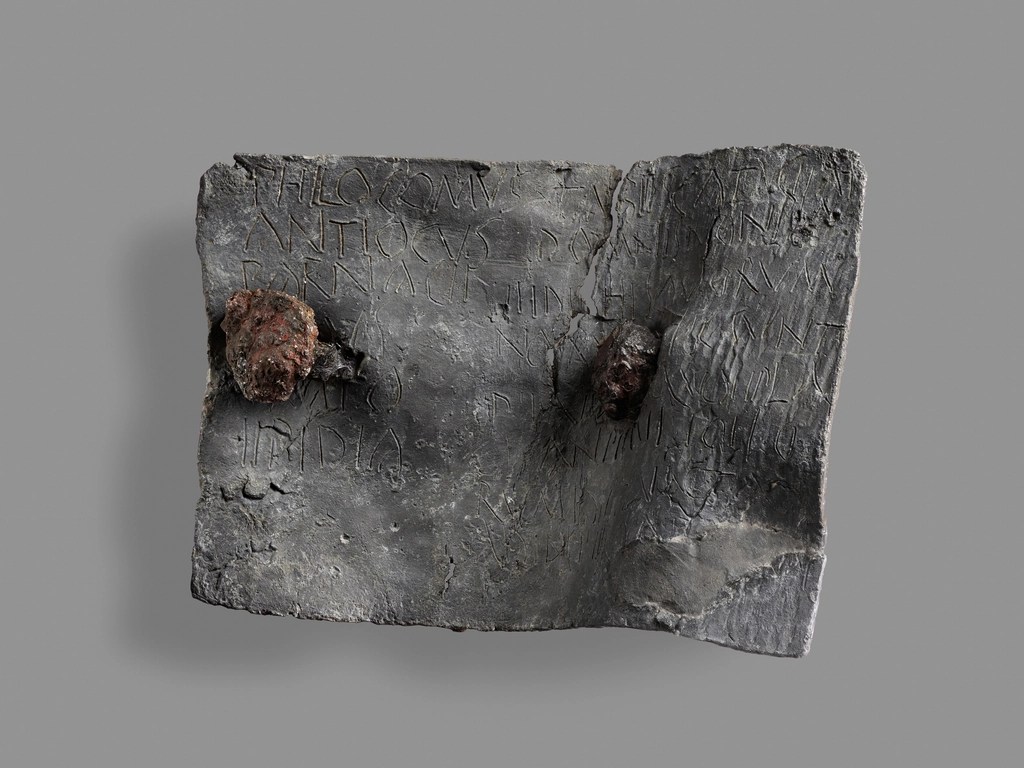
    Photos of a defixio, a curse tablet found in Israel in 2019, present such a quandary. Because the tablet cannot be opened without crumbling, an archaeologist employed tomographic scanning to peer inside. Reportedly, this revealed proto-alphabetic script, a claim that given the archaeological context potentially challenges long held scholarly understandings of world history.

    When, however, the archaeologist publicly released photos of the scans, some experts denied that they showed anything of significance.

    My goal here is two fold. I want to assist you in reaching a well informed understanding of the tablet. Further, I hope to encourage you to act on what you learn.

    But beware! Conversing intelligently about the photos requires more than a mere viewing. To most, other than a few specialized experts, they appear utterly mysterious.2

    Yet, lay persons with some assistance can make well considered observations regarding them.

    To do so they need three things. First, they need the history. Then they need an opportunity for efficient study. Lastly, and most importantly, they need enthusiasm, that is, enthusiasm for the history and for probing the evidence.

    Below, I relate the history.

    Furthermore, I guide an efficient online study of the photos.

    But what about the enthusiasm? 

    Possibly viewing a 30 second video might spark something. It shows, of all things, a technological process being applied to a piece of metal.

    Wow! How thought provoking and intriguing can that be?

    Well, take a look at the video below.

    Glance momentarily at it’s millimeter ticker in the top left corner. When it gets to .20 mm, focus particularly on the object’s top right. 

    Alternatively, watch the red bar on the right graph. When it approaches the major breach, focus on your screen’s top right.

    It helps also to move your cursor over the top right and click. This expands the image.

    Click here. 3

    Now just watch.

    Did you see anything?

    Maybe you perceived only happenstance cracks, dents and scratches on a very old piece of lead.

    But, what about a stick man, a mace, some crossed hockey sticks? Maybe you detected some squiggly lines, a bent arm with an open hand, and a couple of ox skulls?
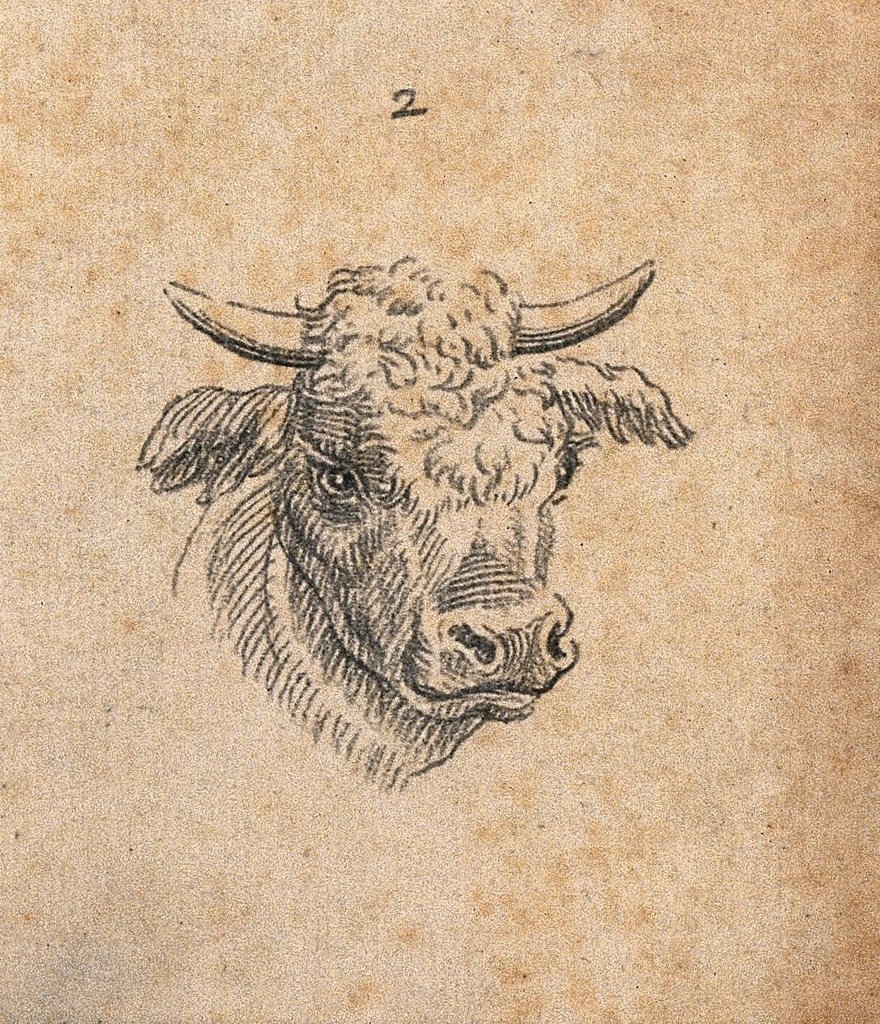
    Ox-head

    Ox head
    Crossed hockey sticks

    Crossed hockey sticks

    Photo by Tony Schnagl on Pexels.com
    A-bent-arm-with-open-hand

    A bent arm with open hand

    Photo by Daria Liudnaya on Pexels.com
    A-role-play-Viking-warrior-wielding-a-mace

    A role play Viking warrior wielding a mace


    Photo by Fernando Cortu00e9s on Pexels.com

    A canon of human history may hang upon which of these assessments is correct.

    Regardless of what you saw, this viewing likely piques some wonder. Possibly questions arise like:

    • What is the story here?
    • How could that story impact history?
    • Why should I or others care?

    This memorandum seeks to prepare you for these and other issues.

    Hopefully, at its end you can keenly scrutinize whether the Mt. Ebal Curse Tablet harbors proto-alphabetic script or even ancient Hebrew words .

    Optimistically, you can then confidently engage:

    • Whether there is anything to see here?; and
    • If so, so what?”

    Now for a question: What reading of the video’s millimeter ticker most colors your present impression about the Curse Tablet? What did you see or fail to see then?

    Let me know your response in the comment section below.

    Thank you for reading!

    If you appreciate this type of analysis, please “subscribe”, “like”, and “share”.

    If you wish to support this work, you can do so in the donation section below. Such really encourages!

    1. Melanie Lidman, Academic article on controversial 3,200-year old ‘curse tablet’ fails to sway experts, The Times of Israel,14 May 2023, paragraph 37,  https://www.timesofisrael.com/academic-article-on-controversial-3200-year-old-curse-tablet-fails-to-sway-experts/, (7 October 2024).
      and
      Sean McDowell, Oldest Hebrew Writing? Mt. Ebal Curse Tablet (Revisited) m.youtube.com>watch, (33:59), 11 May 2023. ↩︎
    2. Id. 4:51 and 30:54; and
      Melanie Lidman, Academic article on controversial 3,200-year old ‘curse tablet’ fails to sway experts, The Times of Israel, 14 May 2023, paragraph 15,  https://www.timesofisrael.com/academic-article-on-controversial-3200-year-old-curse-tablet-fails-to-sway-experts/, (7 October 2024).  ↩︎
    3. Scott Stripling, “You are Cursed by the God YHW,” an early Hebrew inscription from Mt. Ebal,  Heritage Science, 12 May 2023,  Supplementary Information, Additional file 1, https://heritagesciencejournal.springeropen.com/articles/10.1186/s40494-023-00920-9#Fig7, (7 October 2023). ↩︎
    One-Time
    Monthly
    Yearly

    Make a one-time donation

    Make a monthly donation

    Make a yearly donation

    Choose an amount

    $5.00
    $15.00
    $100.00
    $5.00
    $15.00
    $100.00
    $5.00
    $15.00
    $100.00

    Or enter a custom amount

    $

    Your contribution is appreciated.

    Your contribution is appreciated.

    Your contribution is appreciated.

    DonateDonate monthlyDonate yearly

    Dinner-bouquet-option
  • A Defixio?

    A Defixio?

    History V

    [Ebal, eleven of thirty]

    What landed in Snyder’s tray she quickly identified as a defixio, an ancient curse tablet.1

    In Snyder’s analysis Stripling and many of their experienced associates concurred. Why? These they had often seen. From the Greco-Roman world they are relatively common archaeological finds.2

    Nevertheless, they also recognized the irony of finding one on Deuteronomy’s “Mountain of Curses.”

    Stripling immediately recognized too that at this site a defixio posed a problem. Zertal had dated the altar site from 1400 to 1250 B.C. This he had concluded from careful pottery analysis. Contrarily, Stripling knew that defixios commonly dated to the Greek and Roman eras, primarily fourth and third centuries B. C. forward. A defixio seemed inappropriate by around a millennium.3

    He, however, was aware of a possible precedent.

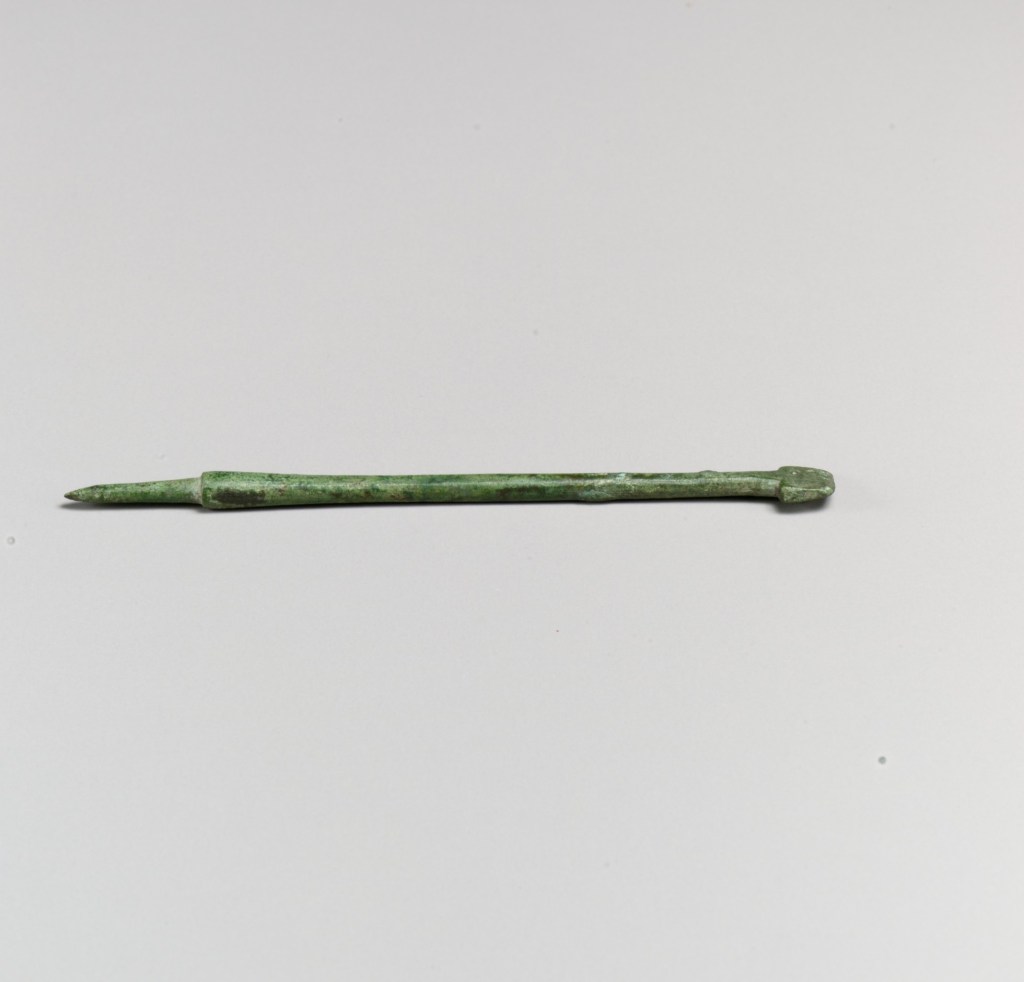
    The Book of Job speaks of Job’s desire to write on lead with an iron pen (Job 19:24).

    That book many scholars peg as the oldest biblical text. One reason is that it does not allude to the Law of Moses.4


    Photo by Pixabay on Pexels.com

    Maybe the defixio concept sprang from that or a similar exceedingly ancient tradition.

    Might other clues provide insights about this enigma? This our next post explores.

    Some questions: What was your earliest encounter with the idea of a defixio? What was the context?

    Thank you for reading!

    If you appreciate this type of analysis, please “subscribe”, “like”, and “share”.

    If you wish to support this work, you can do so in the donation section below. Such really encourages!

    1. Associates for Biblical Research, “ABR Researchers Discover the Oldest Known Proto-Hebrew Inscription Ever Found”, biblicarchaeology.org/ current-events-list/, Youtube, (06:24), March 24, 2022. ↩︎
    2. Sean McDowell, Oldest Hebrew Writing? Mt. Ebal Curse Tablet (Revisited) m.youtube.com>watch, (42:34-43:44), 11 May 2023; and
      Associates for Biblical Research, “ABR Researchers Discover the Oldest Known Proto-Hebrew Inscription Ever Found:, biblicarchaeology.org/current-events-list/, Youtube, (11:40; 19:25), March 24, 2022. ↩︎
    3. Breaking News “Mt Ebal Curse Tablet Peer Review Complete”, Appian Media, In Roads, youtube.com/watch?v=_15tYO4hqJS, (26:08), May 12, 2023. ↩︎
    4. Id. (10:30). ↩︎
    One-Time
    Monthly
    Yearly

    Make a one-time donation

    Make a monthly donation

    Make a yearly donation

    Choose an amount

    $5.00
    $15.00
    $100.00
    $5.00
    $15.00
    $100.00
    $5.00
    $15.00
    $100.00

    Or enter a custom amount

    $

    Your contribution is appreciated.

    Your contribution is appreciated.

    Your contribution is appreciated.

    DonateDonate monthlyDonate yearly
    Dinner-bouquet-option
  • An Inscription!

    An Inscription!

    History VI

    [Ebal, twelve of thirty]

    Although Stripling realized that glyphs adorned the tablet’s outside, he was most intrigued by what may lie within. There as with other defixios someone likely inscribed a curse.

    Usually, this curse was of a trivial nature, often something like, “She stole my boyfriend, may all of her hair fall out!”1

    Stripling and a colleague therefore gingerly attempted to open it. The lead of one corner, brittle with age, however, crumbled. Further efforts they thus ceased.

    Fortunately, the lead fragments Hebrew University in Tel Aviv successfully analyzed. The determination was that the lead originated from a mine in Lavrion, Greece.2

    About that mine historians and archaeologist have arrived at an accepted position. It is that it exported to the Middle East from before the Late Bronze Age well into Roman times.

    Here a curious historical anomaly deserves consideration.

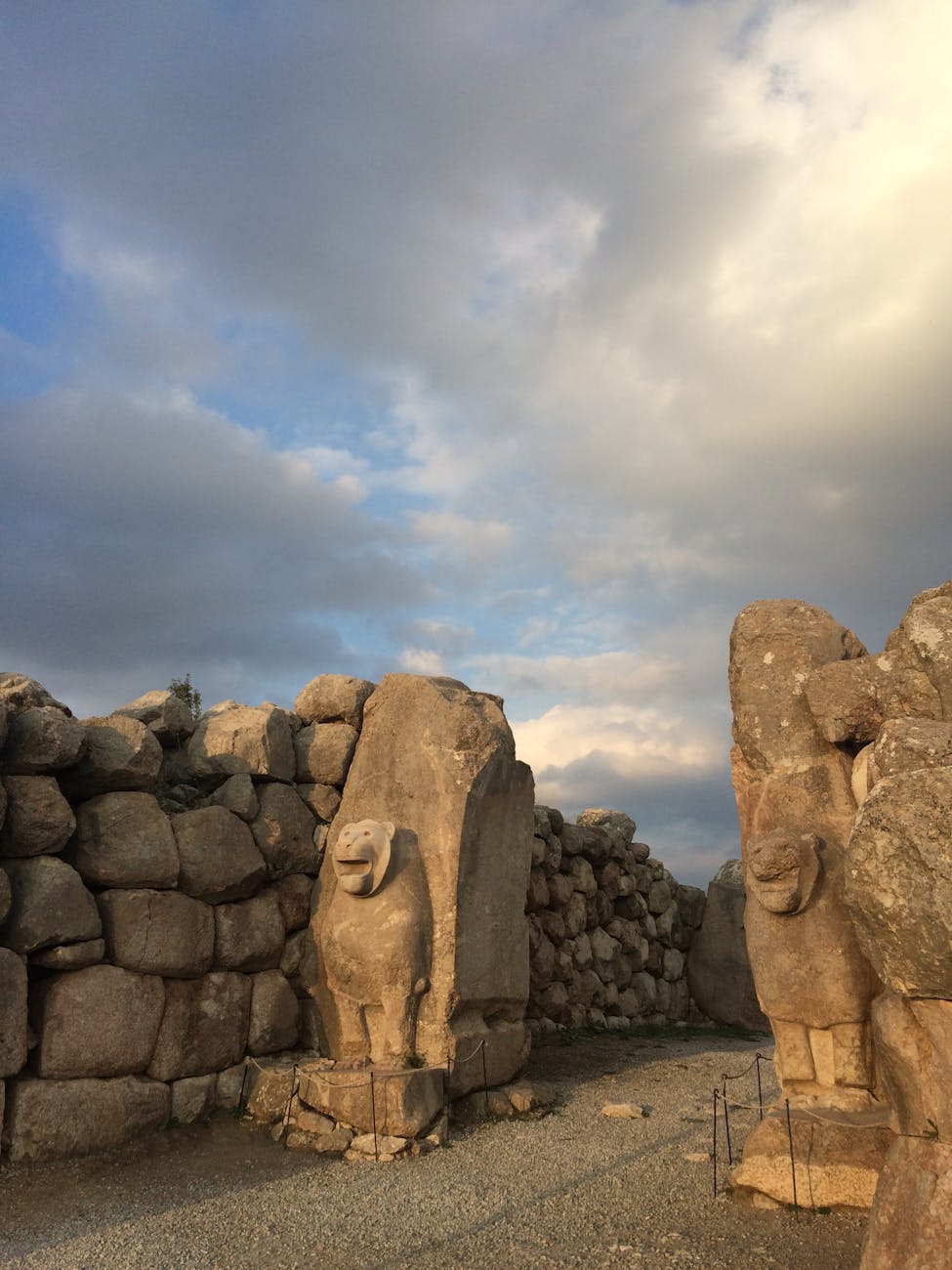
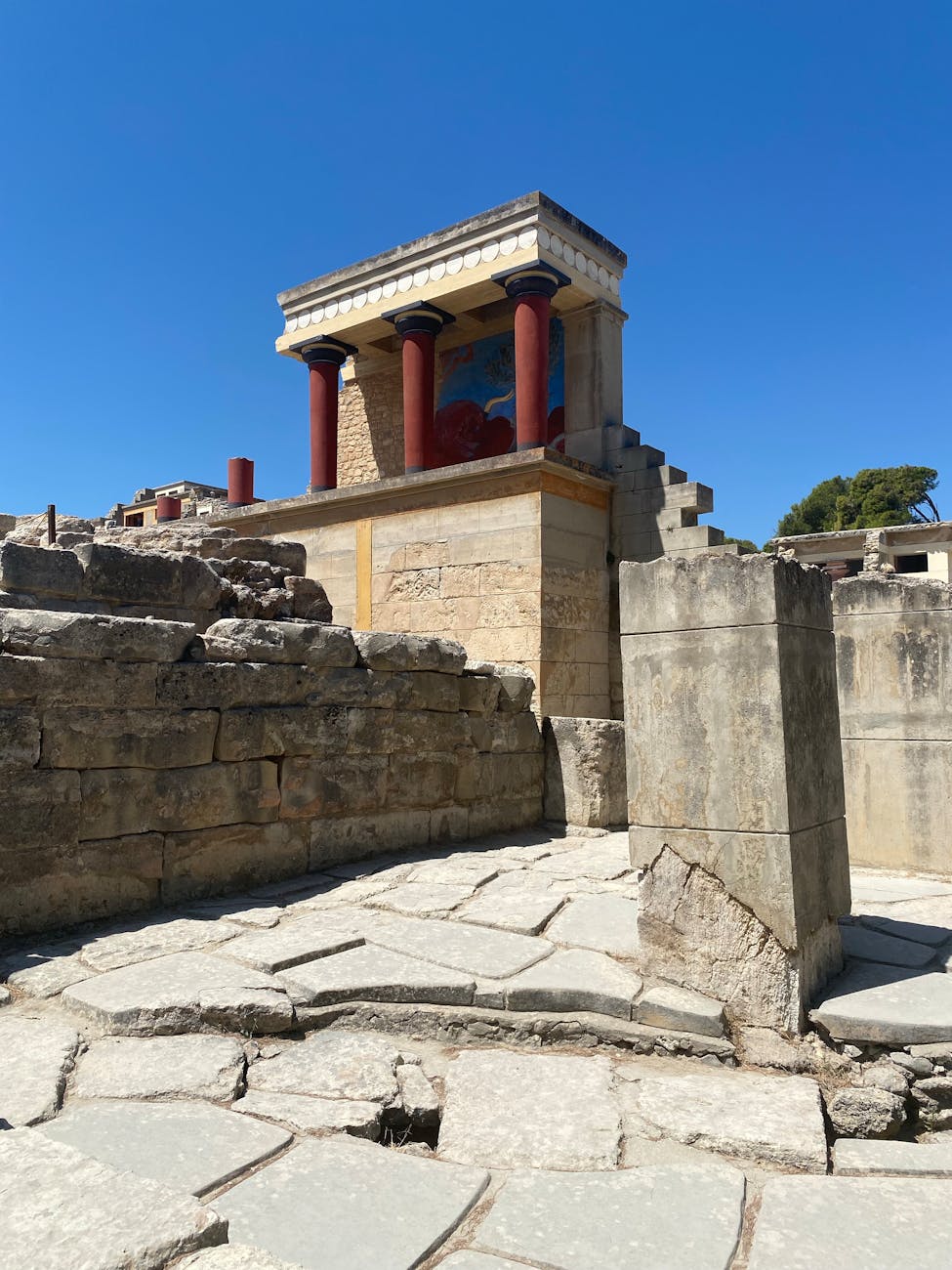
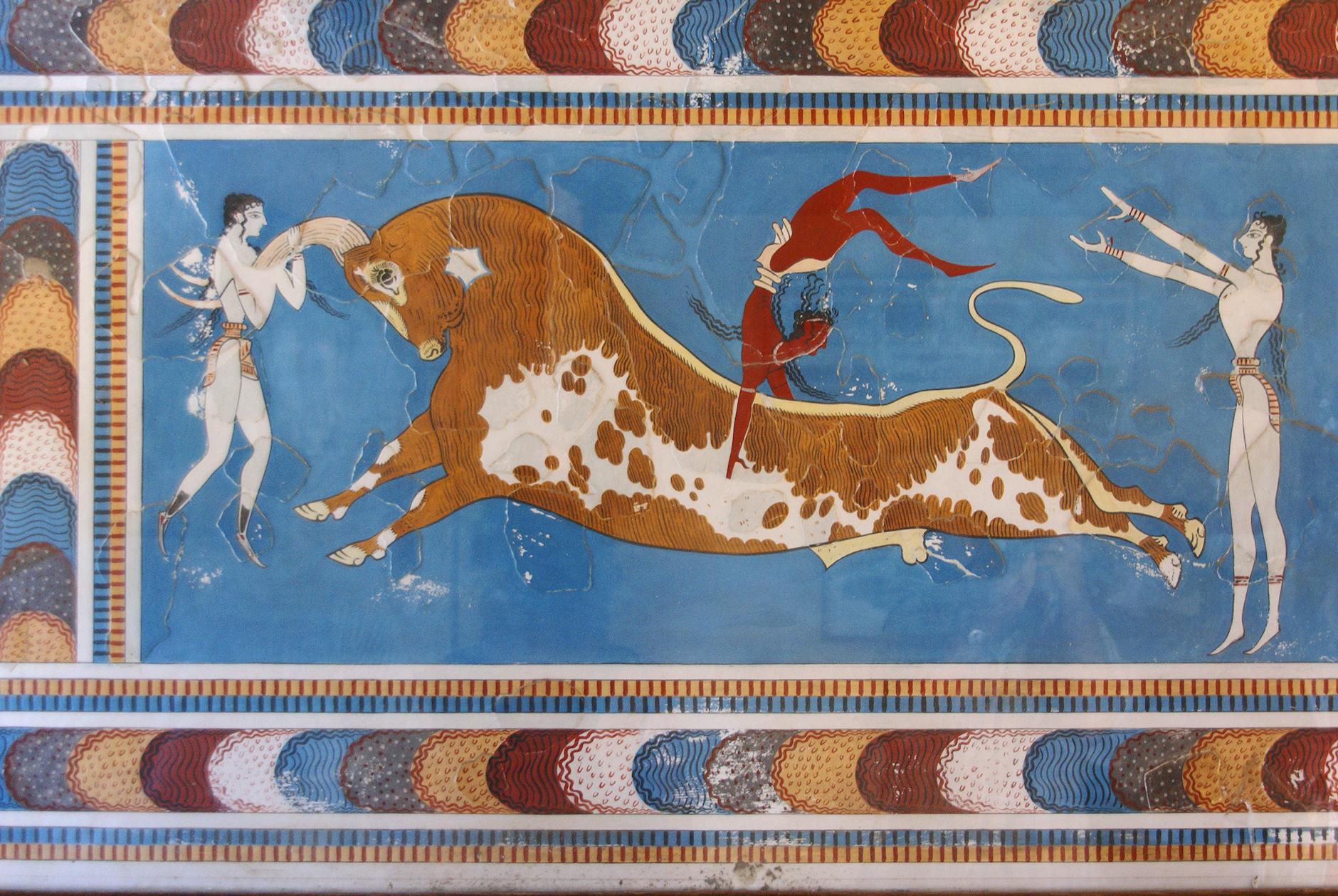
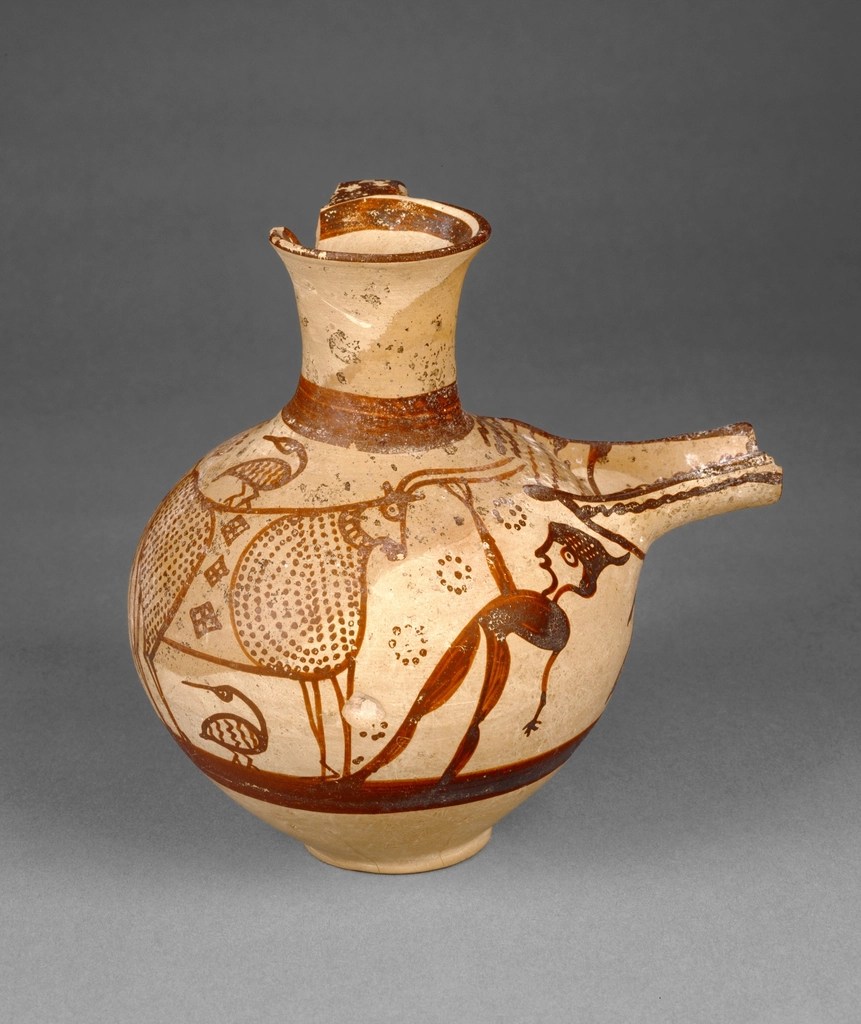
    In the Mediterranean world around the 12th century B. C. a dark age ensued. Then effectively Late Bronze Age civilization mysteriously imploded. Ancient exports plunged. Ostensibly European / Asian economic and cultural sophistication wilted. Among those civilizations disappearing or massively squelched include the Hittite, Ugarite, Minoan, Mycenaean, Trojan, and Babylonian.3 A definitive explanation for why alludes scholars to this date.4


    Mycenaean Sieve Jug Painter 20

    J. Paul Getty Museum
    Licensed under CC-CC0 1.0
    Lion-Gate-of-Hattusa,-Turkey

    Lion Gate of Hattusa, the Capital of the Hittites


    Bogazkale, Turkey

    Photo by u00f6zhan Hazu0131rlar on Pexels.com
    Knossos-Palace,-Crete

    Knossos in modern Crete, a leading cultural center of the ancient Minoans


    Photo by Luo on Pexels.com
    Minoan fresco

    Minoan bull fresco in Knossos Palace, Crete, Greece

    Photo by Gu Bra on Pexels.com

    From this dark age understanding Stripling deduced a probability.

    He proposed that likely someone imported the lead tablet in the thirteenth, fourteenth, or earlier centuries B. C. Zertal dated pottery at the site between 1250 B. C. and 1400 B. C. Given the twelfth century’s mysterious economic and cultural collapse, someone, he surmised, likely imported the lead tablet in previous centuries, namely, before the ancient dark age of 1200 to 1150 B. C.

    The metallurgical analysis, therefore, strengthened Stripling’s idea about the tablet’s date. Although not concrete, likely, the defixio dated from early in the late bronze age.

    Nevertheless, Stripling perceived that he had exhausted the tablet’s plausible investigative analysis. It was time for greater focus on his many other administrative, scholarly, and archaeological pursuits.

    Thinking thus, he sent an email to a colleague attaching a tablet photo. Subsequently, among archaeological circles this began to circulate.

    Then afterwards an unexpected opportunity for further investigation materialized.

    Stripling read of a technological advancement. The ability to peer into lead to discern written content had been demonstrated. Also, he learned that the Institute of Theoretical and Applied Mechanics in Telč (Czech Republic) excelled at the process.

    Arrangements were made. Israeli authorities gave a colleague a license to courier the “defixio” to Prague.5

    Prague

    Prague

    Photo by Eduardo Ortiz on Pexels.com

    Time passed. The Institute at Telč, 152 km. from the capital, finished its analysis and forwarded the results, scientific and epigraphical.

    Amazingly the Telč team indeed perceived something within. An epigraphic expert there suggested proto-alphabetic letters, that is, ancient letters representing sounds rather than complete thoughts.

    These initial revelations alone had profound meaning for Stripling. Now he had his most conclusive evidence for the date of the tablet. It had to be Late Bronze Age or Early Iron Age I, that is, from as early as 1400 to as late as 1250 B.C.6

    Why? Such was the epigraphically and archaeologically accepted period for use of proto-alphabetic script.

    No longer did the tablet present an anachronistic dilemma. It now definitively matched Zertal’s pottery dates.

    What else could this new evidence portend?

    This I probe further in my next post!

    But now some questions: What do you think likely caused the Late Bronze Age civilizational collapse? In Mark Twain parlance how might that rhyme with subsequent history? How might it rhyme in the future?

    Let me know in the comments below.

    Thank you for reading!

    If you appreciate this type of analysis, please “subscribe”, “like”, and “share”.

    If you wish to support this work, you can do so in the donation section below. Such really encourages!

    1. Sean McDowell, Oldest Hebrew Writing? Mt. Ebal Curse Tablet (Revisited) m.youtube.com>watch, (8:51), 11 May 2023. ↩︎
    2. Special Update: The Mount Ebal Curse Tablet (Ep1 of 3), Youtube: Patterns of Evidence, youtube.com/watch?v=YX3TH_nfgLo, Episode One at (26:12), May 21, 2024. ↩︎
    3. Stan Guthrie, “The Book of Joshua and the Late Bronze Age Collapse”, https://www.newcovenantnaperville.org/the-book-of-joshua-and-the-late-bronze-age-collapse, 02 Jan. 2025 ↩︎
    4. Matti Friedman, “An Archaeological Dig reignites the Debate Over the Old Testament’s Historical Accuracy”, mattiefriedman.com, paragraph 21. December 12, 2021. ↩︎
    5. Breaking News “Mt Ebal Curse Tablet Peer Review Complete”, Appian Media, In Roads, youtube.com/watch?v=_15tYO4hqJS, (27:30), May 12, 2023. ↩︎
    6. Id., (06:40). ↩︎
    One-Time
    Monthly
    Yearly

    Make a one-time donation

    Make a monthly donation

    Make a yearly donation

    Choose an amount

    $5.00
    $15.00
    $100.00
    $5.00
    $15.00
    $100.00
    $5.00
    $15.00
    $100.00

    Or enter a custom amount

    $

    Your contribution is appreciated.

    Your contribution is appreciated.

    Your contribution is appreciated.

    DonateDonate monthlyDonate yearly

    Dinner-bouquet-option
  • Letters?

    Letters?

    Objective Analysis II

    [Ebal, twenty-four of thirty]

    We test here the first part of Haughwout’s material fact, that is whether the tablet contains proto-alphabetic letters.

    To evaluate this I take these steps:

    First I outline Haughwout’s position. Find this below the magenta banner.

    Against it, I give push back. This you find below the yellow.

    Lastly, I announce my findings below the purple banner.

    No Letters

    When Haughwout began to study the photos of Stripling’s article, he had an initial favorable impression. The top right corner indeed seemed to show several proto-alphabetic characters. Namely these were Teh, Meh, He, Teh and Aleph–five in total, respectively #’s 18, 19, 12, 20, and 21 of Figure 7.

    For him the most impressive was Aleph #21. Best he felt it displayed the appropriate proto-alphabetic characteristics.

    His opinion, however, soon changed.

    On close review he noticed a number of crack lines commencing from the tablet’s edge to intersect with the character.

    Is-there-an-"Aleph"?

    Is there an “Aleph”?

    Photo by Jesu00fas Esteban San Josu00e9 on Pexels.com

    Prominent were the two cracks that he deduced had over time created the “Ox’s” horns. (See here.)

    Resultantly, this Aleph’s favorable status crumbled. He deduced it only the chance product of crack lines. No longer was it an exquisite inscription. It now presented a coincidental aberration with grotesquely proportioned horns. This disqualified it as a man-made proto-alphabetic letter.1

    Disillusionment followed also for the other four likely script candidates. All he concluded as being mere happenstance cracks, scratches, and dents in the lead.

    Some of the primary reasons for this were these:

    • First, he realized how small these characters were, ranging form .01 to .05 mm. The minimalist crack, scratch, or dent could replicate them; and
    • Photos of bulges on the tablet’s bottom (Table 10) failed to impress Haughwout. These Stripling had presented as negative proofs of inside characters. They too, Haughwout concluded, likely resulted from cracks, scratches and dents.

    Haughwout thus finally surmised that his most favored of the tablet’s characters presented major existential problems. Doubly so this applied to the remainder.

    Pushback on Haughwout’s Improbable Letters

    I. Lovely Aleph

    Haughwout notes that initially “Aleph, ” Figure 7, # 21 presented for him as a gorgeous proto-alphabetic inscription.

    On this I agree.

    Note its beauty! It satisfies the eye as an elegant calligraphy beginning a chapter of a medieval manuscript.

    See Table 2 (3 a and b). What do you think?

    Haughwout, however, finds what he considers a fatal flaw–crack lines intersecting the horns.

    These he concludes reveal the inscription to be nothing more than happenstance cracks, scratches, and dents. (See again Haughwout’s illustration.)

    But Dr. Pieter van der Veens of Johannes Gutenberg University Mainz, one of Stripling’s team epigraphers and an expert in ancient Near Eastern languages and inscriptions, gives a plausible explanation. He suggests that yes there are crack lines emanating from the tablet’s edge. But likely the force of the stylus so close to that edge caused this.

    In fact, along the tablet’s top this “Aleph” is among the closest.2

    Note too that Haughwout’s drawing appears on a photo that poorly focuses this Aleph.”

    Look instead at Table 2, (3 a).

    On this clearer image you can see that the cracks do not intersect the horn tips smoothly and directly. On both horns there is a transition from the points where the aesthetically pleasing horns end and the apparent cracks intersect.

    Both of the aesthetic horns are darker, wider and likely deeper.

    Plus, at the intersection points the direction of the cracks deviate on both, but on one more pronounced than the other.

    The above emphasizes the likelihood of an author having beautifully crafted his letter only to have time mar it with the imperfectly connecting cracks.

    II. Tiny Letters

    Haughwout also complains about many of the letters’ small sizes. Here the simple explanation is that the author had a small space with which to work. Plus, in that small space he had a serious message to convey–one not intended for human eyes but only for God.

    Fortunately, though, they are indeed visible to man.

    III. Bottom Bulges

    Further, Haughwout apparently scoffs at the idea of negatives on the tablet’s bottom , “Outer B”, replicating inner tablet letters.

    This evidence surely deserves less flippant appraisal.

    Consider these examples:

    • Compare “He” of Figure 7’s, #3 and Table 3, (4 a and b) with Table 10, photo #2. This image I have designated “Dancing ‘He’”. Why? Notice that his arms and legs, seemingly in motion, occupy different levels. Nevertheless, the positive of the inner tablet and the negative of the tablet’s bottom mirror.
    • See, the first “Resh” in the word “ARWR”, at Figure 7’s #26 and Table 8, (2a & b). Compare it with the bottom bulge shown at Table 10, #8. Notice how they coincide. The positive inner image slants right.The bulge mirrors to the left.
    • Compare also the “Waw” of Figure 7’s, #13 and Table 4, (1a and b) with Table 10, photo #4. Are these not both mace representations?
    • Similarly compare the “Mem” of Figure 7’s, #19 and Table 7’s, (1a & b) with Table 10, #7. Do they not represent waves of water associated with this character?
    • Possibly most important is the “Yod” of Figure 7’s, # 11 and Table 5, (1a & b) compared with that in Table 10, photo #3. Both are admittedly faint.
    • Yet even faint mirroring reflections have an important ramification, one that Haughwout recognizes. He notes,”The reality is a dent on one side of a 0.4 mm thick piece of lead will of course appear on the opposite side.” Further he continues that this proves that the marks “on the inside are indeed there and are not x-ray anomalies.” In other words even where the mirroring images are faint, they prove that what is faintly depicted is indeed there. It is not some fluke produced by x-ray or photographic lightings or shadows.3

    Several factors limit the possibility of these being the result of mere happenstance cracks, scratches, or dents.

    Note that of the three, a dent seems most likely. Usually such one associates with sufficient downward force to cause an opposing bulge.

    Nevertheless, Haughwout’s contention that a happenstance dent as opposed to a purposeful one caused by an inscriber’s stylus must account for the following:

    • First, the tablet was closed thus protecting the inner tablet from further damage.
    • Second, the tablet’s top,” Outer A,” does not have marks corresponding to these negatives. Only our inner tablet marks do.
    • Third, therefore, the force, possibly by a stylus, was likely applied before the tablet was closed.
    • Fourth, this closing likely occurred during the Late Bronze Age to Iron Age II– the era of proto-alphabetic writing.
    • Fifth, the act of closing was likely done purposefully by a human. Likely too that was done to conceal and protect a message hidden within.

    All of the above amount to justifications for a reasonable person genuinely disputing this portion of the material fact addressed here, namely, that the tablet does not reveals proto-alphabetic script.

    This portion of Haughwout’s material fact thus fails to support his refutation claim.

    The evidence shows that there is a genuine dispute about Haughwout’s proposition here. In other words, a reasonable person can genuinely dispute the claim that there are no proto-alphabetic letters on the tablet.

    Despite conceding that Figure 7’s #’s 18, 19, 12, 20, and 21 represent proto-alphabetic forms, Haughwout nevertheless concludes that only coincidental cracks and dents formed them.

    Yet, a reasonable person could genuinely counter that:

    • “Lovely Aleph”, Figure 7, # 21, is likely a scribe’s work marred somewhat by incongruous intersecting cracks radiating from the nearby tablet edge.
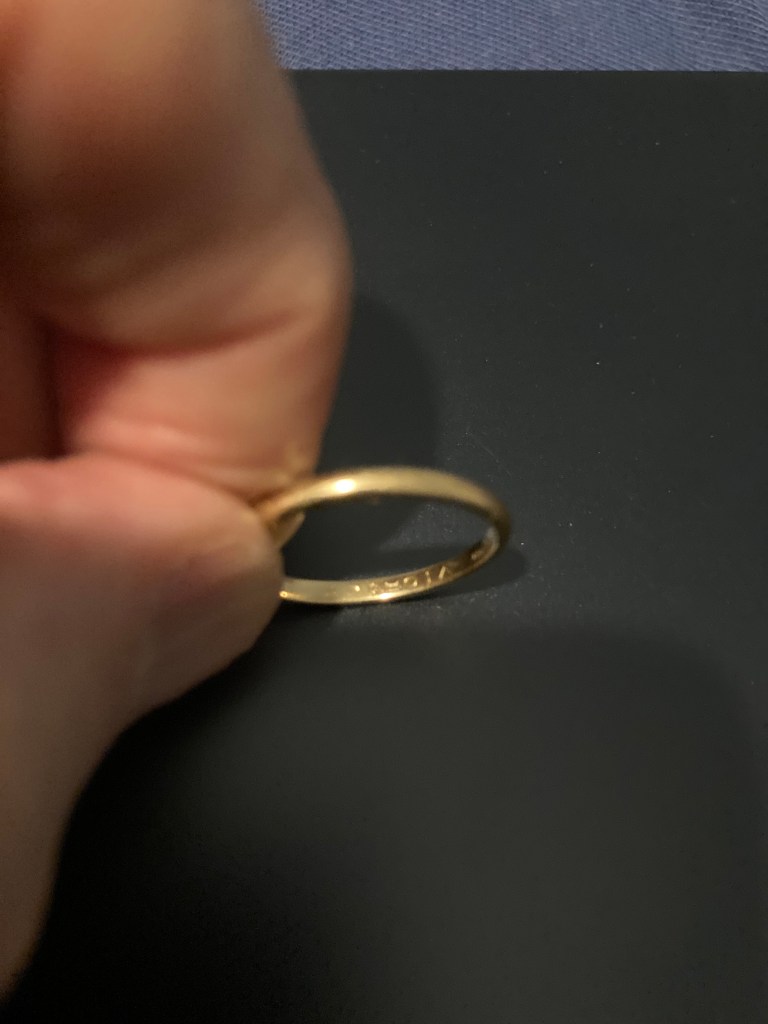
    • The fact that the letters are small is of little consequence. My wedding band has my wife’s name etched inside it. They are comparably as tiny but no less visible, real and meaningful.
    • The bottom negatives legitimately argue of man-made proto-alphabetic script inside the tablet.

    Therefore, Haughwout’s improbable letter arguments do not support his “refutation” claim. Against this part of Stripling’s first material fact he has failed to satisfy our objective test, that is, that a reasonable person could not genuinely dispute the absence of proto-alphabetic letters on the tablet.

    Thank you for reading!

    If you appreciate this type of analysis, please “subscribe”, “like”, and “share”.

    If you wish to support this work, you can do so in the donation section below. Such really encourages!

    1. Haughwoout, M. S. Mt. Ebal curse tablet? A refutation of the claims regarding the so called Mt. Ebal curse tablet, Herit Sci 12, 70 (2024). htts://doi.org/101186/s40494-023-01130-z, paragraph 16. ↩︎
    2. Id. paragraph 17. ↩︎
    3. Id. paragraph 56. ↩︎
    One-Time
    Monthly
    Yearly

    Make a one-time donation

    Make a monthly donation

    Make a yearly donation

    Choose an amount

    $5.00
    $15.00
    $100.00
    $5.00
    $15.00
    $100.00
    $5.00
    $15.00
    $100.00

    Or enter a custom amount

    $

    Your contribution is appreciated.

    Your contribution is appreciated.

    Your contribution is appreciated.

    DonateDonate monthlyDonate yearly
    Dinner-bouquet-option
  • My Adjudication

    My Adjudication

    Objective Analysis VI

    [Ebal, twenty-eight of thirty]

    Has Haughwout refuted Stripling’s claims? Here is my decision!

    Photo by Coco Championship on Pexels.com

    Haughwout entitled his article “A Refutation.”

    On that his conclusion doubles down. There he states,

    “The only substantiate claim that Stripling et al can make at this time is that they have found a very old, small piece of folded lead on Mt. Ebal using wet sifting.”

    Thus Haughwout emphatically declares that he disproved, Stripling’s contentions.

    This evaluation,I have measured against a standard similar to one set out by the U.S. Supreme Court. That standard governs summary judgment in our federal system.

    My similar standard is this: To decide in favor of Haughwout, I must find that a reasonable person could not genuinely dispute his claim’s material fact(s). I must deny Haughwout’s “disproval” if I find otherwise.

    Further, I condensed Haughwout’s claim to a singular material fact. It is that: At least one of the following statements is true:

    • The tablet does not contain proto-alphabetic script, that denotes the words “ARWR”–“cursed” and “YHW”–“Yahweh”, the Hebrew name for God; or
    • A Hebrew of before 1250 B. C. did not inscribe the tablet.

    Ultimately, this statement I deem a reasonable person could genuinely dispute.

    Haughwout thus failed in his endeavor.

    Here is a list of points I find support my adjudication:

    • The difference between three and four letter Yahweh has a reasonable explanation. Later, scribes added the “Heh” to capture the previously understood vowel ending, in this case an “eh” sound.
    • Use of “Wah” in place of the vowel in “ARWR” is reasonably attributable to a smart scribe.
      • The substitution makes phonetic sense.
      • Besides evidence suggests that this Late Bronze Age spelling persisted through to the eight century B. C. Tomb of Shebnayahu and beyond.
    • The crack lines of Aleph, Figure 7, #25 and Table 2, (3 a and b) do not intersect directly with the horns. Thus it is reasonable to deduce that the cracks intersect with a well drawn figure.
    • Affiliating the artifact with the scriptural Mountain of Curses seems reasonable.
      • This is especially so when compared with proposed options classifying it as a net sinker, hair adornment, or theatre ticket.
      • The scriptural attribution better fits the provenance and location.
    • A reasonable person can see both the “Yah” and the “Wah” of Upper Yahweh. The “He” a child can see.
    • Further, that person could consider tiny letters consequential.
      • This they could relate with other tiny inscriptions.
      • One example could be wedding ring inscriptions.
    • A reasonable person could determine the tablets boustrophedon track appropriate.
      • They could presume that the tablet message may have only been meant for the eyes of God.
      • But, neverthless, its track also makes basic sense even to men.
    • A reasonable person also could determine that the tablet’s bottom bulges evidence interior proto-alphabetic letters.
    • Furthermore, part of, Haughwout’s criticisms do more to strengthen rather than negate Stripling’s baseline conclusions.
      • Again, he acknowledges that the presence of proto-alphabetic letters signal a Late Bronze Age to Early Iron Age date, i.e. 1400 to 1200 B. C.
      • Later, he acknowledges that “TMT”, Figure 7 #’s 18, 19 and 20 , comprise a proto-alphabetic word.

    Despite the above, I conclude that Haughwouts criticisms significantly advance scholarly debate about the Mt. Ebal Curse Tablet. That includes the conclusions on which I argue that he errs. Why? Such clearly stated, academically advanced reasonings as his engender a healthy scientific and scholarly quest for truth.

    The stark exception is the claim of a “refutation”.

    Why? To science and scholarship his “refutation” pronouncement potentially causes harm. It can dishearten further investigation, quench pools of funding, block excavation permits, and slacken safety concerns for potential exigent evidence.

    Such an announcement that falls short of an appropriate procedural standard I perceive as a hinderance rather than an advance of the quest for truth.

    As such my decision is to deny Haughwout’s “refutation” claim.


    Photo by Pixabay on Pexels.com

    Stripling’s article I therefore declare “Safe!” from Haughwout’s refutation attempt.

    Next, I proclaim this memorandum’s conclusion!

    Thank you for reading!

    If you appreciate this type of analysis, please “subscribe”, “like”, and “share”.

    If you wish to support this work, you can do so in the donation section below. Such really encourages!

    One-Time
    Monthly
    Yearly

    Make a one-time donation

    Make a monthly donation

    Make a yearly donation

    Choose an amount

    $5.00
    $15.00
    $100.00
    $5.00
    $15.00
    $100.00
    $5.00
    $15.00
    $100.00

    Or enter a custom amount

    $

    Your contribution is appreciated.

    Your contribution is appreciated.

    Your contribution is appreciated.

    DonateDonate monthlyDonate yearly
    Dinner-bouquet-option