Tag: curse tablet

  • Journey Essentials

    Journey Essentials

    Introduction I

    [Ebal’s Plea, five of thirty-two]

    This journey’s operation order reads:

    Situation:

    • Geography

    Where is Mt. Ebal?

    It rises in the northern third of Samaria / Judea adjacent to its slightly smaller sister–Mt. Gerazim, flanking on the south. Between the two runs a pass where one sees modern Nablus on a western neck. The location of ancient Shechem lies nearby a little eastward.

    Nabus,-Ancient-Shechem

    Nablus, Ancient Shechem

    Nablus Ancient Shechem by David Roberts (Scottish, 1796)u20131864

    Licensed under CC-CC0 1.0

    Through this passage people have accessed since antiquity the Jordan Valley on the east and the Plain of Sharon and the Mediterranean on the west.
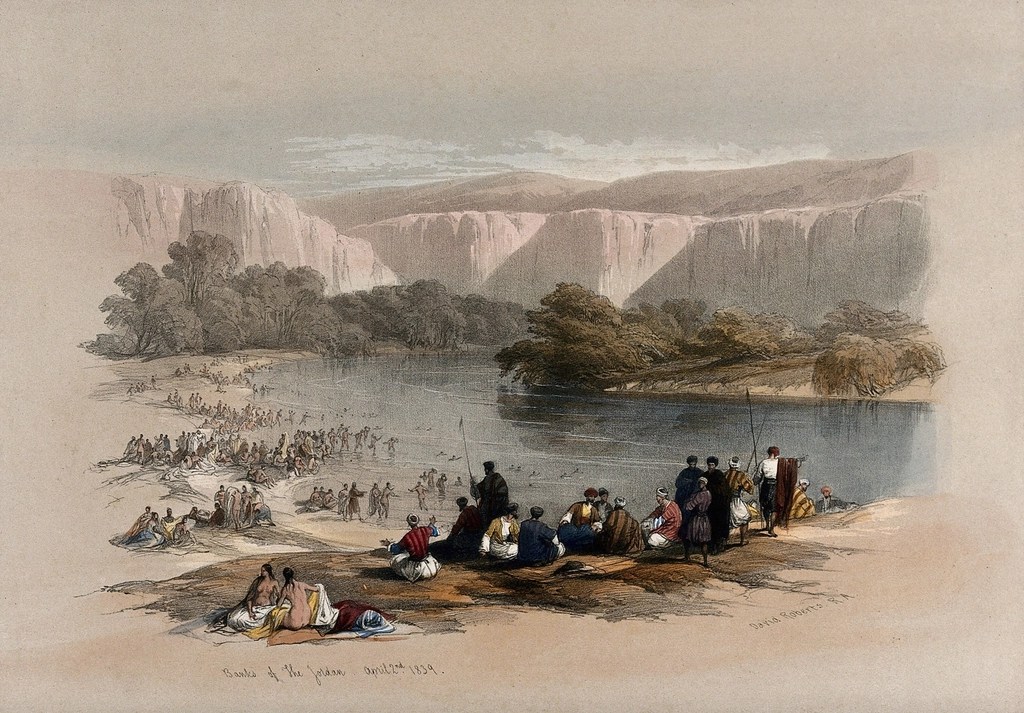
    Bathers-on-the-banks-of-the-Jordan-River

    Bathers on the banks of the Jordan

    A sweeping view to the North reveals the uplands of Galilee where you can glimpse the outline of Nazareth. Adjusting east one sees across the Jordan to Hermon’s whited pinnacle. Farther south the view traverses the Dead Sea to the region of Moab. Finally due south arise the heights of Jerusalem.1

    A nearer view reveals a valley between the two mountains into which many springs flow. These irrigate lush vineyards, orchards, and groves yielding abundant grapes, figs and olives. But higher up near Mt. Ebal’s summit, rocky outcrops, “ubiquitous thistles and prickly shrubs” abound.2

    • History Preview:

    Among this high setting Adam Zertal, an Israeli archaeologist, arrived in the 1980’s on a government survey mission. There he found what ultimately he came to believe was an ancient Hebrew altar.

    Joshua Commanding Sun Stand Still


    National Gallery of Art

    Licensed under CC-CC0 1.0

    This claim paralleled biblically attested events of Deuteronomy and the Book of Joshua. Unsurprisingly, the announcement spawned a worldwide stir.

    The-Torah-or-Pentateuch

    Photo by cottonbro studio on Pexels.com

    Yet, this notion ran contrary to scholarly understanding. It was thus ultimately largely dismissed, even scoffed at.

    Some forty years later an archaeological team, headed by Dr. Stripling, moved some of Zertal’s dump piles off site. To that material they applied a perfected wet sifting technique. Many small, previously missed artifacts they found as a result.

    One particularly intrigued. The tiny lead object they thought a defixio, a curse tablet.

    Having had significant previous experience with such, they anticipated inside an inscribed curse.

    When, however, they attempted to open it, a small corner crumbled. That endeavor they ceased.

    Fortunately, tomographic slice imaging enabled scans of what lay within.

    Their report about the resulting photos startled much of the world. Allegedly inscribed there were proto-alphabetic letters pronouncing God’s Hebrew name–“Yahweh”, and the word “ARWR” meaning “cursed!” Furthermore, the words and provenance recalled a ceremony recorded in scripture.

    After public release of the scans, eminent scholars disputed these claims.

    Recently, Heritage Science published another peer reviewed essay about the tablet. In it Mark S. Haughwout , a prominent Hebrew scholar, gives his views. He also largely summarized the qualms of others scholars.

    The article boldly concludes, “The only substantiated claim that Stripling et al. can make at this time is that they have found a very old, small piece of folded lead on Mt. Ebal using wet sifting.”

    In other words, Haughwout determined that there is nothing to see here!

    Meanwhile, the potential destruction of the Mt. Ebal archaeological site looms. This I explain later.

    Mission:

    This memorandum argues that government authorized excavation of Joshua’s Altar should occur posthaste. The reasons are that:

    • Sufficient evidence supports the fantastic claims about the Curse Tablet; and
    • The chance of Mt. Ebal revealing other important evidence is significant?

    Execution:

    In support of these positions I argue that Haughwout failed in his “refutation”, i. e., disproval, efforts.

    Inside-the- U.S.-Supreme-Court

    Interior United States Supreme Court

    by Carol M Highsmith

    Licensed under CC-CC0 1.0

    In doing so I apply an objective measure derived from a prominent authority well accustomed at resolving issues of this nature. That is the U. S. Supreme Court.

    The High Court’s Rule 56 of its U. S. Code of Civil Procedure mandates how lower courts decide motions for summary judgment.

    Summary judgment, I argue, closely resemble our matter. Thus for it a standard similar to that of Rule 56 should operate appropriately.

    My applying an objective measure to these facts frees you to competently make up your own mind about the issues confronted. Resultantly, you can decide yourself whether my adjudication is fair and reasonable.

    Service and Support:

    Embedded as lagniappe with the flowers displayed at the end of each post, I provide links to materials–written, audio, and video. These reflect the tensions associated with this topic. Adversarial material I attempt to display.

    Music snippets I add for ambiance.

    The last post supplies supplemental materials. This includes letters to my U. S. congressional delegation.

    Command and Signal:

    As co-founder of captivatingtwists.com, I authored the thirty-two posts about this matter. As my audience I welcome anyone interested in the issues presented.

    Dr. Stripling and Mr. Haughwout whose peer review articles I extensively review in this memorandum are the authors of the primary sources of expert information used here.

    Ultimately, this memorandum’s conclusions and recommendations are entirely my own.

    The Mt. Ebal topic is one of several within Captivating Twists’ stable of subjects.

    Brace-for-the-Joust!

    The joust!

    Photo by jordan besson on Pexels.com

    Forewarning:

    Fasten your seat belt! Prepare not only to traverse three and a half millenniums of history. Brace also to referee a joust between competing views about human reality.

    The next post, the last of my introduction, teases curiosity about the journey ahead.

    Next post: ” A Mysterious Tease”

    One-Time
    Monthly
    Yearly

    Make a one-time donation

    Make a monthly donation

    Make a yearly donation

    Choose an amount

    $5.00
    $15.00
    $100.00
    $5.00
    $15.00
    $100.00
    $5.00
    $15.00
    $100.00

    Or enter a custom amount

    $

    Your contribution is appreciated.

    Your contribution is appreciated.

    Your contribution is appreciated.

    DonateDonate monthlyDonate yearly
    1. W. Ewing, Bible Hub, Atlas, Mt. Ebal, 2025, https://bibleatlas.org/mount_ebal.htm, paragraph 2. ↩︎
    2. Id., paragraph 1. ↩︎
    Dinner-bouquet-option

    Lagniappe Curse Tablet link /
    Dr. Bob Cargil, “Sagan Standard”
  • Staking a Claim

    Staking a Claim

    History VII

    [Ebal’s Plea, thirteen of thirty-two]

    The Czech Institute’s data continued to prove a font of revelation.

    From the tomographic scans Stripling’s epigraphers quickly discerned not just letters, but words. These included “Yahweh” and “cursed”, both apparently recalling Joshua’s ceremony of blessings and curses on Mts. Gerizim and Ebal. One epigrapher, Dr. Gershon Galil, of the University of Haifa, additionally decoded a sophisticated parallelism, a chiasmus.

    This literary device one finds throughout the Old and New Testaments. Consider for example Luke 4:16b-20 “The Favorable Year of the Lord”. Note below the parallel and inverse wordings with a central focus:

    14 And Jesus returned to Galilee in the power of the Spirit, and news about Him spread through all the surrounding district. 15 And He began teaching in their synagogues and was praised by all. 16 And He came to Nazareth, where He had been brought up, and as was His custom,

    He entered the synagogue on the Sabbath,

    and stood up to read,

    He has sent Me to proclaim

    release / to the captives,

    And recovery of sight to the blind,

    To set free / those who

    are oppressed,

    and sat down

    and the eyes of all in the synagogue were fixed on Him.

    21 And He began to say to them, “Today this Scripture has been fulfilled in your hearing.”1


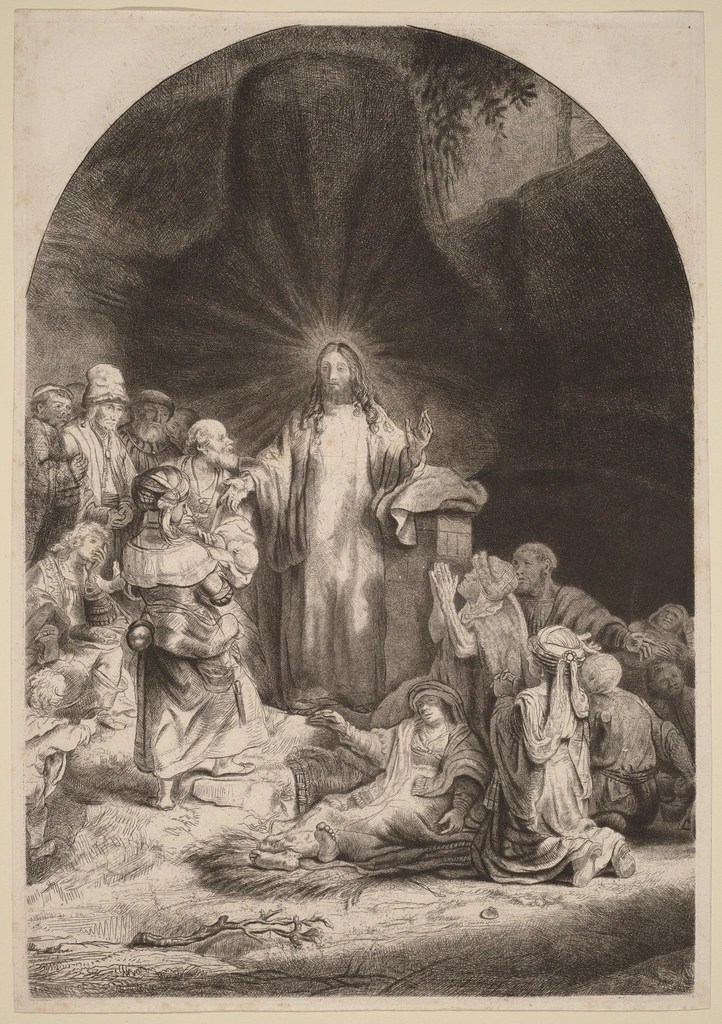
    Christ Preaching / Healing

    National Gallery of Art
    Licensed under CC-CC0 1.0
    Recovery-of-sight-to-the-blind

    Recovery of sight to the blind

    How could Stripling be anything but gobsmacked?

    Nevertheless, as a professional he was certainly aware that a find of this magnitude required cautious, meticulous handling.

    He was a renowned archaeologist with decades of Holy Land field experience at preeminent sites.

    The profound nature of this find earmarked it. Surely it would cause an immense stir. On multiple levels intense international scrutiny lay on the horizon journalistically, scholarly, and politically.

    This needed to be handled right!

    Photo by Pixabay on Pexels.com

    But life threw Stripling a curve ball mandating a different approach.

    Concurrently, speculation circulated about the tablet photo that Stripling had earlier emailed to an associate. Forwarded recipients began generating noise online. Some pondered the outer tablet’s glyphs. Could they be some sort of script?

    Alarmed that others might lay academic claim to the tablet’s message, Stripling deemed it necessary to go public quickly. Otherwise, he risked forfeiting his scholarly stake as the tablet’s lead discovering archaeologist.2

    A press conference ensued in March 2022. At it Stripling and his team announced the following:

    • The lead defixio found by his team contained archaic proto-alphabetic script;
    • From around forty letters present, the Hebrew name for God appears twice and the word “cursed” ten times;
    • The late bronze age dating of the tablet makes it two to four hundred years older than any other known Hebrew text.
    • A possible reading relates a chiasmus, a literary form employed extensively in both the Old and New Testaments.
    • That proposed reading was:

    Cursed, cursed, cursed-cursed by the God YHW
    You will die cursed.
    Cursed you will surely die.
    Cursed by YHW-cursed, cursed, cursed!

    (Mt. Ebal “Curse Tablet” Full Press Conference, YouTube, Appian Media, March 29, 2022)

    Afterwards, public elation and scorn followed.

    Why scorn?

    This our next post addresses.

    Next post: “A Firestorm!”

    1. L. J. Hooge, “The Favorable Year of the Lord”, Biblical Chiasmus, Discovering and Exploring Reverse Parallelism in the Bible, https://biblicalchiasmus.wordpress.com/2014/08/03/luke-416b-20-the-favorable-year-of-the-lord/, August 3, 2014, ↩︎
    2. Breaking News “Mt. Ebal Curse Tablet Peer Review Complete”, Appian Media, In Roads, youtube.com/watch?v=_15tYO4hqJS, (20:39), May 12, 2023. ↩︎
    One-Time
    Monthly
    Yearly

    Make a one-time donation

    Make a monthly donation

    Make a yearly donation

    Choose an amount

    $5.00
    $15.00
    $100.00
    $5.00
    $15.00
    $100.00
    $5.00
    $15.00
    $100.00

    Or enter a custom amount

    $

    Your contribution is appreciated.

    Your contribution is appreciated.

    Your contribution is appreciated.

    DonateDonate monthlyDonate yearly
    Dinner-bouquet-option

    Lagniappe Mt. Ebal link / Inscription Publication, Cargill
    Dinner-bouquet-option

    Lagniappe Curse Tablet link / One for Israel, Archaeological find
  • Peer Review

    Peer Review

    History IX

    [Ebal’s Plea, fifteen of thirty-two]

    Despite the brouhaha Stripling pressed on.

    The next step was to compile the data–archaeological, digital, photographic, and epigraphic into a paper and then submit that to a peer review journal.

    Which journal should they petition?

    They chose Heritage Science. Why? They wanted one esteemed especially by the scientific community. Interpretation of this archaeological find required complex computer and tomographic analysis in addition to archaeological and epigraphic expertise. A respected scientific journal they felt most appropriate.1

    Stripling’s team wrote their paper and submitted it to the journal. It in turn approached three specialist. These it perceived of appropriate backgrounds to review the paper. They assessed its credibility, identified where it needed strengthening, and determined questions that needed answering, etc.

    Eventually, Stripling received the reviewers’ initial verdicts.

    Two of these gave glowing approval. The other reflected considerable disdain and, in fact, vaguely suggested possible criminality.

    All three, however, praised the quality of the writing and scholarship. They all had numerous questions and requests for modifications or clarifications–in total seventy-two.

    Stripling and his team responded.

    Afterwards, the glowing remarks from the two previously favorable reviewers continued. They highly recommended that the journal publish the edited paper.

    After receiving the Stripling team’s responses, the negativity of the dissenting panel member softened markedly. Likely this resulted from legal clarifications regarding documents from relevant authorities–Palestinian and Israeli. He or she, in fact, in the end recommended the paper’s publication. All three reviewers assessed the paper as warranting further examination by the scholarly community.2

    (As an aside, Heritage Science has not released, as of this writing, the names of the peer reviewers they assigned.)

    The journal decided to publish the Stripling team’s article.

    That publication we soon investigate thoroughly.

    But first we need to put events into some perspective.

    Photo by Ketut Subiyanto on Pexels.com

    Next post: “Troubled Waters”

    1. Melainie Kidman, Academic article on controversial 3,200-year old ‘curse tablet’ fails to sway experts, The Times of Israel, 14 May 2023, paragraphs 3 and 5, https://www.timesofisrael.com/academic-article-on-controversial-3200-year-old-curse-tablet-fails-to-sway-experts/, (7 October 2024). ↩︎
    2. Id., paragraph 5. ↩︎
    One-Time
    Monthly
    Yearly

    Make a one-time donation

    Make a monthly donation

    Make a yearly donation

    Choose an amount

    $5.00
    $15.00
    $100.00
    $5.00
    $15.00
    $100.00
    $5.00
    $15.00
    $100.00

    Or enter a custom amount

    $

    Your contribution is appreciated.

    Your contribution is appreciated.

    Your contribution is appreciated.

    DonateDonate monthlyDonate yearly
    Dinner-bouquet-option

    Lagniappe Mt. Ebal link / Fake or Real?
    Dinner-bouquet-option

    Lagniappe Mt. Ebal link / Exploring the Cursed Mountain
  • Stripling’s Article

    Stripling’s Article

    Photo Study I

    [Ebal’s Plea, seventeen of thirty-two]

    As already noted Heritage Science finally published the Stripling team’s peer reviewed article on 12 May 2023. That is twelve months after the press conference and almost three and a half years after the tablet’s discovery.

    Much of the world, of course, breathlessly anticipated one feature.


    Photo by Annushka Ahuja on Pexels.com

    Likely you also think, “Show us the photos, please!”

    Before I do, however, there are four important observations to make.

    Observation One

    The article’s conclusion states the core of the Stripling team’s argument about the Curse Tablet. With it they poise a stake into the heart of much scholarly accepted history including that associated with the documentary hypothesis.


    Licensed under CC-CC0 1.0

    The other parts of the article’s body state facts and ideas considered. Only with the concluding core, however, does Stripling dig in his boots. It is there that he states what about the tablet emphatically belies the idea that Moses could not have authored the Torah.

    The Stripling article, for example, credits team member Professor Gershon Galil, Director of the Institute of Biblical and Ancient History at the University of Haifa, with deciphering most of the interior tablet. His premises it fully elucidates.

    Yet, note this crucial point.

    The Stripling article’s conclusion leaves many, if not most, of Galil’s premises orphaned. His accounting of the number of inner tablet letters is neither adopted nor rejected. The same applies for his full chiasmus interpretation.

    The article acknowledge many of Galil’s premises. It cites his increased letter count of forty declared at the press conference to forty-eight at publication. Consequently, it also acknowledges his slightly modified chiasmus interpretation.

    Despite this, the article’s conclusion does not embrace these premises.

    Instead, it concludes that the tablet’s inscription challenges history for greatly truncated reasons. Those reasons include these:

    • The tablet displays in proto-alphabetic script the word “YHW”, the name of the Hebrew God;
    • From this we know that a Hebrew inscribed the tablet sometime before 1250 B. C.;
    • Additionally, the tablet contains the word “ARWR” or “cursed”;
    • These tablet words recall events described in Deuteronomy and The Book of Joshua;
    • Resultantly, this artifact challenges long standing historical paradigm.1

    The note immediately following the conclusion is telling. It addresses Galil’s allegiance to his premises. It announces that, in effect, he desires to “plant his intellectual flag” on those.2

    A more conservative approach, however, Stripling’s conclusion adopted.

    Following publication, Galil and Stripling amicably ended their team affiliation.

    What are the consequences for our study?

    For us Stripling has simplified our original question, “Is there anything to see here?”

    Stripling’s team answers with a resounding, “Yes, see the two words on the inside of this artifact–the ancient Hebrew equivalents of “cursed” and “Yahweh”. They alone with the tablet’s ambiance challenge world history!”

    Consequentially, that makes our photo study easier.

    From Stripling’s perspective we can focus primarily on photos relevant to two words. The other words of Galil’s chiasmus while important are not crucial to Stripling’s conclusion.

    Observation Two

    Our purpose is not only to review the Stripling article and its photos. We seek also to study an allegedly refuting article.

    That article considers closely the alleged Hebrew words for “cursed” and “Yahweh”.

    Additionally, it makes relevant arguments involving two individual tablet characters and the Hebrew word for “You will die!” These I also include in our study.

    Observation Three

    In the proto-alphabetic era writing often traced a boustrophedon path. Then there was no standardized script order. Instead, letters tracked as oxen plow. They follow left to right, up to down, diagonally, etc. Another example may be the various paths that an inexperienced pre-teen might push a lawnmower over your yard or maybe someone much older quite inebriated.

    Photo by Mehmet Turgut Kirkgoz on Pexels.com

    Observation Four

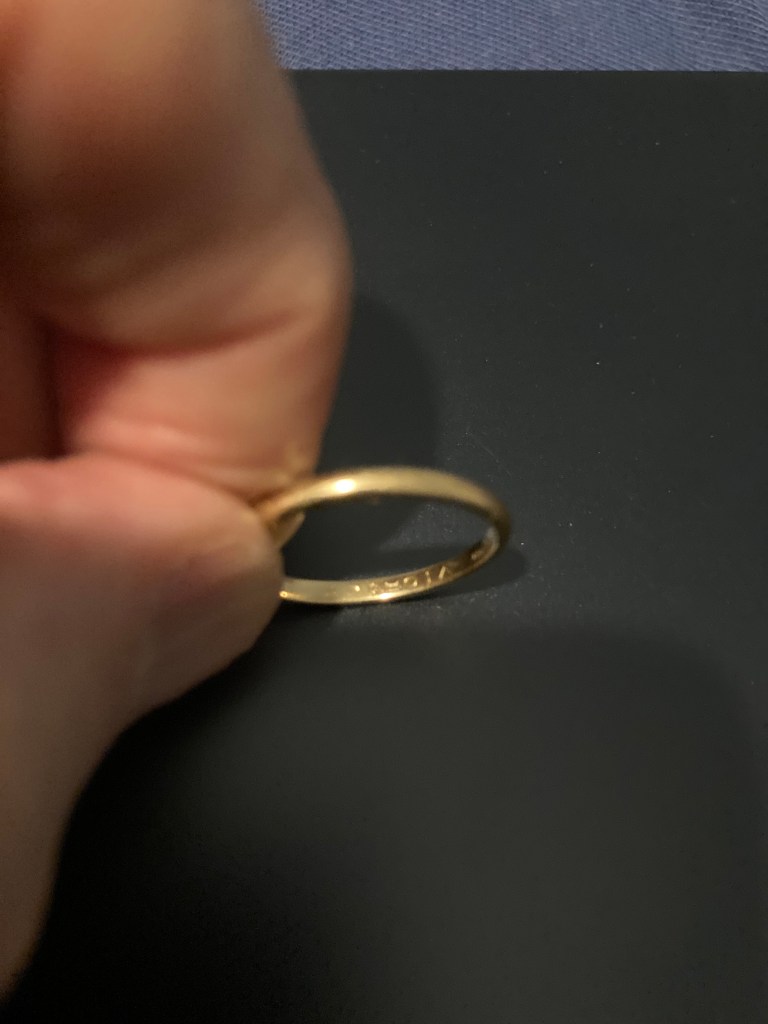
    Many of these inscriptions are quite small. How small? Some could fit inside of a wedding band or even on the side of a penny.

    Some-tablet-letters-would-fit inside-a-wedding-band

    A wedding band could house tablet letters.

    Photo by Ku00e1ssia Melo on Pexels.com

    Photos!

    Ready now for some photos?

    “Cursed! “, our next post declares.

    Still ready?

    Next post: “ARWR,” Cursed!

    1. Stripling, S., Galil, G., Kumpova, I. et al. “You are Cursed by the God YHW:” an early Hebrew inscription from Mt. Ebal. Herit Sci 11, 105 (2023), paragraph 71. https://doi.org/10.1186/s40494-023-00920-9 ↩︎
    2. Id. at paragraph 72. ↩︎
    One-Time
    Monthly
    Yearly

    Make a one-time donation

    Make a monthly donation

    Make a yearly donation

    Choose an amount

    $5.00
    $15.00
    $100.00
    $5.00
    $15.00
    $100.00
    $5.00
    $15.00
    $100.00

    Or enter a custom amount

    $

    Your contribution is appreciated.

    Your contribution is appreciated.

    Your contribution is appreciated.

    DonateDonate monthlyDonate yearly

    Dinner-bouquet-option

    Lagniappe link / Mt. Ebal amulet
    Dinner-bouquet-option

    Lagniappe link / Joshua’s Shechem Stone
  • “YHW,” Yahweh

    “YHW,” Yahweh

    Photo Study III

    [Ebal’s Plea, nineteen of thirty-two]

    “ARWR”, that is “cursed,” I reviewed in my last post.

    I turn now to the divine name–“Yahweh”.

    Galil alleges that this appears twice inside the tablet.

    For simplicity only one of those I discuss here. That one I call “Upper Yahweh” simply because lies near the tablet’s top.

    Galil’s annotated Table 7 drawing labels it as #’s: 11, 12, and 13.

    The phonetic spelling is thus “Yod,” “He,” “Waw”.

    M- beach-towel's-Egyptian-hieroglyphic-immulates-proto-alphabetic-"Yod".

    My beach towel’s Egyptian hieroglyphic immulates proto-alphabetic “Yod”.
    Photo by Pixabay on Pexels.com

    Here is what they look like:

    The photos of “He”, Figure 7’s #12 at Table 3, (1a & b), and “Waw”, Figure 7’s #13 at Table 4 (1a & b), are distinct.

    “Yod”, Figure 7’s #11 at Table 5 (1a & b), however, is faint.

    Other views include:

    • Stripling’s Figure 4 showing:
      • the hand lies under the hips of “Heh”;
      • the thumb is under and intertwined with “Taw”;
      • the wrist and forearm run below the left leg of “Heh”; and
      • the upper arm extends at a right angle from “Heh’s” left ankle”.
    • Haughwout’s Figure 5 gives a mirrored view.

    Importantly, study, too,Table 10, photo # 3. The Stripling team argues that this depicts the bottom bulge of this “Yod”.

    Do you agree?

    If you do, this has major consequences–ones to which even Haughwout, the sceptic, agrees. It is this: mirror bulges on the bottom reflect something actually existing on the inner surface of the tablet. The object does not result from a photographic lighting or shading issue. It also nullifies the object resulting from a computer glitch.

    That finishes my review of the two words which Stripling declares compel his conclusions–“ARWR” and “YHW.”

    What did I tell you? That was not hard.

    However, again, read these sections a couple of times. Let the photos really sink in.

    With the following post I complete an initial dive into the tablet’s photos. There I look at a word and two other letters relevant to Haughwout’s arguments.

    Later, however, l tread deeper into the words and symbols mentioned above as I evaluate Haughwout’s analysis.

    Next post: “You Will Die!”

    One-Time
    Monthly
    Yearly

    Make a one-time donation

    Make a monthly donation

    Make a yearly donation

    Choose an amount

    $5.00
    $15.00
    $100.00
    $5.00
    $15.00
    $100.00
    $5.00
    $15.00
    $100.00

    Or enter a custom amount

    $

    Your contribution is appreciated.

    Your contribution is appreciated.

    Your contribution is appreciated.

    DonateDonate monthlyDonate yearly
    Dinner-bouquet-option /

    Lagniappe link / Refuting the critics
    Dinner-bouquet-option

    Lagniappe link / The Christian Atheist, Ebal contiued
  • A Refutation?

    A Refutation?

    Sizing the Opposition I

    [Ebal’s Plea, twenty-one of thirty-two]

    I now aim at capturing relevant arguments of the numerous critics of Stripling’s article.

    Yet, I discuss the work of only one, Mark S. Haughwout, a respected Hebrew scholar and instructor at the Indian Bible College, Flagstaff, Arizona.

    There are a couple of reasons for this.

    For one he does an admirable job of not only giving his thoughts but of summarizing the main views of other prominent voices.

    The second reason is that his publisher, Heritage Science, the same publisher as Stripling’s article, is free and easily accessible online.

    This of course makes a lay person’s review of his work feasible.

    Before considering the body of Haughwout’s article, let us spend some time with his title–“Mt. Ebal curse tablet? A refutation of the claims regarding the so called Mt. Ebal curse tablet.”

    A key word is “refutation”.

    Merriam-Webster defines this as “the act or process of refuting”.

    For the root word, “refute”, it gives these alternative definitions:

    1. : to prove wrong by argument or evidence : show to be false or erroneous
    2. : to deny the truth or accuracy of

    The meaning of each differ markedly.

    Which did Haughwout intend?

    Does Haughwout prove Stripling’s claims false or does he simply deny their truth?

    To underscore the vast difference in these ideas consider Matthew 9:5 NIV.

    Jesus healing the paraplegic

    Which is easier: to say, ‘Your sins are forgiven,’ or to say, ‘Get up and walk’?

    Matthew 9:5 NIV

    Of course, the answer is the former.

    Similarly, simply denying the truth of Stripling’s claims is one thing. Actually proving that they are wrong is another.

    So which is it? How can we know?

    By happenstance, Haughwout answers himself. His conclusion states: “The only substantiated claim that Stripling et al. can make at this time is that they have found a very old, small piece of folded lead on Mt. Ebal using wet sifting.”

    By using the word “refutation” in his title Haughwout thus declares that he has disproved Stripling’s claims, not that he merely disputes them.

    Photo by Arturo Au00f1ez. on Pexels.com

    We thus perceive that Haughwout’s and Stripllng’s ideas are decidedly in opposition.

    One alleges that the Ebal tablet depicts something profoundly important.

    The other claims to have refuted, i. e. disproved, those contentions. Essentially he declares, “Currently this tablet presents nothing of consequence.”

    One says, “Take notice world! This artifact likely challenges scholarly history.”

    The other declares that he has shown otherwise. Thus scholarly communities and serious journalistic ones should largely ignore the claims about this artifact.

    Esteemed professionals back each. A respected scientific journal published both. Peer reviewers vetted both.

    How do we resolve this tension?

    Whose arguments should carry the day?

    For assistance I turn to an American court procedure.

    This our next post explores.

    Next post: “Between WNN, Sun, and Earth”

    One-Time
    Monthly
    Yearly

    Make a one-time donation

    Make a monthly donation

    Make a yearly donation

    Choose an amount

    $5.00
    $15.00
    $100.00
    $5.00
    $15.00
    $100.00
    $5.00
    $15.00
    $100.00

    Or enter a custom amount

    $

    Your contribution is appreciated.

    Your contribution is appreciated.

    Your contribution is appreciated.

    DonateDonate monthlyDonate yearly
    Dinner-bouquet-option
    Dinner bouquet option / Digging for Truth, Two
    Dinner-bouquet-option
    Dinner bouquet option /
  • Between WWN, Sun, and Earth

    Between WWN, Sun, and Earth

    Sizing the Opposition II

    [Ebal’s Plea, twenty-two of thirty-two]

    The last post sets up our story’s tension. Stripling claims that his artifact challenges scholarly world history. Haughwout counters that he has disproved such.

    How do we resolve this? I suggested turning to an instrument of the American courts.

    That instrument is summary judgment. Via it courts adjudicate civil cases absent a trial.

    The procedure aids in balancing justice and fair play and the need for judicial economy.

    Here I use it for comparison and contrast.

    How does summary judgment work? Imagine yourself as the plaintiff seeking redress for a perceived wrong. At some point in pre-trial proceedings the opposing party files a motion for summary judgment. Both parties brief their respective positions. Afterward, the court issues its decision.

    If the court agrees with the opposition and grants summary judgment in full against you, you lose, end stop! Barring an appeal–a costly, time consuming, and dicy affair, your case is caput. In effect, it has been deemed unworthy of further consideration. You get no opportunity for a trial.

    Comparable Consequences

    With this I draw a parallel with Haughwout’s “refutation”. By analogy he claims an iron clad case for in effect scholarly and journalistic summary judgment.

    Henceforth, Stripling’s positions, Haughwout suggests, qualify in effect only for grocery aisle tabloid offerings of the latest Big Foot and Freddie Mercury sightings.


    Photo by Jack Sparrow on Pexels.com

    He figuratively contends that he has rendered Stripling’s arguments unfit for further serious scholarly or public consideration.


    BIGFOOT VS. ALIENS!

    HAIRY HERO DEFENDS HOME TURF AGAINST SPACE INVADERS!

    9 May 2006-Weekly World News

    Photo by Gabe on Pexels.com

    DA VINCI WAS A TIME TRAVELER!

    5 August 2006-the SUN


    Photo by Henry Acevedo on Pexels.com

    With Haughwout a sizable contingent of authors and professional commentators seem to agree.

    This a quick online search confirms. Google “Mt. Ebal Curse Tablet”. There you soon encounter offerings such as these:

    • “New Studies Debunk Controversial Biblical ‘Curse Tablet’ from Mt. Ebal”;1
    • “New academic articles heap fresh doubt on Mount Ebal ‘curse tablet’ interpretation;”2
    • “Academic article on controversial 3,200 year-old ‘curse tablet fails to sway experts;”3
    • “Hook, Line, and Sinker: Mt. Ebal Curse Tablet Debunked?;”4
    • “Don’t Be Fooled by the Mount Ebal Curse Tablet.” 5
    • “The Mt. Ebal “inscription” is actually a Folding Lead Clasp.”6

    Delve deeper into these and you encounter statements from scholarly professionals like these:

    • “This article is basically a text-book case of the Rorschach Test, and the authors of this article have projected upon a piece of lead the things they want it to say.” So advises Prof. Christopher Rollston, an expert in Northwest Semitic languages and the chair of the Department of Classical and Near Eastern Languages and Civilizations at George Washington University7;
    • “The images made it clear that there are no discernible letters on this piece of crumpled lead,” said Rollston. “And again, the authors’ drawing of the letters bears no real similarity to what is present in the images;”8
    • “One big nothingburger”, says Dr. Robert Cargill, as cited previously, a Bible scholar and professor at the University of Iowa.9

    Articles and opinions pro and con are, of course, appropriate. The scholarly process thrives on such.

    The scholarly world, however, should also honor justice and fair play.

    The question is whether such really operates here.

    Not only has Haughwout figuratively filed a motion for summary judgment in the court of scholarly and public opinion against Stripling’s claims.

    Apparently too that court has in large part granted the motion. In other words, among much of the scholarly and journalistic community the Stripling claims are considered caput.

    Real consequences ensue from this figurative adjudication.

    This includes loss of possible funding. Maybe it quells a future academic / scientific endeavor by Stripling. For example, it could entail the loss of permit requests for further Mt. Ebal excavations.

    Questions arise:

    • Is this figurative adjudication just?
    • Should Haughwout’s claim meet some minimal standard?
    • Is not too much at stake to allow otherwise?

    In sum, how do we arrive at an appropriate fair answer to all of these?”

    Contrasting summary judgment and scholarly “refutation” suggests one.

    This I will discuss in our next post.

    Next post: “Rule 56”

    1. See: http://www.haaretz.com-Archaeology November 20, 2023. ↩︎
    2. See: http://www.timesofisrael.com -new -academic- December 7, 2023. ↩︎
    3. See: http://www.timesofisrael.com -academic -article, May 14, 2023. ↩︎
    4. See: http://www.biblicalarchaeology.org-daily, December 4, 2023. ↩︎
    5. See: Dr. Gad Barnea- Youtube,m.youtube.com -watch, June 2, 2023. ↩︎
    6. The Mt. Ebal “Inscription” is actually a Folding Lead Clasp …
      YouTube·Bible & Archaeology·Dec 2, 2023
      ↩︎
    7. Melanie Lidman, Academic article on controversial 3,200 -year old ‘curse tablet’ fails to sway experts, The Times of Israel, 14 May 2023, paragraph 18, https://www.timesofisrael.com/ academic-article-on-controversial-3200-year-old-curse-tablet-fails-to-sway-experts/, (7 October 2024). ↩︎
    8. Id., paragraph 37. ↩︎
    9. The Mt. Ebal “Inscription” is actually a Folding Lead Clasp …
      YouTube·Bible & Archaeology·Dec 2, 2023
      ↩︎
    One-Time
    Monthly
    Yearly

    Make a one-time donation

    Make a monthly donation

    Make a yearly donation

    Choose an amount

    $5.00
    $15.00
    $100.00
    $5.00
    $15.00
    $100.00
    $5.00
    $15.00
    $100.00

    Or enter a custom amount

    $

    Your contribution is appreciated.

    Your contribution is appreciated.

    Your contribution is appreciated.

    DonateDonate monthlyDonate yearly
    Dinner-bouquet-option
    Dinner bouquet option / Digging for Truth, Three
    Dinner-bouquet-option
    Dinner bouquet option /
  • A Hypothetical Rule

    A Hypothetical Rule

    Sizing the Opposition IV

    [Ebal’s Plea, twenty-four of thirty-two]

    In the last post I concluded that Haughwout’s scholarly refutation should satisfy a standard. Such I discerned might resemble Federal Code of Civil Procedure Article 56.

    Here I propose such a standard clothed in a hypothetical.

    Why the dressing?

    This supplies context.

    Rule 56 has hefty substance behind it, the United States’ highest court and an abundance of case law.

    My standard has none, other than an appeal to fair play and justice.

    The hypothetical supplies at least imaginary substance and authority which makes the standard easier to conceive.

    My proposed rule and its hypothetical context is as follows:


    Photo by Franco Solari on Pexels.com

    Hypothetical

    The Sovereign Isles of Scholarandria

    A Future Date of our Lord


    The world’s first mega trillionaire founded the Sovereign Isles of Scholarandria. At first, he bought the main isle. Later, he acquired a score of surrounding ones.

    The isles he populated with thinkers and tinkerers of the highest order. Monthly stipends with accommodations for families he provided.

    In time, he established a renowned university.

    The isles prospered growing in wealth and population.

    Eventually, they achieved nationhood.

    That brings us to the heart of this tale.

    Journals at Scholarandrian University have published two competing peer review articles. These discuss a tablet found on a Samaritan mountain. Quite a stir these instigate among the Isle’s archaeological, epigraphical, historical, and religious communities..

    The first article by Dr. S. Ling makes fantastic claims about this artifact.

    The second by M. S. Wout alleges to have refuted, i. e. disproved those claims.

    Several influential Scholarandian citizens believe Dr. Ling’s position worthy of regard, even action.

    A vocal delegation of citizenry, however, especially from the archaeological, religious, and epigraphic communities, vehemently denounce Ling’s claims as “silly”, “a nothingburger”, “a classic case of pareidolia.”

    Most of each camp, nevertheless, dismiss the ruckus as simply normal academia at work.

    That was until a recent event unfolded in the Isles’ news media.

    An extremely rich governor of one of Scholarandria’s southern most isles approached the Prime Minister with this proposition:

    “I will fund an archaeological expedition to the Samaritan mountain.

    There I aim to complete excavation of its controversial archaeological site. I ensure employment of the brightest minds in all fields necessary for a successful expedition. At their disposal will be the latest and finest scientific tools and processes.”

    He asked the PM only this:

    “Use your clout with the United Nations to achieve these two concessions:

    • an agreement between the Palestinian Authority and Israel to allow this excavation; and
    • a contingent of armed U. N. peace keepers to protect the archaeological work.”

    Photo by Xabi Oregi on Pexels.com

    The PM promised to look into the matter.

    Word of this conference, however, leaked.

    Subsequently, the nightly news aired word of the PM / Governor meeting.

    Resultantly, the previous ruckus intensified exponentially.

    One side emphasized that an excavation risks the tenuous peace of a war torn region.

    Acknowledging such, others nevertheless stressed the necessity of immediate excavation to protect historically precious artifacts–ones that potentially clarify how mankind’s distant past clarifies the present and future.

    Others declare that the evidence supporting Dr. Ling’s claims fails to meet the simplest tests of credibility.

    Alarmed about political ramifications, the PM seeks the advice of the Isle’s Commission on Scholarship (SCOS).

    Subsequently, that Commission issued this press release:

    “The Scholarandrian Commission on Scholarship (SCOS) finds the consternation brewing over the Samaritan Mountain issue refreshing. Why? This tumult reflects Scholarandrians’ active engagement in matters of intellectual concern.

    Another aspect of this tumult we also find gratifying. We note that our SCOS Code contains longstanding provisions that address a core issue of this controversy.

    The parties involved we thus encourage to avail the provisions found in SCOS Code Provision 56.”

    The press release continued by highlighting pertinent sections of that provision:

    Prov. 56

    Prologue: Many times in the past a university peer review journal has published an academic paper. Then later it or another publishes an article allegedly refuting, i. e.. debunking, the previous article. In other words, the succeeding article’s language manifests a conscious disproval rather than a denial of the original paper’s accuracy.

    For these situations the Isle’s Commission on Scholarship implements this provision:

    Be it known that the Commission finds that:

    When one peer review article of this Isle alleges to debunk another previously issued article, significant negative consequences can adhere for the author of the alleged debunked article. That being so we provide the following optional remedy:

    The original article’s author can file with the Commission a formal challenge to debate the merits of the disproval.

    The cost of this will be three Scholarandrian crypto coins (about $100,000.00)

    This challenge the original journal and the debunking one must publish in their next edition.

    From the date of that publication the author of the “debunking” article shall have sixty days to respond.

    To do so they must:

    • Deposit three Scholarandrian crypto coins with the Commission in order to “Call” the disproval challenge; or
    • Absent issuing the “Call”, allow the 60 days to elapse. This will trigger his/ her article’s publisher printing a retraction, one that must effectively convert the article from a “disproval” to “a challenge of accuracy.”

    Scholarandria Crypto

    Photo by: Kaboompics.com
    on Pexels.com

    Note that owing to the largesse of the Governor, Dr. Ling almost immediately posts his three coins.

    Mr. Wout timely follows suit.

    The news release continued:

    Prov. 56 (Continued)

    On challenge and acceptance being issued the Commission will appoint an independent arbiter to resolve the conflict.

    Guess who they appoint? That is right! It is me!

    As such, I have already overseen building the record, briefing, etc. as Prov. 56 requires.

    That material the journal articles here and here encapsulate.

    Additionally, Prov. 56 mandates:

    Prov. 56 (Continued)

    The arbiter’s written decision must:

    • Include a list of the matter’s material facts, that is, controverted facts that are indispensable to the disproving article’s claims; and
    • Grant the “disproval” if a reasonable persons could not genuinely dispute the material fact(s); and
    • Deny the “disproval”, if otherwise.

    SCOS Code Prov. 56 concludes:

    Prov. 56 (Continued)

    The party to whom the arbiter renders a favorable decision shall receive four Scholarandian crypto coins, the Commission one, and the arbiter one.

    I wish!

    Real World Application

    We return now from my fantasy island.

    Nevertheless, I endorse the Scholarandrian Code’s wisdom. It approximates the summary justice article of U. S. Code of Civil Procedure Article 56. It doing so it provides an objective measure for balancing academic economy with fair play.

    Thus, I intend to follow it in dealing with our real world Stripling v. Haughwout.

    My plan for doing so I outline in the next post.

    Next post: “The Plan

    One-Time
    Monthly
    Yearly

    Make a one-time donation

    Make a monthly donation

    Make a yearly donation

    Choose an amount

    $5.00
    $15.00
    $100.00
    $5.00
    $15.00
    $100.00
    $5.00
    $15.00
    $100.00

    Or enter a custom amount

    $

    Your contribution is appreciated.

    Your contribution is appreciated.

    Your contribution is appreciated.

    DonateDonate monthlyDonate yearly
    Dinner-bouquet-option

    Mt. Ebal Langiappe / Nehemia’s Wall, One
    Dinner-bouquet-option

    Curse Tablet Lagniappe., Absurd Claim / Cargill
  • The Plan

    The Plan

    Objective Analysis I

    [Ebal’s Plea, twenty-five of thirty-two]

    In the last post we returned from the hypothetical to the real world.

    Yet, I have decided to embrace SCOS Code Provision 56. It I will apply for resolving our Stripling v. Haughwout issues.

    But this is important! I am not suggesting that the scientific community adopt a similar Scholarandrian governmental rule. Without other safeguards such might be subject to abuse by an authoritarian regime. Of this legislative drafters must remain always cognizant. Particularly now they must consider any rule in the hands of Donald Trump and his obsequiously corrupt MAGA acolytes.

    What I am suggesting is that the general public use this rule as consumers of scientific and academic information. The scientific and journalistic communities may declare that debate on a topic with issues similar to here has reached its culmination. The general public can then apply this standard to better determine if that is warranted.

    I therefore use Provision 56 of the Scholarandrian Code in that spirit. Has the debate over the Curse Table reached a pinnacle? Does the end result rest with scholars such as Haughwout determining that there is nothing to see here?

    Applying our standard can help us decide.

    Accordingly, I first need to determine the material fact(s) of Haughwout’s claim’s. What are his contested, indispensable ones?

    Is-there-an-"Aleph"?

    Is there an “Aleph”?

    Photo by Jesu00fas Esteban San Josu00e9 on Pexels.com

    Such I determine to be as follows:

    Haughwout insists that at least one of the following statements are true:

    • The tablet does not contain proto-alphabetic script denoting the words “ARWR”–“cursed” and “YHW”–“Yahweh”, the Hebrew name for God; or
    • A Hebrew of before 1250 B. C. did not inscribed the tablet.
    Is-there-a-"He"?

    Is there a “He”?

    Photo by Kulbir on Pexels.com

    To decide in Haughwout’s favor I must find that a reasonable person could not genuinely dispute the above.

    I must deny the “disproval / refutation”, if I find otherwise.

    The next posts divide this material fact into four discussions.

    • Does the tablet contains proto-alphabetic letters?;
    • Does it display the word “ARWR”?;
    • Does it reveal “YHW” as the name of God?; and
    • Did a Hebrew of prior to 1250 B. C. inscribe the tablet?

    After those discussions, I give my preliminary judgment on whether Haughwout has achieved his “refutation”.

    My conclusion of this memorandum follows that.

    Let us get after it.

    Next post: “Letters?”

    One-Time
    Monthly
    Yearly

    Make a one-time donation

    Make a monthly donation

    Make a yearly donation

    Choose an amount

    $5.00
    $15.00
    $100.00
    $5.00
    $15.00
    $100.00
    $5.00
    $15.00
    $100.00

    Or enter a custom amount

    $

    Your contribution is appreciated.

    Your contribution is appreciated.

    Your contribution is appreciated.

    DonateDonate monthlyDonate yearly
    Dinner-bouquet-option


    Mt. Ebal lagniappe / Nehemia’s Wall, Stripling
    Dinner-bouquet-option


    Joshua’s Altar Lagniappe / Cargill Excerpt
  • Letters?

    Letters?

    Objective Analysis II

    [Ebal’s Plea, twenty-six of thirty-two]

    We test here the first part of Haughwout’s material fact. That is whether the tablet contains proto-alphabetic letters.

    To evaluate this I take these steps:

    First I outline Haughwout’s position. Find this below the magenta banner.

    Against it, I give push back. This you find below the yellow.

    Lastly, I announce my findings below the purple banner.

    No Letters

    When Haughwout began to study the photos of Stripling’s article, he had an initial favorable impression. The top right corner indeed seemed to show several proto-alphabetic characters. Namely these were Teh, Meh, He, Teh and Aleph–five in total, respectively #’s 18, 19, 12, 20, and 21 of Figure 7.

    For him the most impressive was Aleph #21. Best he felt it displayed the appropriate proto-alphabetic characteristics.

    His opinion, however, soon changed.

    On close review he noticed a number of crack lines commencing from the tablet’s edge to intersect with the character.

    Prominent were the two cracks that he deduced had over time created the “Ox’s” horns. (See here.)

    Resultantly, this Aleph’s favorable status crumbled. He deduced it only the chance product of crack lines. No longer was it an exquisite inscription. It now presented a coincidental aberration with grotesquely proportioned horns. This disqualified it as a man-made proto-alphabetic letter.1

    Disillusionment followed also for the other four likely script candidates. All he concluded as being mere happenstance cracks, scratches, and dents in the lead.

    Some of the primary reasons for this were these:

    • First, he realized how small these characters were, ranging form .01 to .05 mm. The minimalist crack, scratch, or dent could replicate them; and
    • Photos of bulges on the tablet’s bottom (Table 10) failed to impress Haughwout. These Stripling had presented as negative proofs of inside characters. They too, Haughwout concluded, likely resulted from cracks, scratches and dents.

    Haughwout thus finally surmised that his most favored of the tablet’s characters presented major existential problems. Doubly so this applied to the remainder.

    Pushback on Haughwout’s Improbable Letters

    I. Lovely Aleph

    Haughwout notes that initially “Aleph, ” Figure 7, # 21 presented for him as a gorgeous proto-alphabetic inscription.

    On this I agree.

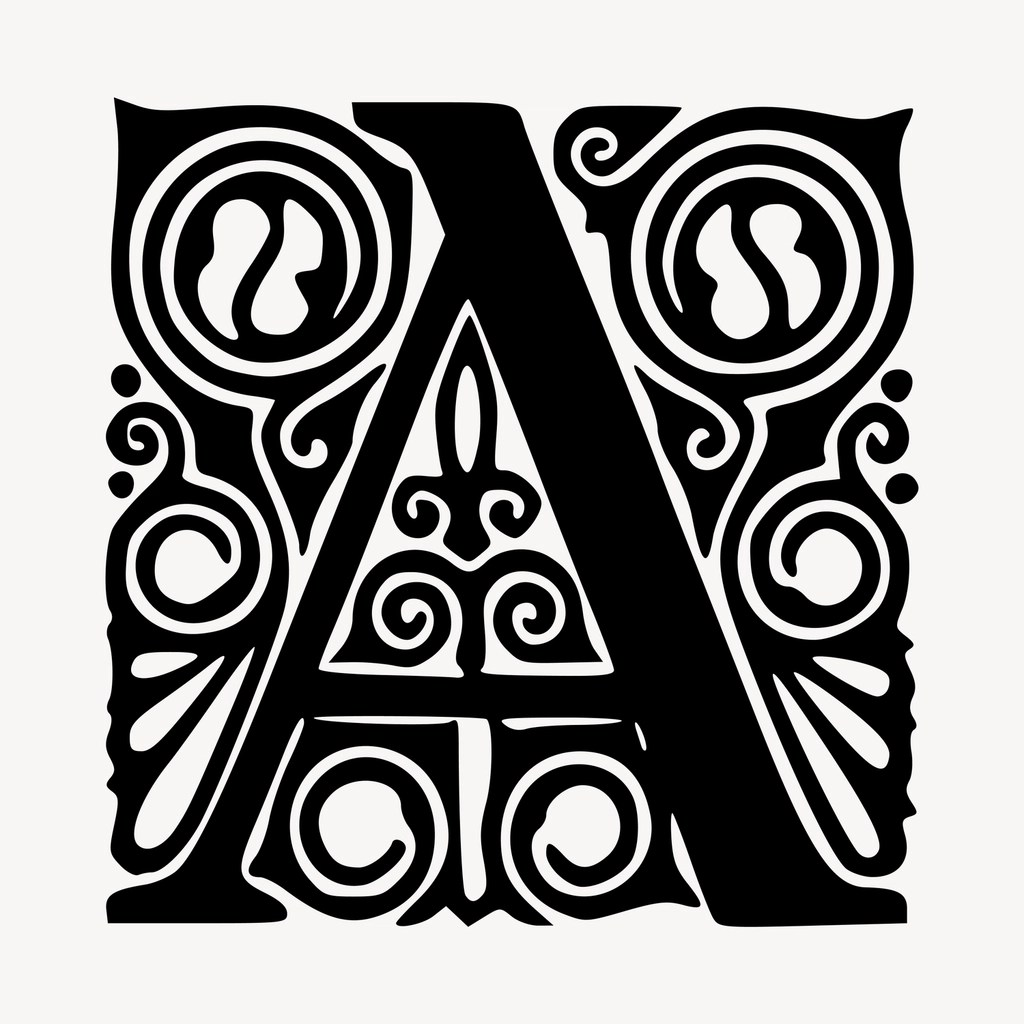
    Note its beauty! It satisfies the eye as an elegant calligraphy beginning a chapter of a medieval manuscript.

    See Table 2 (3 a and b). What do you think?

    Haughwout, however, finds what he considers a fatal flaw–crack lines intersecting the horns.

    These he concludes reveal the inscription to be nothing more than happenstance cracks, scratches, and dents. (See again Haughwout’s illustration.)

    But Dr. Pieter van der Veens of Johannes Gutenberg University Mainz, one of Stripling’s team epigraphers and an expert in ancient Near Eastern languages and inscriptions, gives a plausible explanation. He suggests that yes there are crack lines emanating from the tablet’s edge. But likely the force of the stylus so close to that edge caused this.

    In fact, along the tablet’s top this “Aleph” is among the closest.2

    Note too that Haughwout’s drawing appears on a photo that poorly focuses this Aleph.”

    Look instead at Table 2, (3 a).

    On this clearer image you can see that the cracks do not intersect the horn tips smoothly and directly. On both horns there is a transition from the points where the aesthetically pleasing horns end and the apparent cracks intersect.

    Both of the aesthetic horns are darker, wider and likely deeper.

    Plus, at the intersection points the direction of the cracks deviate on both, but on one more pronounced than the other.

    The above emphasizes the likelihood of an author having beautifully crafted his letter only to have time mar it with the imperfectly connecting cracks.

    II. Tiny Letters

    Haughwout also complains about many of the letters’ small sizes. Here the simple explanation is that the author had a small space with which to work. Plus, in that small space he had a serious message to convey–one not intended for human eyes but only for God.

    Fortunately, though, they are indeed visible to man.

    III. Bottom Bulges

    Further, Haughwout apparently scoffs at the idea of negatives on the tablet’s bottom , “Outer B”, replicating inner tablet letters.

    This evidence surely deserves less flippant appraisal.

    Consider these examples:

    • Compare “He” of Figure 7’s, #3 and Table 3, (4 a and b) with Table 10, photo #2. This image I have designated “Dancing ‘He’”. Why? Notice that his arms and legs, seemingly in motion, occupy different levels. Nevertheless, the positive of the inner tablet and the negative of the tablet’s bottom mirror.
    • See, the first “Resh” in the word “ARWR”, at Figure 7’s #26 and Table 8, (2a & b). Compare it with the bottom bulge shown at Table 10, #8. Notice how they coincide. The positive inner image slants right.The bulge mirrors to the left.
    • Compare also the “Waw” of Figure 7’s, #13 and Table 4, (1a and b) with Table 10, photo #4. Are these not both mace representations?
    • Similarly compare the “Mem” of Figure 7’s, #19 and Table 7’s, (1a & b) with Table 10, #7. Do they not represent waves of water associated with this character?
    • Possibly most important is the “Yod” of Figure 7’s, # 11 and Table 5, (1a & b) compared with that in Table 10, photo #3. Both are admittedly faint.
    • Yet even faint mirroring reflections have an important ramification, one that Haughwout recognizes. He notes,”The reality is a dent on one side of a 0.4 mm thick piece of lead will of course appear on the opposite side.” Further he continues that this proves that the marks “on the inside are indeed there and are not x-ray anomalies.” In other words even where the mirroring images are faint, they prove that what is faintly depicted is indeed there. It is not some fluke produced by x-ray or photographic lightings or shadows.3

    Several factors limit the possibility of these being the result of mere happenstance cracks, scratches, or dents.

    Note that of the three, a dent seems most likely. Usually such one associates with sufficient downward force to cause an opposing bulge.

    Nevertheless, Haughwout’s contention that a happenstance dent as opposed to a purposeful one caused by an inscriber’s stylus must account for the following:

    • First, the tablet was closed thus protecting the inner tablet from further damage.
    • Second, the tablet’s top,” Outer A,” does not have marks corresponding to these negatives. Only our inner tablet marks do.
    • Third, therefore, the force, possibly by a stylus, was likely applied before the tablet was closed.
    • Fourth, this closing likely occurred during the Late Bronze Age to Iron Age II– the era of proto-alphabetic writing.
    • Fifth, the act of closing was likely done purposefully by a human. Likely too that was done to conceal and protect a message hidden within.

    All of the above amount to justifications for a reasonable person genuinely disputing this portion of the material fact addressed here. That is that the tablet does not reveals proto-alphabetic script.

    This portion of Haughwout’s material fact thus fails to support his refutation claim.

    The evidence shows that there is a genuine dispute about Haughwout’s proposition here. In other words, a reasonable person can genuinely dispute the claim that there are no proto-alphabetic letters on the tablet.

    Despite conceding that Figure 7’s #’s 18, 19, 12, 20, and 21 represent proto-alphabetic forms, Haughwout nevertheless concludes that only coincidental cracks and dents formed them.

    Yet, a reasonable person could genuinely counter that:

    • “Lovely Aleph”, Figure 7, # 21, is likely a scribe’s work marred somewhat by incongruous intersecting cracks radiating from the nearby tablet edge.
    • The fact that the letters are small is of little consequence. My wedding band has my wife’s name etched inside it. They are comparably as tiny but no less visible, real and meaningful.
    • The bottom negatives legitimately argue of man-made proto-alphabetic script inside the tablet.

    Therefore, Haughwout’s improbable letter arguments do not support his “refutation” claim. Against this part of Stripling’s first material fact he has failed to satisfy our objective test. That is that a reasonable person could not genuinely dispute the absence of proto-alphabetic letters on the tablet.

    Next post: “ARWR?”

    1. Haughwoout, M. S. Mt. Ebal curse tablet? A refutation of the claims regarding the so called Mt. Ebal curse tablet, Herit Sci 12, 70 (2024). htts://doi.org/101186/s40494-023-01130-z, paragraph 16. ↩︎
    2. Id. paragraph 17. ↩︎
    3. Id. paragraph 56. ↩︎
    One-Time
    Monthly
    Yearly

    Make a one-time donation

    Make a monthly donation

    Make a yearly donation

    Choose an amount

    $5.00
    $15.00
    $100.00
    $5.00
    $15.00
    $100.00
    $5.00
    $15.00
    $100.00

    Or enter a custom amount

    $

    Your contribution is appreciated.

    Your contribution is appreciated.

    Your contribution is appreciated.

    DonateDonate monthlyDonate yearly

    Dinner-bouquet-option

    Joshua’s Altar lagniappe / Refuting the Critics
    Dinner-bouquet-option


    Curse Tablet lagniappe / From Biblical Mt. Ebal in Samaria