Tag: heritage-science

  • Peer Review

    Peer Review

    History IX

    [Ebal’s Plea, fifteen of thirty-two]

    Despite the brouhaha Stripling pressed on.

    The next step was to compile the data–archaeological, digital, photographic, and epigraphic into a paper and then submit that to a peer review journal.

    Which journal should they petition?

    They chose Heritage Science. Why? They wanted one esteemed especially by the scientific community. Interpretation of this archaeological find required complex computer and tomographic analysis in addition to archaeological and epigraphic expertise. A respected scientific journal they felt most appropriate.1

    Stripling’s team wrote their paper and submitted it to the journal. It in turn approached three specialist. These it perceived of appropriate backgrounds to review the paper. They assessed its credibility, identified where it needed strengthening, and determined questions that needed answering, etc.

    Eventually, Stripling received the reviewers’ initial verdicts.

    Two of these gave glowing approval. The other reflected considerable disdain and, in fact, vaguely suggested possible criminality.

    All three, however, praised the quality of the writing and scholarship. They all had numerous questions and requests for modifications or clarifications–in total seventy-two.

    Stripling and his team responded.

    Afterwards, the glowing remarks from the two previously favorable reviewers continued. They highly recommended that the journal publish the edited paper.

    After receiving the Stripling team’s responses, the negativity of the dissenting panel member softened markedly. Likely this resulted from legal clarifications regarding documents from relevant authorities–Palestinian and Israeli. He or she, in fact, in the end recommended the paper’s publication. All three reviewers assessed the paper as warranting further examination by the scholarly community.2

    (As an aside, Heritage Science has not released, as of this writing, the names of the peer reviewers they assigned.)

    The journal decided to publish the Stripling team’s article.

    That publication we soon investigate thoroughly.

    But first we need to put events into some perspective.

    Photo by Ketut Subiyanto on Pexels.com

    Next post: “Troubled Waters”

    1. Melainie Kidman, Academic article on controversial 3,200-year old ‘curse tablet’ fails to sway experts, The Times of Israel, 14 May 2023, paragraphs 3 and 5, https://www.timesofisrael.com/academic-article-on-controversial-3200-year-old-curse-tablet-fails-to-sway-experts/, (7 October 2024). ↩︎
    2. Id., paragraph 5. ↩︎
    One-Time
    Monthly
    Yearly

    Make a one-time donation

    Make a monthly donation

    Make a yearly donation

    Choose an amount

    $5.00
    $15.00
    $100.00
    $5.00
    $15.00
    $100.00
    $5.00
    $15.00
    $100.00

    Or enter a custom amount

    $

    Your contribution is appreciated.

    Your contribution is appreciated.

    Your contribution is appreciated.

    DonateDonate monthlyDonate yearly

    Dinner-bouquet-option

    Lagniappe Mt. Ebal link / Fake or Real?
    Dinner-bouquet-option

    Lagniappe Mt. Ebal link / Exploring the Cursed Mountain
  • “ARWR,” CURSED!

    “ARWR,” CURSED!

    Photo Study II

    [Ebal’s Plea eighteen of thirty-two]

    Our photo study begins.

    From tomographic scans revealing an inside face of the tablet, we first assess the presence of an intimidating word. That is “ARWR” or “cursed”, one of the two words fundamental to Stripling’s conclusions.

    In the Scientific Heritage article Gershon Galil identified this word six times on the inner tablet. Of these we will, for brevity, focus on only one.

    The article’s Figure 7 shows Galil’s drawings of the tablet’s inner symbols. (Henceforth, click on underscored items to see referenced material.)

    You see our word on the right annotated drawing. It is numbers 25 through 28.

    “ARWR’s” proto-alphabetic spelling is “Aleph”, Resh”, “Wah”, and “Resh”.

    Here is what they look like:


    “Aleph”

    Photo by Steward Masweneng on Pexels.com
    "Resh" with a tail resembles a kite

    “‘Resh” with a tail resembles a kite..

    by Nilo Velez is licensed under CC-CC0 1.0
    • “Aleph” looks like an ox’s skull;
    • “Resh” often resembles a rhombus. Sometimes, though, it has a tail making it resemble a kite.
    • “Waw” and “Resh” can be easily confused. But “Waw” replicates a mace, an ancient weapon consisting of a heavy object fastened to a handle used to bash an enemy’s skull, bones, and armor.

    Warrior armed with a mace, the symbol for “Waw”

    Photo by MikeGz on Pexels.com

    Tables 2 through 9 show tomographic scans of all of the tablet’s letters. Beside each appears the Stripling team’s drawing replicating it.

    To study our “ARWR” do as follows:

    Importantly note one thing about the photos and drawings of Tables 2-9. These mirror the drawings of Figure 7. In other words, one must be viewed in a mirror to correspond with the other’s alignment. Otherwise they appear backwards.

    Now see Table 10. It reveals several photos of the tablet’s “Outer B”, that is, the tablet’s bottom.

    Photo # 8 of Table 10 shows a bottom protrusion. It Stripling’s team identifies as a negative of our first “Resh”–Figure 7 #26 and Table 8 (2 a and b).

    Do you agree?

    Note that the photo of our “resh” slants right and the photo of the negative slants left. Is not this what one would expect of a negative?

    Guess what?

    This concludes my presentation regarding our first word, “ARWR”/”Cursed”.

    Surely you found it easy enough.

    Nevertheless, ponder this post closely.

    Read it several times while also viewing the linked photos and drawings. Let all of it sink in!

    In our next post, we turn to the supreme name, that of the Hebrew God.

    Next post: “YHW,” Yahweh

    One-Time
    Monthly
    Yearly

    Make a one-time donation

    Make a monthly donation

    Make a yearly donation

    Choose an amount

    $5.00
    $15.00
    $100.00
    $5.00
    $15.00
    $100.00
    $5.00
    $15.00
    $100.00

    Or enter a custom amount

    $

    Your contribution is appreciated.

    Your contribution is appreciated.

    Your contribution is appreciated.

    DonateDonate monthlyDonate yearly

    Dinner-bouquet-option

    Lagniappe link / Pattern of Evidence Ebal Curse audio
    Dinner-bouquet-option

    Lagniappe link/ Appian Media on Mt. Ebal
  • “YHW,” Yahweh

    “YHW,” Yahweh

    Photo Study III

    [Ebal’s Plea, nineteen of thirty-two]

    “ARWR”, that is “cursed,” I reviewed in my last post.

    I turn now to the divine name–“Yahweh”.

    Galil alleges that this appears twice inside the tablet.

    For simplicity only one of those I discuss here. That one I call “Upper Yahweh” simply because lies near the tablet’s top.

    Galil’s annotated Table 7 drawing labels it as #’s: 11, 12, and 13.

    The phonetic spelling is thus “Yod,” “He,” “Waw”.

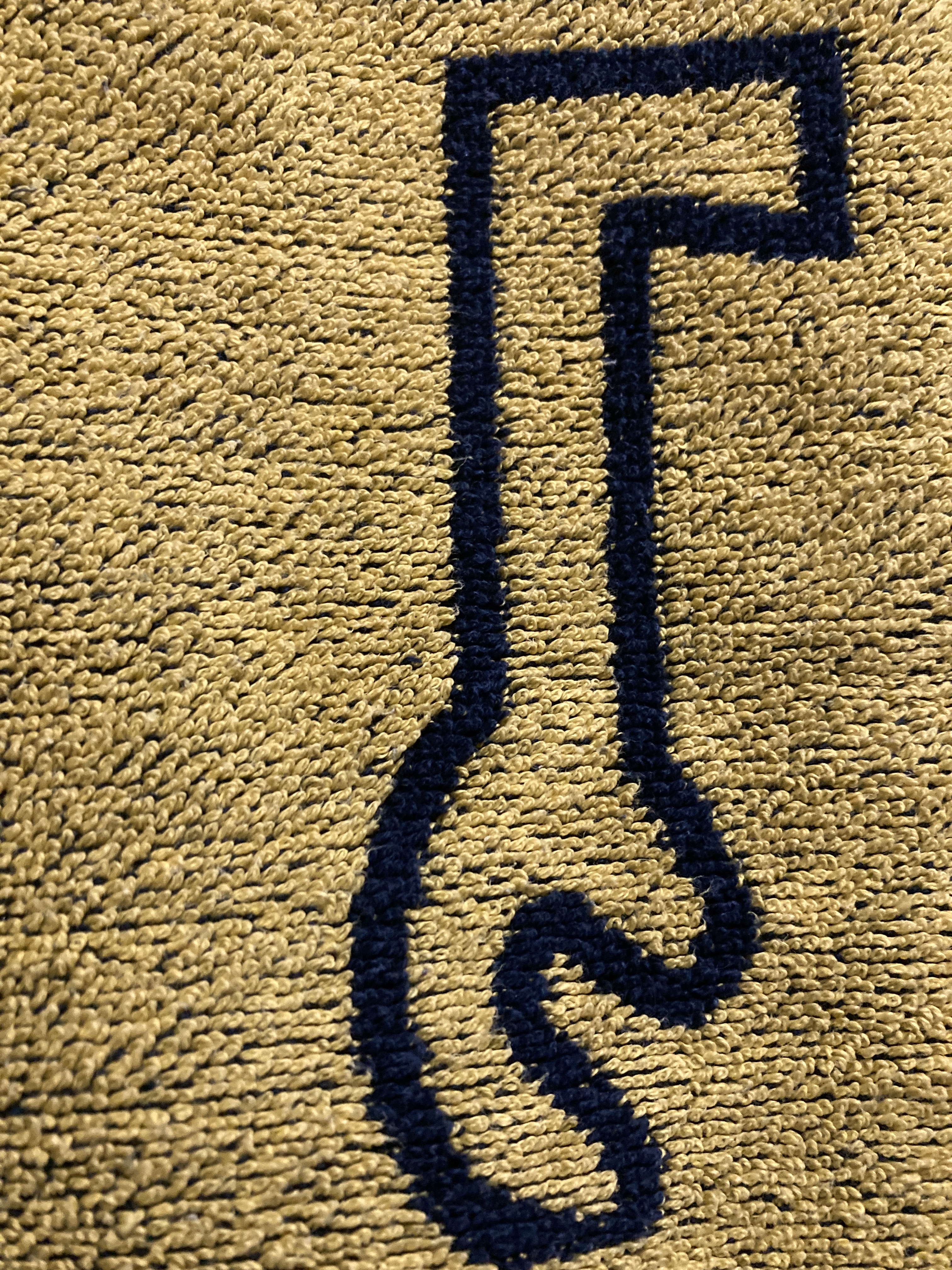
    M- beach-towel's-Egyptian-hieroglyphic-immulates-proto-alphabetic-"Yod".

    My beach towel’s Egyptian hieroglyphic immulates proto-alphabetic “Yod”.
    Photo by Pixabay on Pexels.com

    Here is what they look like:

    The photos of “He”, Figure 7’s #12 at Table 3, (1a & b), and “Waw”, Figure 7’s #13 at Table 4 (1a & b), are distinct.

    “Yod”, Figure 7’s #11 at Table 5 (1a & b), however, is faint.

    Other views include:

    • Stripling’s Figure 4 showing:
      • the hand lies under the hips of “Heh”;
      • the thumb is under and intertwined with “Taw”;
      • the wrist and forearm run below the left leg of “Heh”; and
      • the upper arm extends at a right angle from “Heh’s” left ankle”.
    • Haughwout’s Figure 5 gives a mirrored view.

    Importantly, study, too,Table 10, photo # 3. The Stripling team argues that this depicts the bottom bulge of this “Yod”.

    Do you agree?

    If you do, this has major consequences–ones to which even Haughwout, the sceptic, agrees. It is this: mirror bulges on the bottom reflect something actually existing on the inner surface of the tablet. The object does not result from a photographic lighting or shading issue. It also nullifies the object resulting from a computer glitch.

    That finishes my review of the two words which Stripling declares compel his conclusions–“ARWR” and “YHW.”

    What did I tell you? That was not hard.

    However, again, read these sections a couple of times. Let the photos really sink in.

    With the following post I complete an initial dive into the tablet’s photos. There I look at a word and two other letters relevant to Haughwout’s arguments.

    Later, however, l tread deeper into the words and symbols mentioned above as I evaluate Haughwout’s analysis.

    Next post: “You Will Die!”

    One-Time
    Monthly
    Yearly

    Make a one-time donation

    Make a monthly donation

    Make a yearly donation

    Choose an amount

    $5.00
    $15.00
    $100.00
    $5.00
    $15.00
    $100.00
    $5.00
    $15.00
    $100.00

    Or enter a custom amount

    $

    Your contribution is appreciated.

    Your contribution is appreciated.

    Your contribution is appreciated.

    DonateDonate monthlyDonate yearly

    Dinner-bouquet-option /

    Lagniappe link / Refuting the critics
    Dinner-bouquet-option

    Lagniappe link / The Christian Atheist, Ebal contiued
  • A Refutation?

    A Refutation?

    Sizing the Opposition I

    [Ebal’s Plea, twenty-one of thirty-two]

    I now aim at capturing relevant arguments of the numerous critics of Stripling’s article.

    Yet, I discuss the work of only one, Mark S. Haughwout, a respected Hebrew scholar and instructor at the Indian Bible College, Flagstaff, Arizona.

    There are a couple of reasons for this.

    For one he does an admirable job of not only giving his thoughts but of summarizing the main views of other prominent voices.

    The second reason is that his publisher, Heritage Science, the same publisher as Stripling’s article, is free and easily accessible online.

    This of course makes a lay person’s review of his work feasible.

    Before considering the body of Haughwout’s article, let us spend some time with his title–“Mt. Ebal curse tablet? A refutation of the claims regarding the so called Mt. Ebal curse tablet.”

    A key word is “refutation”.

    Merriam-Webster defines this as “the act or process of refuting”.

    For the root word, “refute”, it gives these alternative definitions:

    1. : to prove wrong by argument or evidence : show to be false or erroneous
    2. : to deny the truth or accuracy of

    The meaning of each differ markedly.

    Which did Haughwout intend?

    Does Haughwout prove Stripling’s claims false or does he simply deny their truth?

    To underscore the vast difference in these ideas consider Matthew 9:5 NIV.

    Jesus healing the paraplegic

    Which is easier: to say, ‘Your sins are forgiven,’ or to say, ‘Get up and walk’?

    Matthew 9:5 NIV

    Of course, the answer is the former.

    Similarly, simply denying the truth of Stripling’s claims is one thing. Actually proving that they are wrong is another.

    So which is it? How can we know?

    By happenstance, Haughwout answers himself. His conclusion states: “The only substantiated claim that Stripling et al. can make at this time is that they have found a very old, small piece of folded lead on Mt. Ebal using wet sifting.”

    By using the word “refutation” in his title Haughwout thus declares that he has disproved Stripling’s claims, not that he merely disputes them.

    Photo by Arturo Au00f1ez. on Pexels.com

    We thus perceive that Haughwout’s and Stripllng’s ideas are decidedly in opposition.

    One alleges that the Ebal tablet depicts something profoundly important.

    The other claims to have refuted, i. e. disproved, those contentions. Essentially he declares, “Currently this tablet presents nothing of consequence.”

    One says, “Take notice world! This artifact likely challenges scholarly history.”

    The other declares that he has shown otherwise. Thus scholarly communities and serious journalistic ones should largely ignore the claims about this artifact.

    Esteemed professionals back each. A respected scientific journal published both. Peer reviewers vetted both.

    How do we resolve this tension?

    Whose arguments should carry the day?

    For assistance I turn to an American court procedure.

    This our next post explores.

    Next post: “Between WNN, Sun, and Earth”

    One-Time
    Monthly
    Yearly

    Make a one-time donation

    Make a monthly donation

    Make a yearly donation

    Choose an amount

    $5.00
    $15.00
    $100.00
    $5.00
    $15.00
    $100.00
    $5.00
    $15.00
    $100.00

    Or enter a custom amount

    $

    Your contribution is appreciated.

    Your contribution is appreciated.

    Your contribution is appreciated.

    DonateDonate monthlyDonate yearly

    Dinner-bouquet-option
    Dinner bouquet option / Digging for Truth, Two
    Dinner-bouquet-option
    Dinner bouquet option /