Tag: mace

  • A Mysterious Tease

    A Mysterious Tease

    Introduction II

    [Ebal’s Plea, six of thirty]

    The controversies surrounding a recent archaeological find should matter to you. This brief explains why.

    When prominent experts allege that a series of photographs challenge long established precepts of world history while others claim, “There is nothing to see here!”, you might think, “Show me the photos! Decide myself, I will!”1

    Photos of a defixio, a curse tablet found in Israel in 2019, present such a quandary. Because the tablet cannot be opened without crumbling, an archaeologist employed tomographic scanning to peer inside. Reportedly, this revealed proto-alphabetic script, a claim that given the archaeological context potentially challenges long held scholarly understandings of world history.

    When, however, the archaeologist publicly released photos of the scans, some experts denied that they showed anything of significance.

    My goal here is two fold. I want to assist you in reaching a well informed understanding of the tablet. Further, I hope to encourage you to act on what you learn.

    But beware! Conversing intelligently about the photos requires more than a mere viewing. To most, other than a few specialized experts, they appear utterly mysterious.2

    Yet, lay persons with some assistance can make well considered observations regarding them.

    To do so they need three things. First, they need the history. Then they need an opportunity for efficient study. Lastly, and most importantly, they need enthusiasm. That is, enthusiasm for the history and for probing the evidence.

    Below, I relate the history.

    Furthermore, I guide an efficient online study of the photos.

    But what about the enthusiasm? 

    Possibly viewing a 30 second video might spark something. It shows, of all things, a technological process being applied to a piece of metal.

    Wow! How thought provoking and intriguing can that be?

    Well, take a look at the video below.

    Glance momentarily at it’s millimeter ticker in the top left corner. When it gets to .20 mm, focus particularly on the object’s top right. 

    Alternatively, watch the red bar on the right graph. When it approaches the major breach, focus on your screen’s top right.

    It helps also to move your cursor over the top right and click. This expands the image.

    Click here. 3

    Now just watch.

    Do you see anything?

    Maybe you perceive only happenstance cracks, dents and scratches on a very old piece of lead.

    But, what about a stick man, a mace, some crossed hockey sticks? Maybe you detect some squiggly lines, a bent arm with an open hand, and a couple of ox skulls?
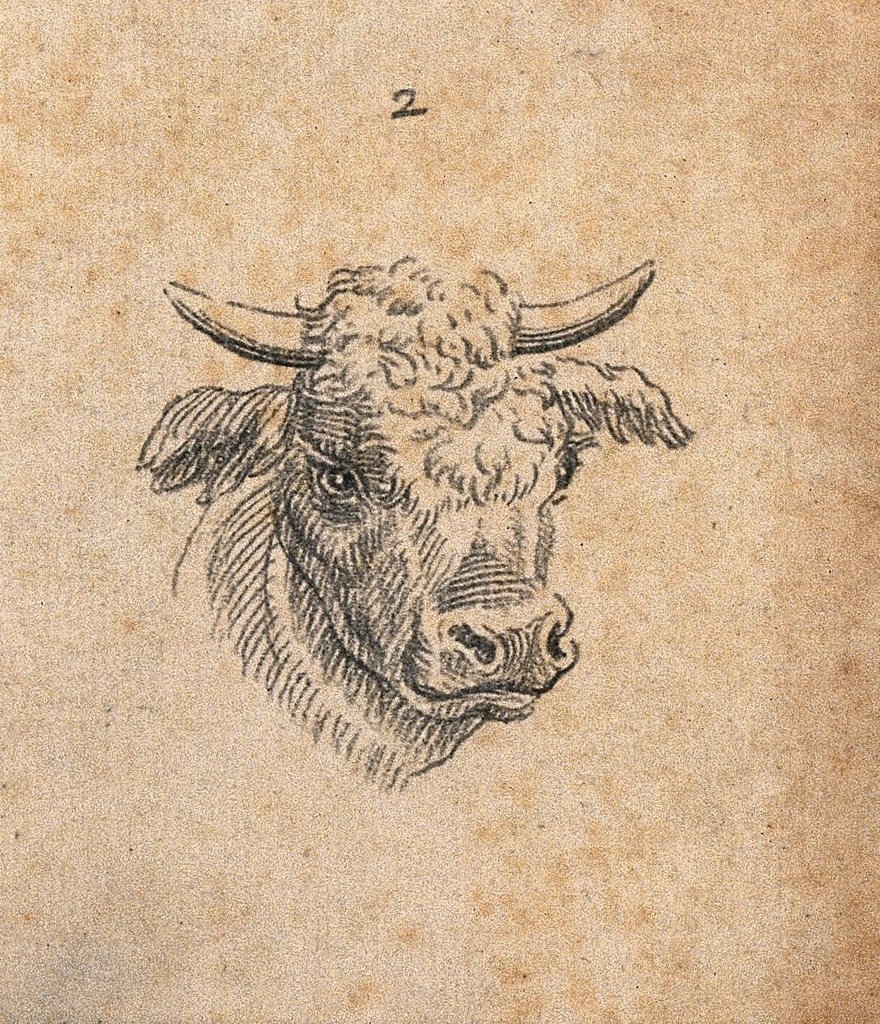
    Ox-head

    Ox head
    Crossed hockey sticks

    Crossed hockey sticks

    Photo by Tony Schnagl on Pexels.com
    A-bent-arm-with-open-hand

    A bent arm with open hand

    Photo by Daria Liudnaya on Pexels.com
    A-role-play-Viking-warrior-wielding-a-mace

    A role play Viking warrior wielding a mace


    Photo by Fernando Cortu00e9s on Pexels.com

    A canon of human history may hang upon which of these assessments is correct.

    Regardless of what you see, this viewing likely piques some wonder. Possibly questions arise like:

    • What is the story here?
    • How could that story impact history?
    • Why should I or others care?

    This memorandum seeks to prepare you for these and other issues.

    Hopefully at its end you can intelligently scrutinize whether the Mt. Ebal Curse Tablet harbors proto-alphabetic script or even ancient Hebrew words . Plus you can ponder whether it challenges scholarly world history.

    Then you can knowingly engage with me whether:

    • There is anything to see here; and
    • If so, so what?”

    Next Post: “The Paradigm”

    1. Melanie Lidman, Academic article on controversial 3,200-year old ‘curse tablet’ fails to sway experts, The Times of Israel,14 May 2023, paragraph 37,  https://www.timesofisrael.com/academic-article-on-controversial-3200-year-old-curse-tablet-fails-to-sway-experts/, (7 October 2024).
      and
      Sean McDowell, Oldest Hebrew Writing? Mt. Ebal Curse Tablet (Revisited) m.youtube.com>watch, (33:59), 11 May 2023. ↩︎
    2. Id. 4:51 and 30:54; and
      Melanie Lidman, Academic article on controversial 3,200-year old ‘curse tablet’ fails to sway experts, The Times of Israel, 14 May 2023, paragraph 15,  https://www.timesofisrael.com/academic-article-on-controversial-3200-year-old-curse-tablet-fails-to-sway-experts/, (7 October 2024).  ↩︎
    3. Scott Stripling, “You are Cursed by the God YHW,” an early Hebrew inscription from Mt. Ebal,  Heritage Science, 12 May 2023,  Supplementary Information, Additional file 1, https://heritagesciencejournal.springeropen.com/articles/10.1186/s40494-023-00920-9#Fig7, (7 October 2023). ↩︎
    One-Time
    Monthly
    Yearly

    Make a one-time donation

    Make a monthly donation

    Make a yearly donation

    Choose an amount

    $5.00
    $15.00
    $100.00
    $5.00
    $15.00
    $100.00
    $5.00
    $15.00
    $100.00

    Or enter a custom amount

    $

    Your contribution is appreciated.

    Your contribution is appreciated.

    Your contribution is appreciated.

    DonateDonate monthlyDonate yearly

    Dinner-bouquet-option
  • YHW?

    YHW?

    Objective Analysis IV

    [Ebal’s Plea, twenty-six of thirty]

    The third discussion of Haughwout’s material fact ensues here.The question is this: Does the tablet contain, “YHW”–the holy name?

    Haughwout declares, “No”.

    About this a reasonable person can not genuinely dispute. Otherwise, this fact portion does not support his “refutation”.

    This issue I examine in these steps:

    As before, I first outline Haughwout’s position. Find this below the magenta banner.

    Against that I give push back below the yellow.

    Lastly, I announce my findings beneath the purple banner.

    “YHW” Is Not a Word

    Twice on the inner tablet Galil finds the name for the Hebrew God.

    For simplicity, I concentrate only on the Upper Yahweh of Figure 7’s #’s 11, 12, and 13.

    With Upper Yahweh Haughwout perceives two primary problems. He disputes the letter count. He also disparages visibility.

    These problems, Haughwout concludes, disqualify this “YHW”as either a word or as proto-alphabetic letters.

    • Letter Count

    For “Yahweh”, three letters are inadequate. The earliest otherwise recognized Hebrew spelling comes from the ninth century. It uses four letters–“YHWH”.

    Such vacillation among scribes on the name of God raises red flags.

    "He"-raises-a-red-flag!

    “He” raises a red flag!

    Stripling counters that three letters conform with an Egyptian spelling of the Hebrew name. There one finds a contemporary Late Bronze Age Egyptian inscription. It uses what some scholars contend is a three letter form.

    Haughwout minimizes the Egyptian case. First, some scholars allege that the three Egyptian letters actually correspond to the four phonetic letters of “YHWA”. Further, he notes, translating from Egyptian to Hebrew is problematic.

    Haughwout thus surmises that only a four letter rendition of the name is appropriate.

    • Visibilty

    Nevertheless, two of the letters which Galil purports for “YHW” present other problems.

    The first letter “Yod”, Figure 7’s # 11, he maintains is simply not there.

    Additionally, the last letter “Waw”, Figure 7’s # 13, is “highly speculative”.

    • Haughwout’s Conclusion

    As previously discussed, one of the best ways to distinguish coincidental marks from actual letters is this: The later will coalesce to form a word but not the former.

    “YHW” has an insufficient number of proposed letters to form the name of God.

    Additionally, some of its proposed letters are indistinguishable.

    Consequently, the above problems disqualify “YHW” from being a word or even proto-alphabetic letters.

    “YHW” Pushback

    Haughwout raises two objections. First, he objects to Yahweh’s three letter spelling. Second, he observes that one of its proposed letters, the “Yod”, is invisible while another, the “Waw”, is speculative.

    Separately below I address these.

    Yahweh of Three Letters?

    There is a reasonable explanation for the three or four letter conundrum.

    In the proto-alphabetic era as previously discussed, the written script was largely consonantal. In other words, vowels were usually not designated.

    Thus a proto-alphabetic scribe would have written “YHW” even though a vowel sound, likely an “eh” or an “ah” followed the “Waw”. This was simply understood without any designation.

    Is-there-a-"He"?

    Is there a “He”?

    Photo by Kulbir on Pexels.com

    At a later time scribes added an “H” to the end of words to capture the previously understood vowel sound.1

    The “H” sound remained largely silent. Only the vowel, likely an “eh” or “ah” was voiced.2

    Thus, the later scribes did not altar the name of God. They simply modified the spelling by adding the letter “H” to act as a vowel at the end of the name. This thereby ensured the capture of the originally intended but previously only understood pronunciation.

    This explanation harmonizes the ancient three letters with the subsequent four.

    Absent “Yod”?

    Haughwout, who is not an epigrapher, alleges that an important letter does not exist. That is the initial “Yod” of our “YHW” set.

    Galil and van der Veen, both esteemed epigraphers, declare its presence.

    I agree with Galil and Pieter Girt van der Veen. The “Yod,” is indeed faint. Yet, in the composite photos of Figure 4 I nevertheless distinguish it under “Taw” and above the leg of “He.”

    See also Table 9, photo 2(a).

    Look, additionally, at Table 10, photo # 3. This hints of this letter’s negative bulge.

    Speculative “Waw”?

    While Haughwout concedes our “YHW’s” stickman “He” (See Table 3 [1 a & b]), the “Waw” he characterizes as “highly speculative.”

    Again, Galil and van Der Veen, the esteemed epigraphers, see it.

    Yet, honestly, could Picasso himself have drawn a more convincing mace? (See Table 4, 1 (a and b)!)


    Pablo Picasso

    by Beaton, Cecil

    Licensed under CC-BY-NC-ND 4.0

    A reasonable person could genuinely dispute Haughwout’s contention that the tablet does not display God’s name. Justifications include:

    • There is a reasonable explanation for why the proto-alphabetic era’s “YHW” equates with subsequent era’s “YHWH”. It is that later scribes added the “H” at the end of many words to ensure that previously understood vowel sounds were not lost. Those vowel sounds were endings of “ah” and “eh” with the “H” sound largely silent.
    • The “Yod” of our “YHW” is faint, but distinguishable. Further, the bottom bulge reinforces the presence of this letter.
    • A child would recognize this “Yahweh’s” “He”;
    • Picasso would embrace its “Waw”.

    The third portion of Haughwout’s material fact thus fails.

    Thus far we have determined this: That a reasonable person could genuinely dispute the absence of proto-alphabetic letters and the words “ARWR” and “YHW”. Therefore these portions of Haughwout’s material fact do not support his “refutation” claim.

    Our next post considers the remaining material fact portion. There I discuss whether the tablet’s inscriber was a Hebrew of before 1250 B. C.

    Let us get to it!

    Next post: “Pre-1250 B.C. Hebrew?”

    1. Hebrew Alphabet Made Easy, Hei, Lesson Three, Line 16, https://www.hebrewpod101.com/lesson/hebrew-alphabet-made-easy-3-hei; and
      Lobliner, Jacob, The Story of H, paragraph 36, 2008, http://faculty.ce.berkeley.edu/coby/essays/h.htm ↩︎
    2. Vowels in Hebrew, Lilmod Aleph Beth, https://lilmod-aleph-beth.com/vowels-in-hebrew/, The Mater Lectionis are consonants that function as vowels. paragraph five ↩︎
    One-Time
    Monthly
    Yearly

    Make a one-time donation

    Make a monthly donation

    Make a yearly donation

    Choose an amount

    $5.00
    $15.00
    $100.00
    $5.00
    $15.00
    $100.00
    $5.00
    $15.00
    $100.00

    Or enter a custom amount

    $

    Your contribution is appreciated.

    Your contribution is appreciated.

    Your contribution is appreciated.

    DonateDonate monthlyDonate yearly
    Dinner-bouquet-option
    Dinner-bouquet-option