“ARWR”, that is,”cursed,” I reviewed in my last post.
I turn now to the divine name–“Yahweh”.
I am Ernie Vallery, a retired Louisiana attorney living now in South Coast Massachusetts.
This is my nineteenth post urging that the proposed Joshua’s Altar and the Mt. Ebal Curse Tablet deserve a chance to prove what they might be. To start the journey from its beginning click here. Otherwise, proceed on.
Galil alleges that this sacred name appears twice inside the tablet.
For simplicity, only one of those I discuss here. That one I call “Upper Yahweh” simply because it lies near the tablet’s top.
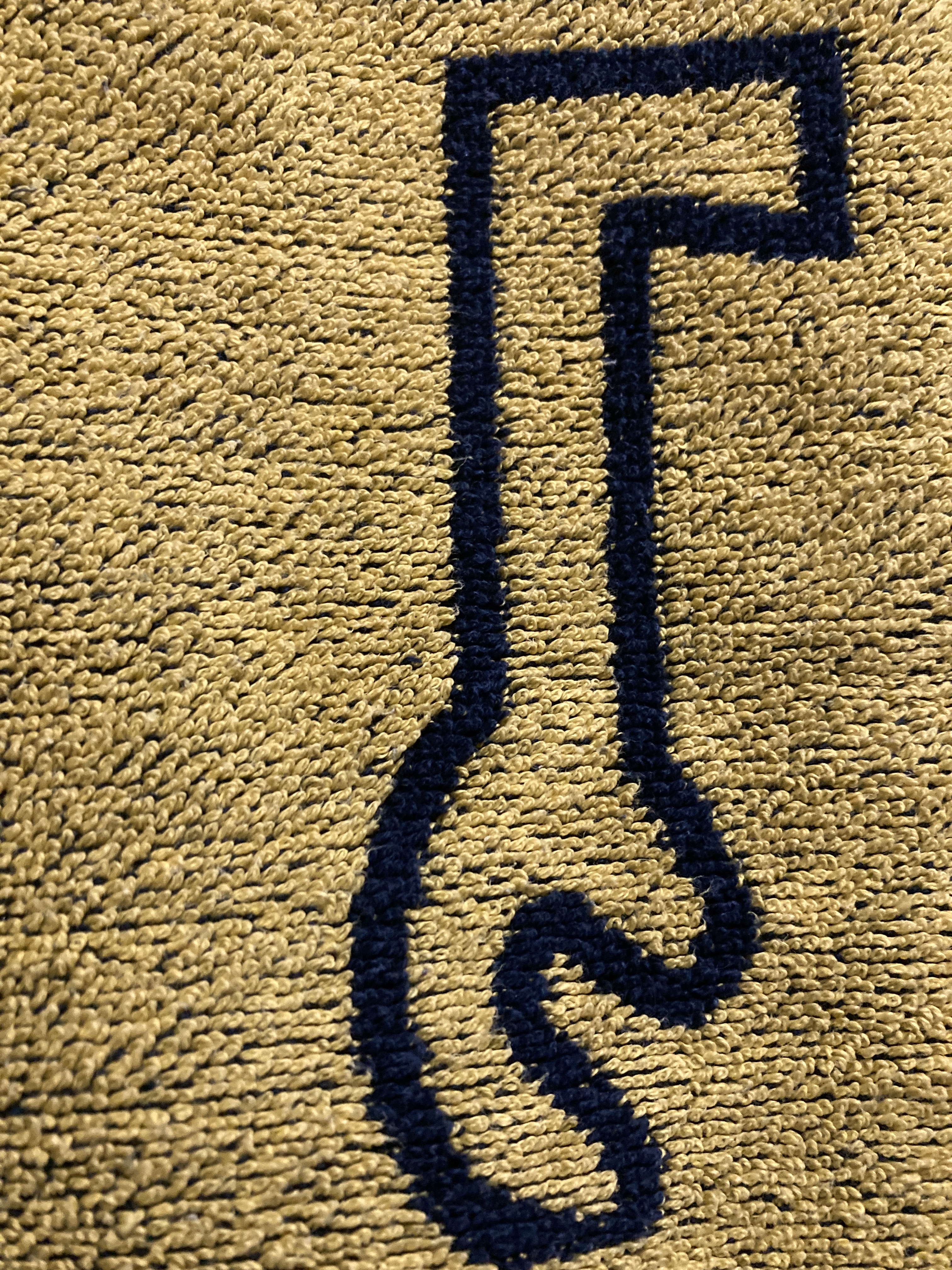
My beach towel’s Egyptian hieroglyphic immulates proto-alphabetic “Yod”.Photo by Pixabay on Pexels.com
Here is what they look like:
An angled arm symbolizes “Yod”. Picture it as running from above the elbow to the thumb and thence to the pointer finger. See Figure 7’s #11, at Table 5, (1 a and b).
Importantly, study, too,Table 10, photo # 3. The Stripling team argues that this depicts the bottom bulge of this “Yod”.
Do you agree?
If you do, this has major consequences–ones to which even Haughwout, the sceptic, agrees. It is this: mirror bulges on the bottom reflect something actually existing on the inner surface of the tablet. The object does not result from a photographic lighting or shading issue. It also nullifies the object resulting from a computer glitch.
That finishes my review of the two words which Stripling declares compel his conclusions–“ARWR” and “YHW.”
What did I tell you? That was not hard.
However, again, read these sections a couple of times. Let the photos really sink in.
With the following post, I complete an initial dive into the tablet’s photos. There I look at a word and two other letters relevant to Haughwout’s arguments.
Later, however, l tread deeper into the words and symbols mentioned above as I evaluate the analysis of Haughwout, our scholarly skeptic.
Thank you for reading!
If you appreciate this type of analysis, please “subscribe”, “like”, and “share”.
If you wish to support this work, you can do so in the donation section below. Such really encourages!
We look now at a new word and two solo letters relevant to a critic’s arguments.
Here, I introduce them somewhat superficially. Later, I delve deeper when I discuss that scholar’s views.
I am Ernie Vallery, a retired Louisiana attorney living now in South Coast Massachusetts.
This is my twentieth post arguing that the proposed Joshua’s Altar and the Mt. Ebal Curse Tablet deserve a chance to prove what they might be. To start the journey from its beginning click here. Otherwise, proceed ahead.
We can now declare a wrap on our initial alphabet and word canvas.
Consider that our script count comprises only seven unique letters–“Aleph”, “He”, “Mem”, “Resh”, “Taw”, “Waw”, and “Yod”.
At first, tackling ancient inscriptions of thirty-five hundred years ago possibly intimidated. In retrospect you likely see them as relatively straight forward.
As an aside, consider that in short order first graders learn all 26 letters of our script. Plus, they quickly master a corral of words from their readers. What a wonder!
Many influential scholars criticize Stripling’s claims about the Curse Table. A significant number consider this prominent archaeologist’s Heritage Science article largely debunked.
Here, I consolidate my discussion of those criticisms. This I do by focusing on the work of Mark S. Haughwout, a respected Hebrew scholar at the Indian Bible College, Flagstaff, Arizona.
My name is Ernie Vallery. I am a retired Louisiana attorney living now in South Coast Massachusetts.
This is my twenty-first post contending that the proposed Joshua’s Altar and the Mt. Ebal Curse Tablet deserve a chance to prove what they might be. To start the journey from its beginning click here. Otherwise, read on.
There are a couple of reasons for this.
For one, he does an admirable job of not only giving his thoughts but of summarizing the main views of other prominent voices.
The second reason is that his publisher, Heritage Science, the same publisher as Stripling’s article, is free and easily accessible online.
This, of course, makes a lay person’s review of his work feasible.
Before considering the body of Haughwout’s article, let us spend some time with his title–“Mt. Ebal curse tablet? A refutation of the claims regarding the so called Mt. Ebal curse tablet.”
A key word is “refutation”.
Merriam-Webster defines this as “the act or process of refuting”.
For the root word, “refute”, it gives these alternative definitions:
: to prove wrong by argument or evidence : show to be false or erroneous
: to deny the truth or accuracy of
The meaning of each differ markedly.
Which did Haughwout intend?
Does Haughwout prove Stripling’s claims false or does he simply deny their truth?
To underscore the vast difference in these ideas consider Matthew 9:5 NIV.
Which is easier: to say, ‘Your sins are forgiven,’ or to say, ‘Get up and walk’?
Matthew 9:5 NIV
Of course, the answer is the former.
Similarly, simply denying the truth of Stripling’s claims is one thing. Actually proving that they are wrong is another.
So which is it? How can we know?
By happenstance, Haughwout answers himself. His conclusion states: “The only substantiated claim that Stripling et al. can make at this time is that they have found a very old, small piece of folded lead on Mt. Ebal using wet sifting.”
By using the word “refutation” in his title, Haughwout thus declares that he has disproved Stripling’s claims, not that he merely disputes them.
We thus perceive that Haughwout’s and Stripllng’s ideas are decidedly in opposition.
One alleges that the Ebal tablet depicts something profoundly important.
The other claims to have refuted, i. e. disproved, those contentions. Essentially, he declares, “Currently, this tablet presents nothing of consequence.”
One says, “Take notice world! This artifact likely challenges scholarly history.”
The other declares that he has shown otherwise. Thus, scholarly communities and serious journalistic ones should largely ignore the claims about this artifact.
Esteemed professionals back each. A respected scientific journal published both. Peer reviewers vetted both.
How do we resolve this tension?
Whose arguments should carry the day?
This our next posts explore.
Thank you for reading!
If you appreciate this type of analysis, please “subscribe”, “like”, and “share”.
If you wish to support this work, you can do so in the donation section below. Such really encourages!
The last post sets up our story’s tension. Stripling alleges that his artifact challenges scholarly world history. Haughwout counters that he has disproved such.
Henceforth, Stripling’s positions, Haughwout suggests, qualify in effect only for grocery aisle tabloid offerings of the latest Big Foot and Freddie Mercury sightings.
I am Ernie Vallery, a retired Louisiana attorney living now in South Coast Massachusetts.
This is my twenty-second post asserting that the proposed Joshua’s Altar and the Mt. Ebal Curse Tablet deserve a chance to prove what they might be. To start the journey from its beginning click here. Otherwise, continue on.
With Haughwout a sizable contingent of authors and professional commentators seem to agree.
This a quick online search confirms. Google “Mt. Ebal Curse Tablet”. There you soon encounter offerings such as these:
“New Studies Debunk Controversial Biblical ‘Curse Tablet’ from Mt. Ebal”;1
“New academic articles heap fresh doubt on Mount Ebal ‘curse tablet’ interpretation;”2
“Academic article on controversial 3,200 year-old ‘curse tablet fails to sway experts;”3
“Hook, Line, and Sinker: Mt. Ebal Curse Tablet Debunked?;”4
“Don’t Be Fooled by the Mount Ebal Curse Tablet.” 5
“The Mt. Ebal “inscription” is actually a Folding Lead Clasp.”6
Delve deeper into these and you encounter statements from scholarly professionals like these:
“This article is basically a text-book case of the Rorschach Test, and the authors of this article have projected upon a piece of lead the things they want it to say.” So advises Prof. Christopher Rollston, an expert in Northwest Semitic languages and the chair of the Department of Classical and Near Eastern Languages and Civilizations at George Washington University7;
“The images made it clear that there are no discernible letters on this piece of crumpled lead,” said Rollston. “And again, the authors’ drawing of the letters bears no real similarity to what is present in the images;”8
“One big nothingburger”, says Dr. Robert Cargill, as cited previously, a Bible scholar and professor at the University of Iowa.9
Articles and opinions pro and con are, of course, appropriate. The scholarly process thrives on such.
The scholarly world, however, should also desire to make an appropriate and wise decision on this matter
The question is whether such really operates here given the following factors:
A fully excavated altar site could yield other evidence regarding Stripling’s claims; and
There are competing interest in the “refutation” determination.
Considering these, how do we arrive at an appropriately wise answer?”
The next post suggests a plan!
Thank you for reading!
If you appreciate this type of analysis, please “subscribe”, “like”, and “share”.
If you wish to support this work, you can do so in the donation section below. Such really encourages!
Melanie Lidman, Academic article on controversial 3,200 -year old ‘curse tablet’ fails to sway experts, The Times of Israel, 14 May 2023, paragraph 18, https://www.timesofisrael.com/ academic-article-on-controversial-3200-year-old-curse-tablet-fails-to-sway-experts/, (7 October 2024). ↩︎
We test here the first part of Haughwout’s material fact, that is whether the tablet contains proto-alphabetic letters.
To evaluate this I take these steps:
First I outline Haughwout’s position. Find this below the magenta banner.
Against it, I give push back. This you find below the yellow.
Lastly, I announce my findings below the purple banner.
I am Ernie Vallery, a retired Louisiana attorney living now in South Coast Massachusetts.
This is my twenty-fourth post insisting that the proposed Joshua’s Altar and the Mt. Ebal Curse Tablet deserve a chance to prove what they might be. To start the journey from its beginning click here. Otherwise, drive on.
No Letters
When Haughwout began to study the photos of Stripling’s article, he had an initial favorable impression. The top right corner indeed seemed to show several proto-alphabetic characters. Namely these were Teh, Meh, He, Teh and Aleph–five in total, respectively #’s 18, 19, 12, 20, and 21 of Figure 7.
For him the most impressive was Aleph #21. Best he felt it displayed the appropriate proto-alphabetic characteristics.
His opinion, however, soon changed.
On close review he noticed a number of crack lines commencing from the tablet’s edge to intersect with the character.
Is there an “Aleph”?
Photo by Jesu00fas Esteban San Josu00e9 on Pexels.com
Prominent were the two cracks that he deduced had over time created the “Ox’s” horns. (See here.)
Resultantly, this Aleph’s favorable status crumbled. He deduced it only the chance product of crack lines. No longer was it an exquisite inscription. It now presented a coincidental aberration with grotesquely proportioned horns. This disqualified it as a man-made proto-alphabetic letter.1
Disillusionment followed also for the other four likely script candidates. All he concluded as being mere happenstance cracks, scratches, and dents in the lead.
Some of the primary reasons for this were these:
First, he realized how small these characters were, ranging form .01 to .05 mm. The minimalist crack, scratch, or dent could replicate them; and
Photos of bulges on the tablet’s bottom (Table 10) failed to impress Haughwout. These Stripling had presented as negative proofs of inside characters. They too, Haughwout concluded, likely resulted from cracks, scratches and dents.
Haughwout thus finally surmised that his most favored of the tablet’s characters presented major existential problems. Doubly so this applied to the remainder.
Pushback on Haughwout’s Improbable Letters
I. Lovely Aleph
Haughwout notes that initially “Aleph, ” Figure 7, # 21 presented for him as a gorgeous proto-alphabetic inscription.
On this I agree.
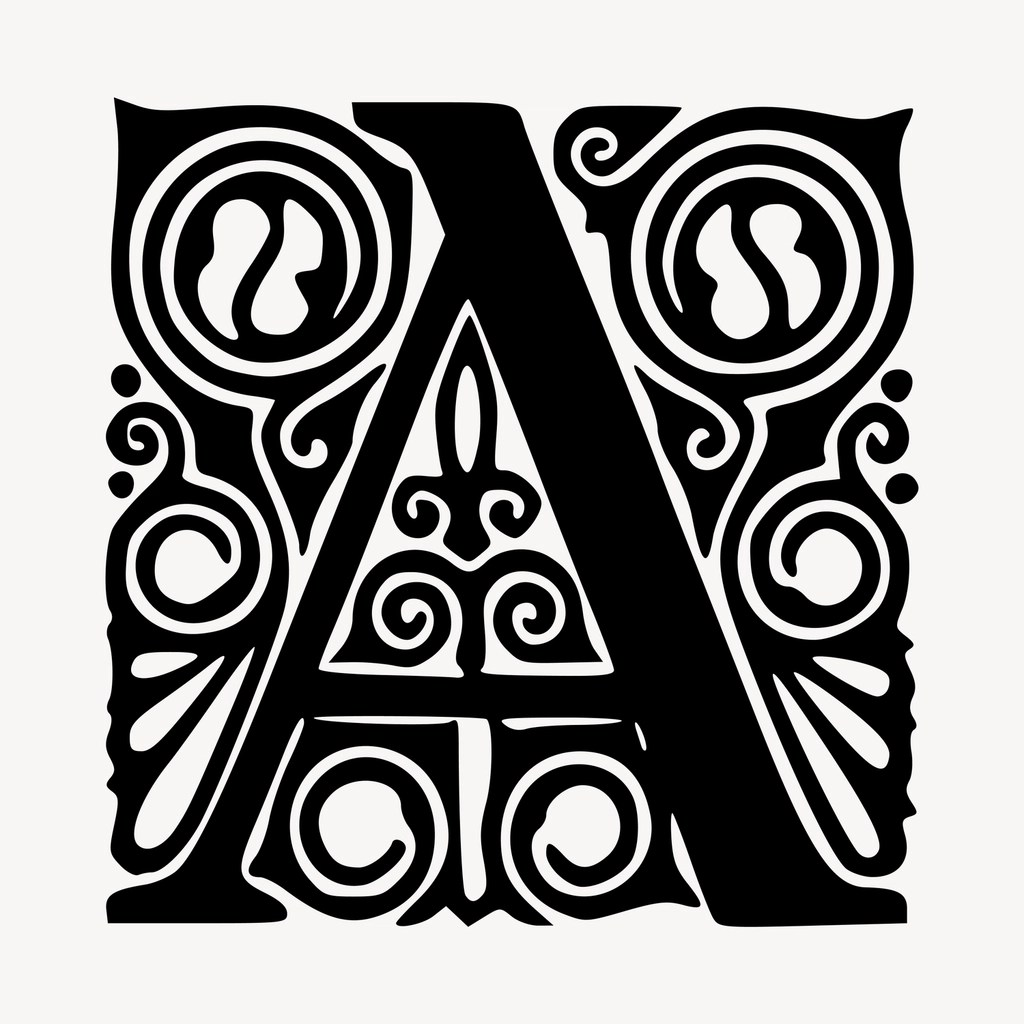
Note its beauty! It satisfies the eye as an elegant calligraphy beginning a chapter of a medieval manuscript.
Haughwout, however, finds what he considers a fatal flaw–crack lines intersecting the horns.
These he concludes reveal the inscription to be nothing more than happenstance cracks, scratches, and dents. (See again Haughwout’s illustration.)
But Dr. Pieter van der Veens of Johannes Gutenberg University Mainz, one of Stripling’s team epigraphers and an expert in ancient Near Eastern languages and inscriptions, gives a plausible explanation. He suggests that yes there are crack lines emanating from the tablet’s edge. But likely the force of the stylus so close to that edge caused this.
In fact, along the tablet’s top this “Aleph” is among the closest.2
Note too that Haughwout’s drawing appears on a photo that poorly focuses this Aleph.”
On this clearer image you can see that the cracks do not intersect the horn tips smoothly and directly. On both horns there is a transition from the points where the aesthetically pleasing horns end and the apparent cracks intersect.
Both of the aesthetic horns are darker, wider and likely deeper.
Plus, at the intersection points the direction of the cracks deviate on both, but on one more pronounced than the other.
The above emphasizes the likelihood of an author having beautifully crafted his letter only to have time mar it with the imperfectly connecting cracks.
II. Tiny Letters
Haughwout also complains about many of the letters’ small sizes. Here the simple explanation is that the author had a small space with which to work. Plus, in that small space he had a serious message to convey–one not intended for human eyes but only for God.
Fortunately, though, they are indeed visible to man.
III. Bottom Bulges
Further, Haughwout apparently scoffs at the idea of negatives on the tablet’s bottom , “Outer B”, replicating inner tablet letters.
This evidence surely deserves less flippant appraisal.
Consider these examples:
Compare “He” of Figure 7’s, #3 and Table 3, (4 a and b) with Table 10, photo #2. This image I have designated “Dancing ‘He’”. Why? Notice that his arms and legs, seemingly in motion, occupy different levels. Nevertheless, the positive of the inner tablet and the negative of the tablet’s bottom mirror.
See, the first “Resh” in the word “ARWR”, at Figure 7’s #26 and Table 8, (2a & b). Compare it with the bottom bulge shown at Table 10, #8. Notice how they coincide. The positive inner image slants right.The bulge mirrors to the left.
Yet even faint mirroring reflections have an important ramification, one that Haughwout recognizes. He notes,”The reality is a dent on one side of a 0.4 mm thick piece of lead will of course appear on the opposite side.” Further he continues that this proves that the marks “on the inside are indeed there and are not x-ray anomalies.” In other words even where the mirroring images are faint, they prove that what is faintly depicted is indeed there. It is not some fluke produced by x-ray or photographic lightings or shadows.3
Several factors limit the possibility of these being the result of mere happenstance cracks, scratches, or dents.
Note that of the three, a dent seems most likely. Usually such one associates with sufficient downward force to cause an opposing bulge.
Nevertheless, Haughwout’s contention that a happenstance dent as opposed to a purposeful one caused by an inscriber’s stylus must account for the following:
First, the tablet was closed thus protecting the inner tablet from further damage.
Second, the tablet’s top,” Outer A,” does not have marks corresponding to these negatives. Only our inner tablet marks do.
Third, therefore, the force, possibly by a stylus, was likely applied before the tablet was closed.
Fourth, this closing likely occurred during the Late Bronze Age to Iron Age II– the era of proto-alphabetic writing.
Fifth, the act of closing was likely done purposefully by a human. Likely too that was done to conceal and protect a message hidden within.
All of the above amount to justifications for a reasonable person genuinely disputing this portion of the material fact addressed here, namely, that the tablet does not reveals proto-alphabetic script.
This portion of Haughwout’s material fact thus fails to support his refutation claim.
Improbable Letter Finding
The evidence shows that there is a genuine dispute about Haughwout’s proposition here. In other words, a reasonable person can genuinely dispute the claim that there are no proto-alphabetic letters on the tablet.
Despite conceding that Figure 7’s #’s 18, 19, 12, 20, and 21 represent proto-alphabetic forms, Haughwout nevertheless concludes that only coincidental cracks and dents formed them.
Yet, a reasonable person could genuinely counter that:
“Lovely Aleph”, Figure 7, # 21, is likely a scribe’s work marred somewhat by incongruous intersecting cracks radiating from the nearby tablet edge.
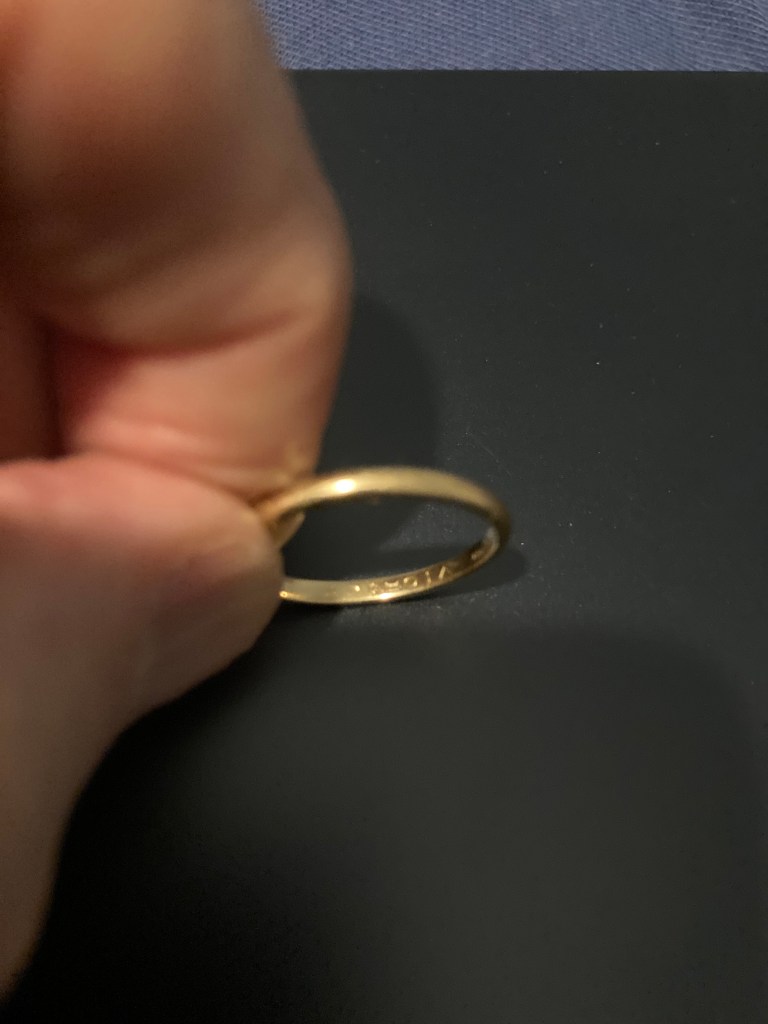
The fact that the letters are small is of little consequence. My wedding band has my wife’s name etched inside it. They are comparably as tiny but no less visible, real and meaningful.
The bottom negatives legitimately argue of man-made proto-alphabetic script inside the tablet.
Therefore, Haughwout’s improbable letter arguments do not support his “refutation” claim. Against this part of Stripling’s first material fact he has failed to satisfy our objective test, that is, that a reasonable person could not genuinely dispute the absence of proto-alphabetic letters on the tablet.
Might another of his arguments fare better? Next up we will examine the first of his “Improbable word” criticisms, namely, against “ARWR”–“You are Cursed!”
Thank you for reading!
If you appreciate this type of analysis, please “subscribe”, “like”, and “share”.
If you wish to support this work, you can do so in the donation section below. Such really encourages!
Next post: “ARWR?”
Haughwoout, M. S. Mt. Ebal curse tablet? A refutation of the claims regarding the so called Mt. Ebal curse tablet, Herit Sci 12, 70 (2024). htts://doi.org/101186/s40494-023-01130-z, paragraph 16. ↩︎
















 captivatingtwists.com