Tag: yahweh

  • Staking a Claim

    Staking a Claim

    History VII

    [Ebal’s Plea, thirteen of thirty-two]

    The Czech Institute’s data continued to prove a font of revelation.

    From the tomographic scans Stripling’s epigraphers quickly discerned not just letters, but words. These included “Yahweh” and “cursed”, both apparently recalling Joshua’s ceremony of blessings and curses on Mts. Gerizim and Ebal. One epigrapher, Dr. Gershon Galil, of the University of Haifa, additionally decoded a sophisticated parallelism, a chiasmus.

    This literary device one finds throughout the Old and New Testaments. Consider for example Luke 4:16b-20 “The Favorable Year of the Lord”. Note below the parallel and inverse wordings with a central focus:

    14 And Jesus returned to Galilee in the power of the Spirit, and news about Him spread through all the surrounding district. 15 And He began teaching in their synagogues and was praised by all. 16 And He came to Nazareth, where He had been brought up, and as was His custom,

    He entered the synagogue on the Sabbath,

    and stood up to read,

    He has sent Me to proclaim

    release / to the captives,

    And recovery of sight to the blind,

    To set free / those who

    are oppressed,

    and sat down

    and the eyes of all in the synagogue were fixed on Him.

    21 And He began to say to them, “Today this Scripture has been fulfilled in your hearing.”1
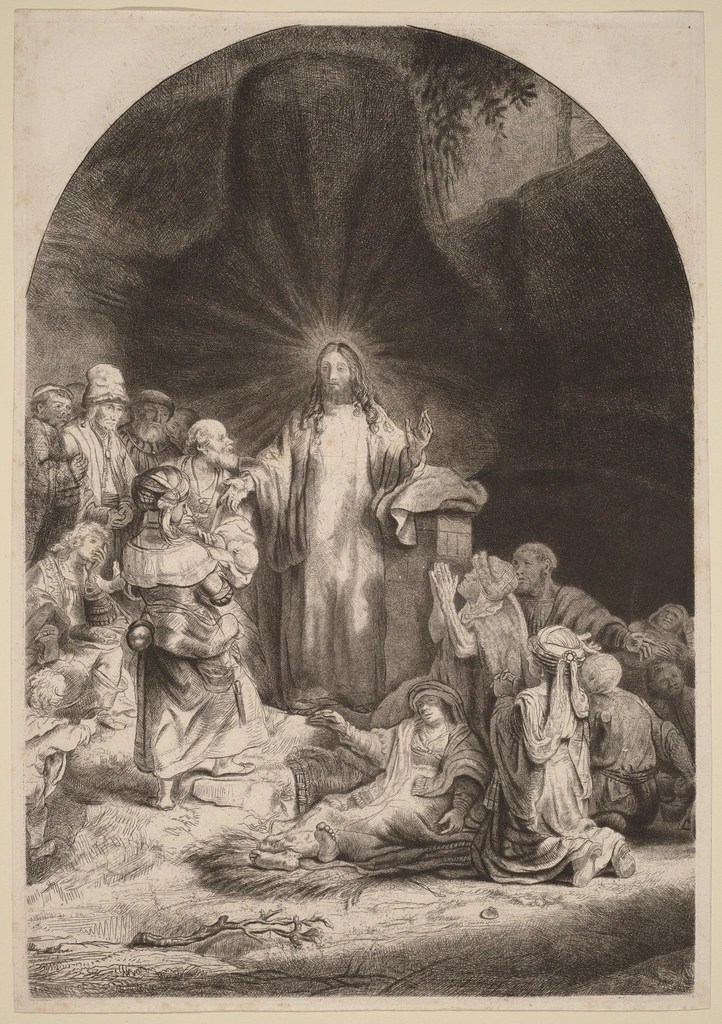

    Christ Preaching / Healing

    National Gallery of Art
    Licensed under CC-CC0 1.0
    Recovery-of-sight-to-the-blind

    Recovery of sight to the blind

    How could Stripling be anything but gobsmacked?

    Nevertheless, as a professional he was certainly aware that a find of this magnitude required cautious, meticulous handling.

    He was a renowned archaeologist with decades of Holy Land field experience at preeminent sites.

    The profound nature of this find earmarked it. Surely it would cause an immense stir. On multiple levels intense international scrutiny lay on the horizon journalistically, scholarly, and politically.

    This needed to be handled right!

    Photo by Pixabay on Pexels.com

    But life threw Stripling a curve ball mandating a different approach.

    Concurrently, speculation circulated about the tablet photo that Stripling had earlier emailed to an associate. Forwarded recipients began generating noise online. Some pondered the outer tablet’s glyphs. Could they be some sort of script?

    Alarmed that others might lay academic claim to the tablet’s message, Stripling deemed it necessary to go public quickly. Otherwise, he risked forfeiting his scholarly stake as the tablet’s lead discovering archaeologist.2

    A press conference ensued in March 2022. At it Stripling and his team announced the following:

    • The lead defixio found by his team contained archaic proto-alphabetic script;
    • From around forty letters present, the Hebrew name for God appears twice and the word “cursed” ten times;
    • The late bronze age dating of the tablet makes it two to four hundred years older than any other known Hebrew text.
    • A possible reading relates a chiasmus, a literary form employed extensively in both the Old and New Testaments.
    • That proposed reading was:

    Cursed, cursed, cursed-cursed by the God YHW
    You will die cursed.
    Cursed you will surely die.
    Cursed by YHW-cursed, cursed, cursed!

    (Mt. Ebal “Curse Tablet” Full Press Conference, YouTube, Appian Media, March 29, 2022)

    Afterwards, public elation and scorn followed.

    Why scorn?

    This our next post addresses.

    Next post: “A Firestorm!”

    1. L. J. Hooge, “The Favorable Year of the Lord”, Biblical Chiasmus, Discovering and Exploring Reverse Parallelism in the Bible, https://biblicalchiasmus.wordpress.com/2014/08/03/luke-416b-20-the-favorable-year-of-the-lord/, August 3, 2014, ↩︎
    2. Breaking News “Mt. Ebal Curse Tablet Peer Review Complete”, Appian Media, In Roads, youtube.com/watch?v=_15tYO4hqJS, (20:39), May 12, 2023. ↩︎
    One-Time
    Monthly
    Yearly

    Make a one-time donation

    Make a monthly donation

    Make a yearly donation

    Choose an amount

    $5.00
    $15.00
    $100.00
    $5.00
    $15.00
    $100.00
    $5.00
    $15.00
    $100.00

    Or enter a custom amount

    $

    Your contribution is appreciated.

    Your contribution is appreciated.

    Your contribution is appreciated.

    DonateDonate monthlyDonate yearly


    Dinner-bouquet-option

    Lagniappe Mt. Ebal link / Inscription Publication, Cargill
    Dinner-bouquet-option

    Lagniappe Curse Tablet link / One for Israel, Archaeological find
  • “ARWR,” CURSED!

    “ARWR,” CURSED!

    Photo Study II

    [Ebal’s Plea eighteen of thirty-two]

    Our photo study begins.

    From tomographic scans revealing an inside face of the tablet, we first assess the presence of an intimidating word. That is “ARWR” or “cursed”, one of the two words fundamental to Stripling’s conclusions.

    In the Scientific Heritage article Gershon Galil identified this word six times on the inner tablet. Of these we will, for brevity, focus on only one.

    The article’s Figure 7 shows Galil’s drawings of the tablet’s inner symbols. (Henceforth, click on underscored items to see referenced material.)

    You see our word on the right annotated drawing. It is numbers 25 through 28.

    “ARWR’s” proto-alphabetic spelling is “Aleph”, Resh”, “Wah”, and “Resh”.

    Here is what they look like:


    “Aleph”

    Photo by Steward Masweneng on Pexels.com
    "Resh" with a tail resembles a kite

    “‘Resh” with a tail resembles a kite..

    by Nilo Velez is licensed under CC-CC0 1.0
    • “Aleph” looks like an ox’s skull;
    • “Resh” often resembles a rhombus. Sometimes, though, it has a tail making it resemble a kite.
    • “Waw” and “Resh” can be easily confused. But “Waw” replicates a mace, an ancient weapon consisting of a heavy object fastened to a handle used to bash an enemy’s skull, bones, and armor.

    Warrior armed with a mace, the symbol for “Waw”

    Photo by MikeGz on Pexels.com

    Tables 2 through 9 show tomographic scans of all of the tablet’s letters. Beside each appears the Stripling team’s drawing replicating it.

    To study our “ARWR” do as follows:

    Importantly note one thing about the photos and drawings of Tables 2-9. These mirror the drawings of Figure 7. In other words, one must be viewed in a mirror to correspond with the other’s alignment. Otherwise they appear backwards.

    Now see Table 10. It reveals several photos of the tablet’s “Outer B”, that is, the tablet’s bottom.

    Photo # 8 of Table 10 shows a bottom protrusion. It Stripling’s team identifies as a negative of our first “Resh”–Figure 7 #26 and Table 8 (2 a and b).

    Do you agree?

    Note that the photo of our “resh” slants right and the photo of the negative slants left. Is not this what one would expect of a negative?

    Guess what?

    This concludes my presentation regarding our first word, “ARWR”/”Cursed”.

    Surely you found it easy enough.

    Nevertheless, ponder this post closely.

    Read it several times while also viewing the linked photos and drawings. Let all of it sink in!

    In our next post, we turn to the supreme name, that of the Hebrew God.

    Next post: “YHW,” Yahweh

    One-Time
    Monthly
    Yearly

    Make a one-time donation

    Make a monthly donation

    Make a yearly donation

    Choose an amount

    $5.00
    $15.00
    $100.00
    $5.00
    $15.00
    $100.00
    $5.00
    $15.00
    $100.00

    Or enter a custom amount

    $

    Your contribution is appreciated.

    Your contribution is appreciated.

    Your contribution is appreciated.

    DonateDonate monthlyDonate yearly

    Dinner-bouquet-option

    Lagniappe link / Pattern of Evidence Ebal Curse audio
    Dinner-bouquet-option

    Lagniappe link/ Appian Media on Mt. Ebal
  • “YHW,” Yahweh

    “YHW,” Yahweh

    Photo Study III

    [Ebal’s Plea, nineteen of thirty-two]

    “ARWR”, that is “cursed,” I reviewed in my last post.

    I turn now to the divine name–“Yahweh”.

    Galil alleges that this appears twice inside the tablet.

    For simplicity only one of those I discuss here. That one I call “Upper Yahweh” simply because lies near the tablet’s top.

    Galil’s annotated Table 7 drawing labels it as #’s: 11, 12, and 13.

    The phonetic spelling is thus “Yod,” “He,” “Waw”.

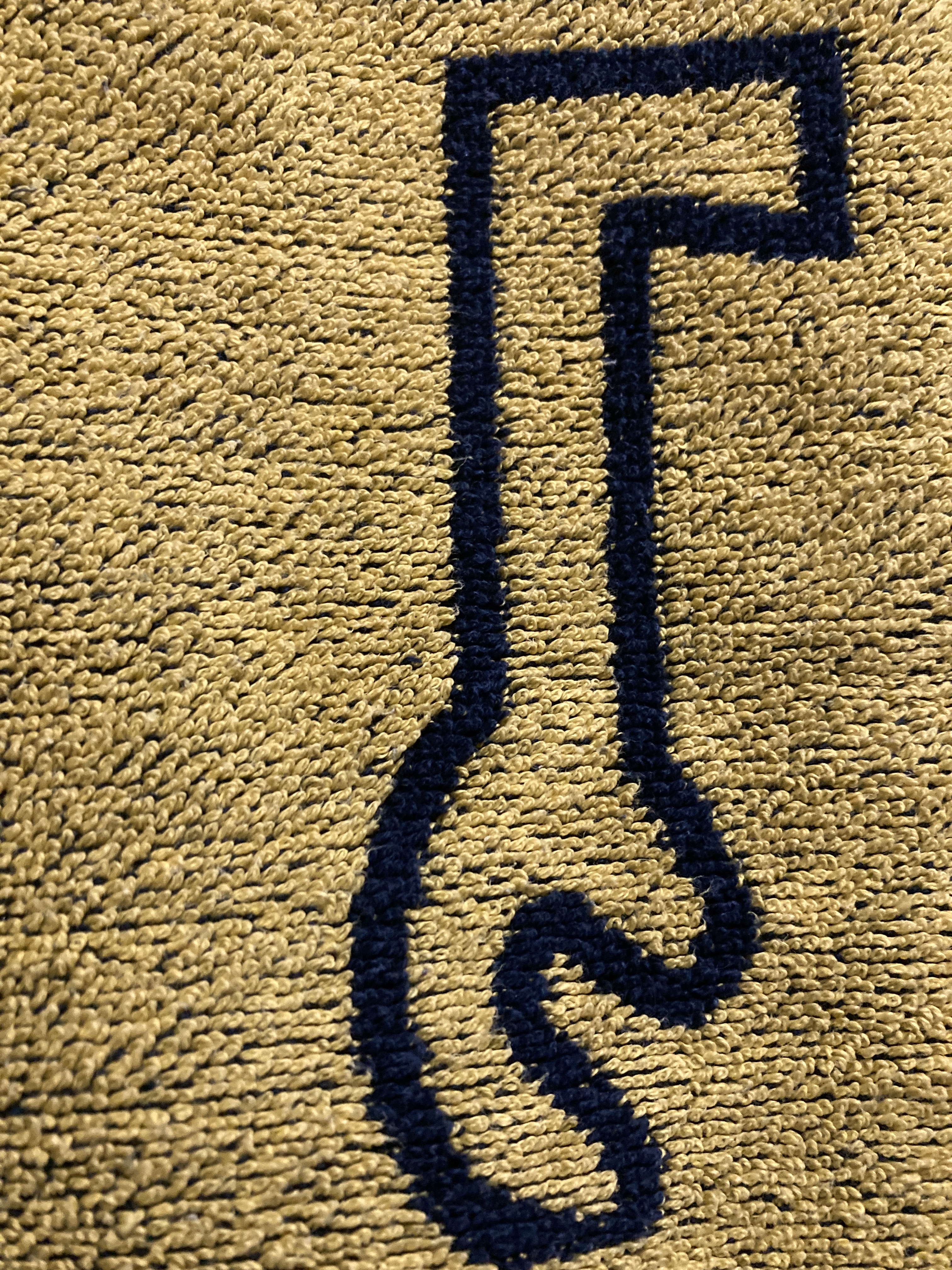
    M- beach-towel's-Egyptian-hieroglyphic-immulates-proto-alphabetic-"Yod".

    My beach towel’s Egyptian hieroglyphic immulates proto-alphabetic “Yod”.
    Photo by Pixabay on Pexels.com

    Here is what they look like:

    The photos of “He”, Figure 7’s #12 at Table 3, (1a & b), and “Waw”, Figure 7’s #13 at Table 4 (1a & b), are distinct.

    “Yod”, Figure 7’s #11 at Table 5 (1a & b), however, is faint.

    Other views include:

    • Stripling’s Figure 4 showing:
      • the hand lies under the hips of “Heh”;
      • the thumb is under and intertwined with “Taw”;
      • the wrist and forearm run below the left leg of “Heh”; and
      • the upper arm extends at a right angle from “Heh’s” left ankle”.
    • Haughwout’s Figure 5 gives a mirrored view.

    Importantly, study, too,Table 10, photo # 3. The Stripling team argues that this depicts the bottom bulge of this “Yod”.

    Do you agree?

    If you do, this has major consequences–ones to which even Haughwout, the sceptic, agrees. It is this: mirror bulges on the bottom reflect something actually existing on the inner surface of the tablet. The object does not result from a photographic lighting or shading issue. It also nullifies the object resulting from a computer glitch.

    That finishes my review of the two words which Stripling declares compel his conclusions–“ARWR” and “YHW.”

    What did I tell you? That was not hard.

    However, again, read these sections a couple of times. Let the photos really sink in.

    With the following post I complete an initial dive into the tablet’s photos. There I look at a word and two other letters relevant to Haughwout’s arguments.

    Later, however, l tread deeper into the words and symbols mentioned above as I evaluate Haughwout’s analysis.

    Next post: “You Will Die!”

    One-Time
    Monthly
    Yearly

    Make a one-time donation

    Make a monthly donation

    Make a yearly donation

    Choose an amount

    $5.00
    $15.00
    $100.00
    $5.00
    $15.00
    $100.00
    $5.00
    $15.00
    $100.00

    Or enter a custom amount

    $

    Your contribution is appreciated.

    Your contribution is appreciated.

    Your contribution is appreciated.

    DonateDonate monthlyDonate yearly

    Dinner-bouquet-option /

    Lagniappe link / Refuting the critics
    Dinner-bouquet-option

    Lagniappe link / The Christian Atheist, Ebal contiued
  • You will Die!

    You will Die!

    Photo Study IV

    [Ebal’s Plea, twenty of thirty-two]

    We look now at a new word and two solo letters relevant to a critic’s arguments.

    Here I introduce them somewhat superficially. Later, I delve deeper when I discuss that scholar’s views.

    Our new word is “TMT”, meaning “You will die!”

    Galil depicts it in Figure 7 as #’s: 18, 19, and 20.

    The phonetic spelling is “Taw”, “Mem”, “Taw.”

    Here is how they look:

    • “Taw” looks like an “X” or a cross and with small tick marks it resembles crossed hockey sticks or swords.; and
    • “Mem” looks like our “M”, wavy lines, or rolling waves.

    Photo by Alexander Nadrilyanski on Pexels.com

    Photo by David Cruz asenjo on Pexels.com

    To see photos and drawings of each click:

    This concludes our proto-alphabetic vocabulary survey.

    Our lexicon now includes YHW, ARUR, and TMT, three easy words–three heavy notions.

    I now turn to our survey’s two solo letters. For simplicity these I consider independent from the words they help form.

    The first I call “Lovely Aleph”. See it as Figure 7’s #21 and as Table 2’s (3a & b).

    All I will say currently is, “What a beauty!”.

    The second letter I call “Dancing He” because it appears to exude rhythmic motion on the lower tablet.

    View it as Figure 7’s #3 and in Table 3 (4a & b).

    See a remarkable negative of it in Table 10, #2.

    We can now declare a wrap on our initial alphabet and word canvas.

    Consider our script count comprises only seven unique letters–“Aleph”, “He”, “Mem”, “Resh”, “Taw”, “Waw”, and “Yod”.

    At first tackling ancient inscriptions of thirty-five hundred years ago possibly intimidated. In retrospect you likely see them as relatively straight forward.

    As an aside, consider that in short order first graders learn all 26 letters of our script. Plus they quickly master a corral of words from their readers. What a wonder!


    Photo by Pixabay on Pexels.com

    Nevertheless, rather than taxing, I trust that you found our exercise enlightening and maybe fun.

    But we are not yet done. We still must review the substance of voices opposing Stripling’s claims.

    This too I will attempt to keep sufferable, if not entertaining.

    Let us get started!

    Next post: “A Refutation?”

    One-Time
    Monthly
    Yearly

    Make a one-time donation

    Make a monthly donation

    Make a yearly donation

    Choose an amount

    $5.00
    $15.00
    $100.00
    $5.00
    $15.00
    $100.00
    $5.00
    $15.00
    $100.00

    Or enter a custom amount

    $

    Your contribution is appreciated.

    Your contribution is appreciated.

    Your contribution is appreciated.

    DonateDonate monthlyDonate yearly
    Dinner-bouquet-option
    Dinner bouquet option /
    Dinner-bouquet-option
    Dinner bouquet option / Digging for Truth, One
  • The Plan

    The Plan

    Objective Analysis I

    [Ebal’s Plea, twenty-five of thirty-two]

    In the last post we returned from the hypothetical to the real world.

    Yet, I have decided to embrace SCOS Code Provision 56. It I will apply for resolving our Stripling v. Haughwout issues.

    But this is important! I am not suggesting that the scientific community adopt a similar Scholarandrian governmental rule. Without other safeguards such might be subject to abuse by an authoritarian regime. Of this legislative drafters must remain always cognizant. Particularly now they must consider any rule in the hands of Donald Trump and his obsequiously corrupt MAGA acolytes.

    What I am suggesting is that the general public use this rule as consumers of scientific and academic information. The scientific and journalistic communities may declare that debate on a topic with issues similar to here has reached its culmination. The general public can then apply this standard to better determine if that is warranted.

    I therefore use Provision 56 of the Scholarandrian Code in that spirit. Has the debate over the Curse Table reached a pinnacle? Does the end result rest with scholars such as Haughwout determining that there is nothing to see here?

    Applying our standard can help us decide.

    Accordingly, I first need to determine the material fact(s) of Haughwout’s claim’s. What are his contested, indispensable ones?

    Is-there-an-"Aleph"?

    Is there an “Aleph”?

    Photo by Jesu00fas Esteban San Josu00e9 on Pexels.com

    Such I determine to be as follows:

    Haughwout insists that at least one of the following statements are true:

    • The tablet does not contain proto-alphabetic script denoting the words “ARWR”–“cursed” and “YHW”–“Yahweh”, the Hebrew name for God; or
    • A Hebrew of before 1250 B. C. did not inscribed the tablet.
    Is-there-a-"He"?

    Is there a “He”?

    Photo by Kulbir on Pexels.com

    To decide in Haughwout’s favor I must find that a reasonable person could not genuinely dispute the above.

    I must deny the “disproval / refutation”, if I find otherwise.

    The next posts divide this material fact into four discussions.

    • Does the tablet contains proto-alphabetic letters?;
    • Does it display the word “ARWR”?;
    • Does it reveal “YHW” as the name of God?; and
    • Did a Hebrew of prior to 1250 B. C. inscribe the tablet?

    After those discussions, I give my preliminary judgment on whether Haughwout has achieved his “refutation”.

    My conclusion of this memorandum follows that.

    Let us get after it.

    Next post: “Letters?”

    One-Time
    Monthly
    Yearly

    Make a one-time donation

    Make a monthly donation

    Make a yearly donation

    Choose an amount

    $5.00
    $15.00
    $100.00
    $5.00
    $15.00
    $100.00
    $5.00
    $15.00
    $100.00

    Or enter a custom amount

    $

    Your contribution is appreciated.

    Your contribution is appreciated.

    Your contribution is appreciated.

    DonateDonate monthlyDonate yearly
    Dinner-bouquet-option


    Mt. Ebal lagniappe / Nehemia’s Wall, Stripling
    Dinner-bouquet-option


    Joshua’s Altar Lagniappe / Cargill Excerpt
  • YHW?

    YHW?

    Objective Analysis IV

    [Ebal’s Plea, twenty-eight of thirty-two]

    The third discussion of Haughwout’s material fact ensues here.The question is this: Does the tablet contain, “YHW”–the holy name?

    Haughwout declares, “No”.

    About this a reasonable person can not genuinely dispute. Otherwise, this fact portion does not support his “refutation”.

    This issue I examine in these steps:

    As before, I first outline Haughwout’s position. Find this below the magenta banner.

    Against that I give push back below the yellow.

    Lastly, I announce my findings beneath the purple banner.

    “YHW” Is Not a Word

    Twice on the inner tablet Galil finds the name for the Hebrew God.

    For simplicity, I concentrate only on the Upper Yahweh of Figure 7’s #’s 11, 12, and 13.

    With Upper Yahweh Haughwout perceives two primary problems. He disputes the letter count. He also disparages visibility.

    These problems, Haughwout concludes, disqualify this “YHW”as either a word or as proto-alphabetic letters.

    • Letter Count

    For “Yahweh”, three letters are inadequate. The earliest otherwise recognized Hebrew spelling comes from the ninth century. It uses four letters–“YHWH”.

    Such vacillation among scribes on the name of God raises red flags.

    "He"-raises-a-red-flag!

    “He” raises a red flag!

    Stripling counters that three letters conform with an Egyptian spelling of the Hebrew name. There one finds a contemporary Late Bronze Age Egyptian inscription. It uses what some scholars contend is a three letter form.

    Haughwout minimizes the Egyptian case. First, some scholars allege that the three Egyptian letters actually correspond to the four phonetic letters of “YHWA”. Further, he notes, translating from Egyptian to Hebrew is problematic.

    Haughwout thus surmises that only a four letter rendition of the name is appropriate.

    • Visibilty

    Nevertheless, two of the letters which Galil purports for “YHW” present other problems.

    The first letter “Yod”, Figure 7’s # 11, he maintains is simply not there.

    Additionally, the last letter “Waw”, Figure 7’s # 13, is “highly speculative”.

    • Haughwout’s Conclusion

    As previously discussed, one of the best ways to distinguish coincidental marks from actual letters is this: The later will coalesce to form a word but not the former.

    “YHW” has an insufficient number of proposed letters to form the name of God.

    Additionally, some of its proposed letters are indistinguishable.

    Consequently, the above problems disqualify “YHW” from being a word or even proto-alphabetic letters.

    “YHW” Pushback

    Haughwout raises two objections. First, he objects to Yahweh’s three letter spelling. Second, he observes that one of its proposed letters, the “Yod”, is invisible while another, the “Waw”, is speculative.

    Separately below I address these.

    Yahweh of Three Letters?

    There is a reasonable explanation for the three or four letter conundrum.

    In the proto-alphabetic era as previously discussed, the written script was largely consonantal. In other words, vowels were usually not designated.

    Thus a proto-alphabetic scribe would have written “YHW” even though a vowel sound, likely an “eh” or an “ah” followed the “Waw”. This was simply understood without any designation.

    At a later time scribes added an “H” to the end of words to capture the previously understood vowel sound.1

    The “H” sound remained largely silent. Only the vowel, likely an “eh” or “ah” was voiced.2

    Thus, the later scribes did not altar the name of God. They simply modified the spelling by adding the letter “H” to act as a vowel at the end of the name. This thereby ensured the capture of the originally intended but previously only understood pronunciation.

    This explanation harmonizes the ancient three letters with the subsequent four.

    Absent “Yod”?

    Haughwout, who is not an epigrapher, alleges that an important letter does not exist. That is the initial “Yod” of our “YHW” set.

    Galil and van der Veen, both esteemed epigraphers, declare its presence.

    I agree with Galil and Pieter Girt van der Veen. The “Yod,” is indeed faint. Yet, in the composite photos of Figure 4 I nevertheless distinguish it under “Taw” and above the leg of “He.”

    See also Table 9, photo 2(a).

    Look, additionally, at Table 10, photo # 3. This hints of this letter’s negative bulge.

    Speculative “Waw”?

    While Haughwout concedes our “YHW’s” stickman “He” (See Table 3 [1 a & b]), the “Waw” he characterizes as “highly speculative.”

    Again, Galil and van Der Veen, the esteemed epigraphers, see it.

    Yet, honestly, could Picasso himself have drawn a more convincing mace? (See Table 4, 1 (a and b)!)


    Pablo Picasso

    by Beaton, Cecil

    Licensed under CC-BY-NC-ND 4.0

    A reasonable person could genuinely dispute Haughwout’s contention that the tablet does not display God’s name. Justifications include:

    • There is a reasonable explanation for why the proto-alphabetic era’s “YHW” equates with subsequent era’s “YHWH”. It is that later scribes added the “H” at the end of many words to ensure that previously understood vowel sounds were not lost. Those vowel sounds were endings of “ah” and “eh” with the “H” sound largely silent.
    • The “Yod” of our “YHW” is faint, but distinguishable. Further, the bottom bulge reinforces the presence of this letter.
    • A child would recognize this “Yahweh’s” “He”;
    • Picasso would embrace its “Waw”.

    The third portion of Haughwout’s material fact thus fails.

    Thus far we have determined this: That a reasonable person could genuinely dispute the absence of proto-alphabetic letters and the words “ARWR” and “YHW”. Therefore these portions of Haughwout’s material fact do not support his “refutation” claim.

    Our next post considers the remaining material fact portion. There I discuss whether the tablet’s inscriber was a Hebrew of before 1250 B. C.

    Let us get to it!

    Next post: “Pre-1250 B.C. Hebrew?”

    1. Hebrew Alphabet Made Easy, Hei, Lesson Three, Line 16, https://www.hebrewpod101.com/lesson/hebrew-alphabet-made-easy-3-hei; and
      Lobliner, Jacob, The Story of H, paragraph 36, 2008, http://faculty.ce.berkeley.edu/coby/essays/h.htm ↩︎
    2. Vowels in Hebrew, Lilmod Aleph Beth, https://lilmod-aleph-beth.com/vowels-in-hebrew/, The Mater Lectionis are consonants that function as vowels. paragraph five ↩︎
    One-Time
    Monthly
    Yearly

    Make a one-time donation

    Make a monthly donation

    Make a yearly donation

    Choose an amount

    $5.00
    $15.00
    $100.00
    $5.00
    $15.00
    $100.00
    $5.00
    $15.00
    $100.00

    Or enter a custom amount

    $

    Your contribution is appreciated.

    Your contribution is appreciated.

    Your contribution is appreciated.

    DonateDonate monthlyDonate yearly
    Dinner-bouquet-option

    Joshua’s Altar Lagniappe / Tablet Deciphered
    Dinner-bouquet-option

    Mt. Ebal Lagniappe / Joshua’s Altar