In the last post we returned from the hypothetical to the real world.
Yet, I have decided to embrace SCOS Code Provision 56. It I will apply for resolving our Stripling v. Haughwout issues.
But this is important! I am not suggesting that the scientific community adopt a similar Scholarandrian governmental rule. Without other safeguards such might be subject to abuse by an authoritarian regime. Of this legislative drafters must remain always cognizant. Particularly now they must consider any rule in the hands of Donald Trump and his obsequiously corrupt MAGA acolytes.
What I am suggesting is that the general public use this rule as consumers of scientific and academic information. The scientific and journalistic communities may declare that debate on a topic with issues similar to here has reached its culmination. The general public can then apply this standard to better determine if that is warranted.
I therefore use Provision 56 of the Scholarandrian Code in that spirit. Has the debate over the Curse Table reached a pinnacle? Does the end result rest with scholars such as Haughwout determining that there is nothing to see here?
Applying our standard can help us decide.
Accordingly, I first need to determine the material fact(s) of Haughwout’s claim’s. What are his contested, indispensable ones?
Is there an “Aleph”?
Photo by Jesu00fas Esteban San Josu00e9 on Pexels.com
Such I determine to be as follows:
Haughwout insists that at least one of the following statements are true:
The tablet does not contain proto-alphabetic script denoting the words “ARWR”–“cursed” and “YHW”–“Yahweh”, the Hebrew name for God; or
A Hebrew of before 1250 B. C. did not inscribed the tablet.
We test here the first part of Haughwout’s material fact. That is whether the tablet contains proto-alphabetic letters.
To evaluate this I take these steps:
First I outline Haughwout’s position. Find this below the magenta banner.
Against it, I give push back. This you find below the yellow.
Lastly, I announce my findings below the purple banner.
No Letters
When Haughwout began to study the photos of Stripling’s article, he had an initial favorable impression. The top right corner indeed seemed to show several proto-alphabetic characters. Namely these were Teh, Meh, He, Teh and Aleph–five in total, respectively #’s 18, 19, 12, 20, and 21 of Figure 7.
For him the most impressive was Aleph #21. Best he felt it displayed the appropriate proto-alphabetic characteristics.
His opinion, however, soon changed.
On close review he noticed a number of crack lines commencing from the tablet’s edge to intersect with the character.
Prominent were the two cracks that he deduced had over time created the “Ox’s” horns. (See here.)
Resultantly, this Aleph’s favorable status crumbled. He deduced it only the chance product of crack lines. No longer was it an exquisite inscription. It now presented a coincidental aberration with grotesquely proportioned horns. This disqualified it as a man-made proto-alphabetic letter.1
Disillusionment followed also for the other four likely script candidates. All he concluded as being mere happenstance cracks, scratches, and dents in the lead.
Some of the primary reasons for this were these:
First, he realized how small these characters were, ranging form .01 to .05 mm. The minimalist crack, scratch, or dent could replicate them; and
Photos of bulges on the tablet’s bottom (Table 10) failed to impress Haughwout. These Stripling had presented as negative proofs of inside characters. They too, Haughwout concluded, likely resulted from cracks, scratches and dents.
Haughwout thus finally surmised that his most favored of the tablet’s characters presented major existential problems. Doubly so this applied to the remainder.
Pushback on Haughwout’s Improbable Letters
I. Lovely Aleph
Haughwout notes that initially “Aleph, ” Figure 7, # 21 presented for him as a gorgeous proto-alphabetic inscription.
On this I agree.
Note its beauty! It satisfies the eye as an elegant calligraphy beginning a chapter of a medieval manuscript.
Haughwout, however, finds what he considers a fatal flaw–crack lines intersecting the horns.
These he concludes reveal the inscription to be nothing more than happenstance cracks, scratches, and dents. (See again Haughwout’s illustration.)
But Dr. Pieter van der Veens of Johannes Gutenberg University Mainz, one of Stripling’s team epigraphers and an expert in ancient Near Eastern languages and inscriptions, gives a plausible explanation. He suggests that yes there are crack lines emanating from the tablet’s edge. But likely the force of the stylus so close to that edge caused this.
In fact, along the tablet’s top this “Aleph” is among the closest.2
Note too that Haughwout’s drawing appears on a photo that poorly focuses this Aleph.”
On this clearer image you can see that the cracks do not intersect the horn tips smoothly and directly. On both horns there is a transition from the points where the aesthetically pleasing horns end and the apparent cracks intersect.
Both of the aesthetic horns are darker, wider and likely deeper.
Plus, at the intersection points the direction of the cracks deviate on both, but on one more pronounced than the other.
The above emphasizes the likelihood of an author having beautifully crafted his letter only to have time mar it with the imperfectly connecting cracks.
II. Tiny Letters
Haughwout also complains about many of the letters’ small sizes. Here the simple explanation is that the author had a small space with which to work. Plus, in that small space he had a serious message to convey–one not intended for human eyes but only for God.
Fortunately, though, they are indeed visible to man.
III. Bottom Bulges
Further, Haughwout apparently scoffs at the idea of negatives on the tablet’s bottom , “Outer B”, replicating inner tablet letters.
This evidence surely deserves less flippant appraisal.
Consider these examples:
Compare “He” of Figure 7’s, #3 and Table 3, (4 a and b) with Table 10, photo #2. This image I have designated “Dancing ‘He’”. Why? Notice that his arms and legs, seemingly in motion, occupy different levels. Nevertheless, the positive of the inner tablet and the negative of the tablet’s bottom mirror.
See, the first “Resh” in the word “ARWR”, at Figure 7’s #26 and Table 8, (2a & b). Compare it with the bottom bulge shown at Table 10, #8. Notice how they coincide. The positive inner image slants right.The bulge mirrors to the left.
Yet even faint mirroring reflections have an important ramification, one that Haughwout recognizes. He notes,”The reality is a dent on one side of a 0.4 mm thick piece of lead will of course appear on the opposite side.” Further he continues that this proves that the marks “on the inside are indeed there and are not x-ray anomalies.” In other words even where the mirroring images are faint, they prove that what is faintly depicted is indeed there. It is not some fluke produced by x-ray or photographic lightings or shadows.3
Several factors limit the possibility of these being the result of mere happenstance cracks, scratches, or dents.
Note that of the three, a dent seems most likely. Usually such one associates with sufficient downward force to cause an opposing bulge.
Nevertheless, Haughwout’s contention that a happenstance dent as opposed to a purposeful one caused by an inscriber’s stylus must account for the following:
First, the tablet was closed thus protecting the inner tablet from further damage.
Second, the tablet’s top,” Outer A,” does not have marks corresponding to these negatives. Only our inner tablet marks do.
Third, therefore, the force, possibly by a stylus, was likely applied before the tablet was closed.
Fourth, this closing likely occurred during the Late Bronze Age to Iron Age II– the era of proto-alphabetic writing.
Fifth, the act of closing was likely done purposefully by a human. Likely too that was done to conceal and protect a message hidden within.
All of the above amount to justifications for a reasonable person genuinely disputing this portion of the material fact addressed here. That is that the tablet does not reveals proto-alphabetic script.
This portion of Haughwout’s material fact thus fails to support his refutation claim.
Improbable Letter Finding
The evidence shows that there is a genuine dispute about Haughwout’s proposition here. In other words, a reasonable person can genuinely dispute the claim that there are no proto-alphabetic letters on the tablet.
Despite conceding that Figure 7’s #’s 18, 19, 12, 20, and 21 represent proto-alphabetic forms, Haughwout nevertheless concludes that only coincidental cracks and dents formed them.
Yet, a reasonable person could genuinely counter that:
“Lovely Aleph”, Figure 7, # 21, is likely a scribe’s work marred somewhat by incongruous intersecting cracks radiating from the nearby tablet edge.
The fact that the letters are small is of little consequence. My wedding band has my wife’s name etched inside it. They are comparably as tiny but no less visible, real and meaningful.
The bottom negatives legitimately argue of man-made proto-alphabetic script inside the tablet.
Therefore, Haughwout’s improbable letter arguments do not support his “refutation” claim. Against this part of Stripling’s first material fact he has failed to satisfy our objective test. That is that a reasonable person could not genuinely dispute the absence of proto-alphabetic letters on the tablet.
Might another of his arguments fare better? Next up we will examine the first of his “Improbable word” criticisms. That is against “ARWR”–“You are Cursed!”
Next post: “ARWR?”
Haughwoout, M. S. Mt. Ebal curse tablet? A refutation of the claims regarding the so called Mt. Ebal curse tablet, Herit Sci 12, 70 (2024). htts://doi.org/101186/s40494-023-01130-z, paragraph 16. ↩︎
Here we consider the second part of the Haughwout’s material fact. It is that the tablet does not contain the proto-alphabetic word “ARWR”.
There must be no genuine dispute about this. Otherwise, this portion of Haughwout’s arguments cannot contribute to the success of his position. It cannot support his “refutation”.
I ponder this again in these steps:
First, I outline Haughwout’s position. Find this below the magenta banner.
Against that I give push back. This you find below the yellow.
Lastly, I announce my findings below the purple banner.
“ARWR” Is Not a Word
Haughwout announces that one of the best ways to distinguish a coincidental mark resulting from cracks, scratches, or dents from an actual letter is this: A letter will usually coalesce with other letters to form a word. Coincidental marks likely will not.
Six times on the inner tablet Galil identified “ARWR”, the alleged ancient equivalent of the modern Hebrew word pronounced “ARUR” meaning “cursed”.
Haughwout counters that “ARWR” is not a word that a Hebrew of before 1250 B. C. would have written.
Why? Ancient Hebrew had no vowel indicators, he declares. Thus “ARR” would have been the proper spelling, not “ARWR”.
Much later, around the ninth century B. C., Hebrew writers began using occasional consonants to replicate vowels. Particularly this was rare within a word rather at the end until the eight century B. C.
This use of “Waw” to mimic the “U” vowel inside of “ARWR” is thus inappropriate. It is an anachronism of four to six hundred years.
One therefore cannot reasonably argue for “ARWR” forming a word. One should consider that combination as happenstance cracks, scratches, or dents.
“ARWR” Pushback
For simplicity we examine here only one of the six “ARWR” iterations that Galil identified. It is Figure 7’s #25-28. It also is the “ARWR” which we earlier discussed in Post #13.
Haughwout avers that happenstance dents caused our “ARWR” and the rest of the inner tablet characters.
For this he states a main reason, one underlying his disillusionment with the tablet almost from the beginning. It is this: That one should not accept marks as human writing unless they coalesce with other characters to form words. “ARWR” is not a Hebrew word that a person of the proto-alphabetic era would have written, he concludes. Therefore, those marks do not qualify as letters.
In essence, the reason that Haughwout declares that “ARWR” is not a word of the thirteenth century B. C. is that it has too many letters. As explained above, he insists, that the proper spelling is “ARR”. A Hebrew of that time, he continues, would not have substituted the consonant “W” for the understood “U” vowel sound within a word until four to six hundred years later.
The next section offers contradictory observations.:
A reasonable person can genuinely dispute that “ARWR” is not proto-alphabetic Hebrew..
Here are several reasons why:
Sparse Corpus
Arguing in his article a point about syntax, Haughwout declares:
“However, we do not currently have a large enough corpus of second millennium texts from the land of Canaan for comparison.”
What is a take away? It is that currently you can only put limited faith in assumptions about the proto-alphabetic corpus. We just have too few examples.
Rules for both syntax and vowel markers should be deemed speculative and tenuous at best.
Exceptions litter languages
While this hardly needs illustration, it does merit remembering.
Exceptions are normal in language. The same should be expected of ancient proto-alphabetic.
Phonetic Sense
Modern Hebrew pronounces the word for “cursed” as “ARUR”. Likely the ancients spoke it similarly.
So, imagine an ancient inscriber faced with spelling the word he knew sounded like “ARUR”. Could he have reasoned, “I hear something else in that word? What about adding the consonant “W”? “ARWR” sounds a little closer to “ARUR” than does “ARR”,–the spelling Haughwout would saddle him with.
Would someone back then have pulled out a grammar book and said, “You cannot do that!”?
More likely the inscriber would have said, “I like this. I am going to stick with it.”
Maybe they did not decided to do this with other words. Maybe they did not realize that this is something that they could do with other words.
They just decide to go with “ARWR” as a better way to sound out their word for “cursed”.
“ARWR”, a Time Traveler?(The strongest reply!)
What could better evidence that the “ARWR” spelling traveled from the remote proto-alphabetic era through to a subsequent age?
Obvious evidence would include similar examples in both epochs.
Our tablet provides evidence for the proto-alphabetic era’s “ARWR” spelling.
Compare this with a Jerusalem stone inscription allegedly marking the tomb of Shebnayahu, King Hezekiah’s royal steward about whom Isaiah prophesied. That eight century B. C. inscriber similarly used a consonant to represent the “U” vowel sound of the Hebrew “cursed”.
On both the spelling is essentially the same. Each uses four letters with a consonant substituting for the “U” sound.
Evidently between our tablet and the Shebnayahu stone no other Hebrew variant other than our “AR(consonant)R” is known. Specifically, in the interim between these two examples there is no example of “ARR” having been written for the word “cursed”.
Nevertheless, Haughwout insists that a “book spelling” of “ARR” would have constrained our inscriber.
On what grounds do I suggest that there are no examples of the “ARR” spelling for the word cursed between the Late Bronze Age and the eighth century B.C.? The reason is that Haughwout does not cite such. Surely he would have to support his argument had he known of one.
It thus remains reasonable for a person to determine that the “AR(consonant)R” spelling remained constant between the two ages.
Therefore, for this reason and the others above, a reasonable person could genuinely dispute that the tablet does not exhibit the Hebrew word for “cursed”–“ARWR”.
Therefore this second part of the Haughwput’s material fact fails to support his refutation” claim.
Improbable “ARWR” Finding
The evidence shows that there is a genuine dispute about the material fact portion scrutinized here. In other words, a reasonable person could genuinely dispute that the ancient proto-alphabetic word for “cursed” does not appears on the tablet.
These are the reasons:
Bookish grammatical and use norms for our proto-alphabetic text one should deem speculative and tenuous. The corpus of Hebrew late Bronze Age literature is just too sparse.
Further, the “AR(consonant)R” spelling of the tablet matches the spelling of an eight century B. C. example. Haughwout, on the other hand, produces no intervening examples of the Hebrew for “cursed” being spelled “ARR”.
This material fact portion thus fails to support Haughwout’s refutation claim.
Next up we consider Haughwout’s arguments regarding the alleged Supreme name, “YHW”.
With Upper Yahweh Haughwout perceives two primary problems. He disputes the letter count. He also disparages visibility.
These problems, Haughwout concludes, disqualify this “YHW”as either a word or as proto-alphabetic letters.
Letter Count
For “Yahweh”, three letters are inadequate. The earliest otherwise recognized Hebrew spelling comes from the ninth century. It uses four letters–“YHWH”.
Such vacillation among scribes on the name of God raises red flags.
“He” raises a red flag!
Stripling counters that three letters conform with an Egyptian spelling of the Hebrew name. There one finds a contemporary Late Bronze Age Egyptian inscription. It uses what some scholars contend is a three letter form.
Haughwout minimizes the Egyptian case. First, some scholars allege that the three Egyptian letters actually correspond to the four phonetic letters of “YHWA”. Further, he notes, translating from Egyptian to Hebrew is problematic.
Haughwout thus surmises that only a four letter rendition of the name is appropriate.
Visibilty
Nevertheless, two of the letters which Galil purports for “YHW” present other problems.
The first letter “Yod”, Figure 7’s # 11, he maintains is simply not there.
Additionally, the last letter “Waw”, Figure 7’s # 13, is “highly speculative”.
Haughwout’s Conclusion
As previously discussed, one of the best ways to distinguish coincidental marks from actual letters is this: The later will coalesce to form a word but not the former.
“YHW” has an insufficient number of proposed letters to form the name of God.
Additionally, some of its proposed letters are indistinguishable.
Consequently, the above problems disqualify “YHW” from being a word or even proto-alphabetic letters.
“YHW” Pushback
Haughwout raises two objections. First, he objects to Yahweh’s three letter spelling. Second, he observes that one of its proposed letters, the “Yod”, is invisible while another, the “Waw”, is speculative.
Separately below I address these.
Yahweh of Three Letters?
There is a reasonable explanation for the three or four letter conundrum.
In the proto-alphabetic era as previously discussed, the written script was largely consonantal. In other words, vowels were usually not designated.
Thus a proto-alphabetic scribe would have written “YHW” even though a vowel sound, likely an “eh” or an “ah” followed the “Waw”. This was simply understood without any designation.
At a later time scribes added an “H” to the end of words to capture the previously understood vowel sound.1
The “H” sound remained largely silent. Only the vowel, likely an “eh” or “ah” was voiced.2
Thus, the later scribes did not altar the name of God. They simply modified the spelling by adding the letter “H” to act as a vowel at the end of the name. This thereby ensured the capture of the originally intended but previously only understood pronunciation.
This explanation harmonizes the ancient three letters with the subsequent four.
Absent “Yod”?
Haughwout, who is not an epigrapher, alleges that an important letter does not exist. That is the initial “Yod” of our “YHW” set.
Galil and van der Veen, both esteemed epigraphers, declare its presence.
I agree with Galil and Pieter Girt van der Veen. The “Yod,” is indeed faint. Yet, in the composite photos of Figure 4 I nevertheless distinguish it under “Taw” and above the leg of “He.”
A reasonable person could genuinely dispute Haughwout’s contention that the tablet does not display God’s name. Justifications include:
There is a reasonable explanation for why the proto-alphabetic era’s “YHW” equates with subsequent era’s “YHWH”. It is that later scribes added the “H” at the end of many words to ensure that previously understood vowel sounds were not lost. Those vowel sounds were endings of “ah” and “eh” with the “H” sound largely silent.
The “Yod” of our “YHW” is faint, but distinguishable. Further, the bottom bulge reinforces the presence of this letter.
A child would recognize this “Yahweh’s” “He”;
Picasso would embrace its “Waw”.
The third portion of Haughwout’s material fact thus fails.
Thus far we have determined this: That a reasonable person could genuinely dispute the absence of proto-alphabetic letters and the words “ARWR” and “YHW”. Therefore these portions of Haughwout’s material fact do not support his “refutation” claim.
Our next post considers the remaining material fact portion. There I discuss whether the tablet’s inscriber was a Hebrew of before 1250 B. C.
Here I consider the last portion of Haughwout’s material fact. It is that a Hebrew of before 1250 B. C. did not author the tablet.
To rule for Haughwout I must find that a reasonable person could not genuinely dispute this.
Otherwise this portion of his material fact fails to support his “refutation”.
This I strive to decipher in these steps:
As before, I outline Haughwout’s position first. Find this below the magenta banner.
Against that I give push back below the yellow.
Lastly, I announce my findings beneath the purple banner.
Not a Hebrew from before 1250 B. C.
The artifact’s nature and provenance deride Stripling’s assessments for the following reasons
Anachronistic Defixio
He lnks his curse tablet with a culture alien to that of the early Hebrews. A late bronze age Hebrew defixio would be an approximate seven hundred year anachronism.
Tortured letter and word sequence
Stripling et. al. use an improbably contorted letter sequence to justify their Hebrew words and chiastic interpretation.
Look at the letter and word direction of travel shown here. Such strains credibility.
Wrong Nature and Provenance
Rather than these tortured wanderings, prominent archaeologists and epigraphers offer sensible alternative interpretations.
For one, Dr. Gad Barnea and Dr. Robert Cargill suggest that the artifact is something entirely different from a defixio. To them it is a clasp for fastening a strand of decorative string or maybe a hair barrette. The lead’s markings they theorize are mere decorations not particularly associated with any culture. Their origin could be Canaanite, Phoenician, Moabite, or another people native or sojourning in the ancient Middle East.
Additionally, Prof. Amhai Mazar suggests a fishing weight. This idea fits well a translations of the tablet’s “TMT” letters, Figure 7’s #18, 19, and 20. In Mesopotamian this means “depth”– logical parlance for fishing gear.
Faulty Dating
Contrary to Stripling’s suggestions, neither the lead nor pottery analysis reliably date the tablet.
I. Lead analysis
The lead analysis alone does not link the tablet to the Late Bronze Age or Early Iron Age. The Labrion mine exported to the Middle East for about a millennium. This object thus could have arrived in Israel/Palestine centuries later than that ascribed by Stripling.
II. Pottery Dating
Pottery also cannot accurately date this artifact. Such requires verified stratification correspondence. Here we lack this.
This object, for example, could have been a theatre ticket dropped by a Roman soldier. There it lay on or near ground level for centuries. Then Zertal’s team laid a discard pile on top of it.
Some 40 years later the Stripling team transported the entire pile to a neutral site. In that process the stratification levels were intermingled.
One thus cannot reliably distinguish a ground level Roman object from a late bronze age item.
For these reasons pottery and lead analysis cannot be used to properly date this artifact.
There should therefore be no genuine dispute about the material fact portion here. That is that a Hebrew of the Late Bronze Age or Early Iron Age did not inscribed the tablet. Neither lead nor pottery analysis provide reliable dating for this object. Also better theories exists for the artifact’s nature and provenance than a defixio that is a seven hundred year anachronism. More plausible are either a hair piece, a net sinker, or a theatre ticket.
Hebrew of 1250 B. C. +
Here is a point by point response to the the above:
An Anachronistic Defixio?
Stripling’s article made no anachronistic connection between the tablet and Greco-Roman culture.
At the time that Frankie Snyder announced finding the lead object in her tray, she recognized it as a defixio. So did Stripling. Yet, he also realized the Greco-Roman inconsistency. He knew that this presented a dating dilemma. Fourth century B. C. forward he knew did not match Zertal’s careful pottery analysis for the Ebal site.
Later, the tomographic scans revealed the tablet’s proto-alphabetic script. For Stripling this anchored the tablet to Middle Eastern inhabitants of the Late Bronze to Early Iron Ages or earlier, not to the Greco-Roman period.
Henceforth, he used the term “defixio” to aid understanding about it as a sealed tablet containing a curse. He, however, was not ascribing any Greco-Roman cultural connection.
“Defixio” accurately communicated to fellow archaeologist much about the tablet. They envisioned its small size, lead composition, association with a subterranean feature, and being the bearer of a sealed curse.
But throughout he also highlighted this defixio’s contrast with the Greco-Roman variant. He noted the general, non individualistic nature of the curse. He emphasized it being Late Bronze Age Hebrew as opposed to third to fourth century B. C. Greco-Roman. For this he noted a precedent from Hebrew culture. That is the Book of Job’s reference to writing on lead.
Again, Stripling ultimately ascribed no anachronistic Greco-Roman connection of his defixio. Nor did his article do so.
Letter and Word Sequence
Haughwout complains bitterly about the boustrophedon nature of Galil’s proposed text. This he claims to be too extreme. Yet, reconsider the map of the tablet’s proposed letter and word order here. It starts logically at the bottom left, proceeds by in large up that left side. Then it twists and turns a bit in the top left corner. Next the text moves across the top. Then it moves down the right side and culminates tucking into the middle. The logic is as if one is coiling a rope.
One can reasonably assume that the tablet’s message is solely for God. That is because it was found within an altar’s waste pile. Thus, the author had no concern about his message being understood by man. Yet, contrary to Haughwout’s insistence the sequence is largely coherent even for us.
Might the artifact have been an ornate barrette or a fishing weight? The evidence suggests, “Not likely!”
Of the two the hair accessory seems most plausible. If for no other reason, such one would more expect on a mountain top far from a fishery. The Sea of Galilee is fifty-seven miles (ninety-one kilometers) from Mt. Ebal.
Yet, both seem starkly incongruous with the tablet’s vibe. I can think of a lot of writing that I might desire on such things. “God’s death curse” would not be one–not for a fishing net and especially not for a woman’s hair.
Note here the inconsistency of Haughwout’s argument supporting the net sinker theory. He suggests that the “TMT”, Figure 7’s #’s: 18, 19, and 20, may represent a proto-alphabetic Mesopotamian word for “depth”. Contrarily, throughout his article he argues that the tablet has neither proto-alphabetic letters nor words.
If the letters could be proto-alphabetic representing a Mesopotamian word–“depth”, they could also spell in Hebrew, the word–“You will die!”
Lead and Pottery Dating?
Admittedly, Haughwout makes some valid points here. Yes, neither the lead origin nor the pottery analysis make iron clad dating assessments. But Stripling never alleged such.
They do, however, as Stripling contends support, rather than establish, an earlier 1400 to 1200 B. C. plus date.
However, it really is not necessary to decide this. For Haughwout himself concedes the issue.
How? He acknowledges that the presence of proto-alphabetic script would signal a Late Bronze Age to Early Iron Age date, i. e. 1400 to 1200 B. C.
Come on now! How and why would it contain proto-alphabetic Hebrew? Yes, there are possible explanations. But the chances of these are remote. These leave room for a reasonable person to doubt.
1250 + Finding
I find that Haughwout failed to carry his burden on this last portion of his material fact.
He asserts that a Hebrew from before 1250 B. C. did not inscribe the tablet.
Yet, a reasonable person could genuinely dispute this.
There are four justifications for this.
First, Stripling’s article made no anachronistic connection between the tablet and Greco-Roman culture.
Second, one could reasonably conclude that the tablet’s letter and word sequencing presents a reasonable boustrophedon offering. It is one not only appropriate for the eyes of God. It is also one reasonable to the eyes of man.
Third, affiliating the artifact with the biblical Mountain of Curses seems reasonable compared with proposed options classifying it as a fishing sinker, a hair adornment, or a theatre ticket. The former better fits the provenance and location.
Fourth, part of Haughwout’s criticisms do more to strengthen rather than negate Stripling’s Hebrew dating conclusions.
Here I again refer to this: He acknowledges that the presence of proto-alphabetic letters would signal a Late Bronze Age to Early Iron Age date, i.e. 1400 to 1200 B. C. Yet, later, he acknowledges that “TMT”, Figure 7 #’s 18, 19 and 20, is possibly proto-alphabetic Mesopotamian.
We have now reflected on the four portions of Haughwout’s material fact. It is time for my adjudication. Has Haughwout achieved the refutation he claims?
On that he doubles down in his conclusion. There he states,
“The only substantiate claim that Stripling et al can make at this time is that they have found a very old, small piece of folded lead on Mt. Ebal using wet sifting.”
Thus Haughwout emphatically declares that he disproved, Stripling’s contentions.
This evaluation,I have measured against a standard.
It was this: To decide in favor of Haughwout, I must find that a reasonable person could not genuinely dispute his claim’s material fact. I must deny Haughwout’s “disproval” if I find otherwise.
Further, I determined that Haughwout’s material fact–the contested, indispensable one–is that:
At least one of the following statements is true:
The tablet does not contain proto-alphabetic script, that denotes the words “ARWR”–“cursed” and “YHW”–“Yahweh”, the Hebrew name for God; or
A Hebrew of before 1250 B. C. did not inscribe the tablet.
I find that a reasonable person could genuinely dispute this.
Haughwout thus failed in his endeavor.
Here is a list of points which I deem support my adjudication:
The difference between three and four letter Yahweh has a reasonable explanation. Later, scribes added the “Heh” to capture the previously understood vowel ending, in this case an “eh” sound.
Use of “Wah” in place of the vowel in “ARWR” is reasonably attributable to a smart scribe.
The substitution makes phonetic sense.
Besides evidence suggests that this Late Bronze Age spelling persisted through to the eight century B. C. Tomb of Shebnayahu and beyond.
The crack lines of Aleph, Figure 7, #25 and Table 2, (3 a and b) do not intersect directly with the horns. Thus it is reasonable to deduce that the cracks intersect with a well drawn figure.
Affiliating the artifact with the scriptural Mountain of Curses seems reasonable.
This is especially so when compared with proposed options classifying it as a net sinker, hair adornment, or theatre ticket.
The scriptural attribution better fits the provenance and location.
A reasonable person can see both the “Yah” and the “Wah” of Upper Yahweh. The “He” a child can see.
Further, that person could consider tiny letters consequential.
This they could relate with other tiny inscriptions.
One example could be wedding ring inscriptions.
A reasonable person could determine the tablets boustrophedon track appropriate.
They could presume that the tablet message may have only been meant for the eyes of God.
But, neverthless, its track also makes basic sense even to men.
A reasonable person also could determine that the tablet’s bottom bulges evidence interior proto-alphabetic letters.
Furthermore, part of, Haughwout’s criticisms do more to strengthen rather than negate Stripling’s baseline conclusions.
Again, he acknowledges that the presence of proto-alphabetic letters signal a Late Bronze Age to Early Iron Age date, i.e. 1400 to 1200 B. C.
Despite the above, I conclude that Haughwouts criticisms significantly advance scholarly debate about the Mt. Ebal Curse Tablet. That includes the conclusions on which I argue that he errs. Why? Such clearly stated, academically advanced reasonings as his engender a healthy scientific and scholarly quest for truth.
The stark exception is the claim of a “refutation”.
Why? To science and scholarship his “refutation” pronouncement potentially causes harm. It can dishearten further investigation, quench pools of funding, block excavation permits, and slacken safety concerns for potential exigent evidence.
Such an announcement that falls short of an appropriate procedural standard I perceive as a hinderance rather than an advance of the quest for truth.
As such my decision is to deny Haughwout’s “refutation” claim.
The Mt. Ebal Curse tablet exhibits compelling evidence–evidence not to be ignore but acted upon.
Its claims admittedly do not now arise to scholarly immutable facts. More evidence is needed.
Yet, the “compelling” classification it deserves. It is not silly. It is not a “nothing burger”. It is not the stuff of pareidolia.
An epic journey we time traveled in reaching this conclusion. Beginning in the Late Bronze Age, eras trekked include the Greco-Roman, the days of Wellhausen, Adam Zertal’s enigmatic discovery, Frankie Syder’s find, the scourge of COVID-19, and Stripling’s saga unveiling to the world the Curse Tablet.
Reaching this conclusion also encompassed scientific detective work plus the application of an objective legal measure.
But so what? What value derives from this endeavor?
The tablet possibly glimpses our ancient past. From thence mankind can course correct as appropriate. Truer then can be our heading .
Examples abound of how peoples’ misunderstanding of history clouded their interpretation of the future. Think of the consequences of the Nazis’ misperceptions of their Germanic past or the equally bizarre interpretations that Vladimir Putin employs to “justify” his Ukrainian invasions.
On the other hand, we in the United States reap the benefits of our forefathers’ historical wisdom.
From antiquity they perceived three powers of government. Thence they embraced the need for them to be separately held.
Later, they embraced due process for all in our country. Its necessity they derived from Magna Carter and beyond. Thence they perceived it as fundamental to our freedoms.
Similarly, we must ferociously embrace these gifts. Thus we protect liberty.
Unfortunately, many in my country no longer venerate this inheritance. They envision differently the country’s past and therefore its future. Once cherished ideas are forgotten or ignored.
We need to wake up!
A similar warning the tablet story makes.
It is this: We have little hope of discerning wisdom from the past if we have no evidence of it.
We have seen that Joshua’s Altar, allegedly on Mt. Ebal, lies in an dangerous part of the world. There it faces real threats.
If destroyed, its secrets cannot hope to guide our future.
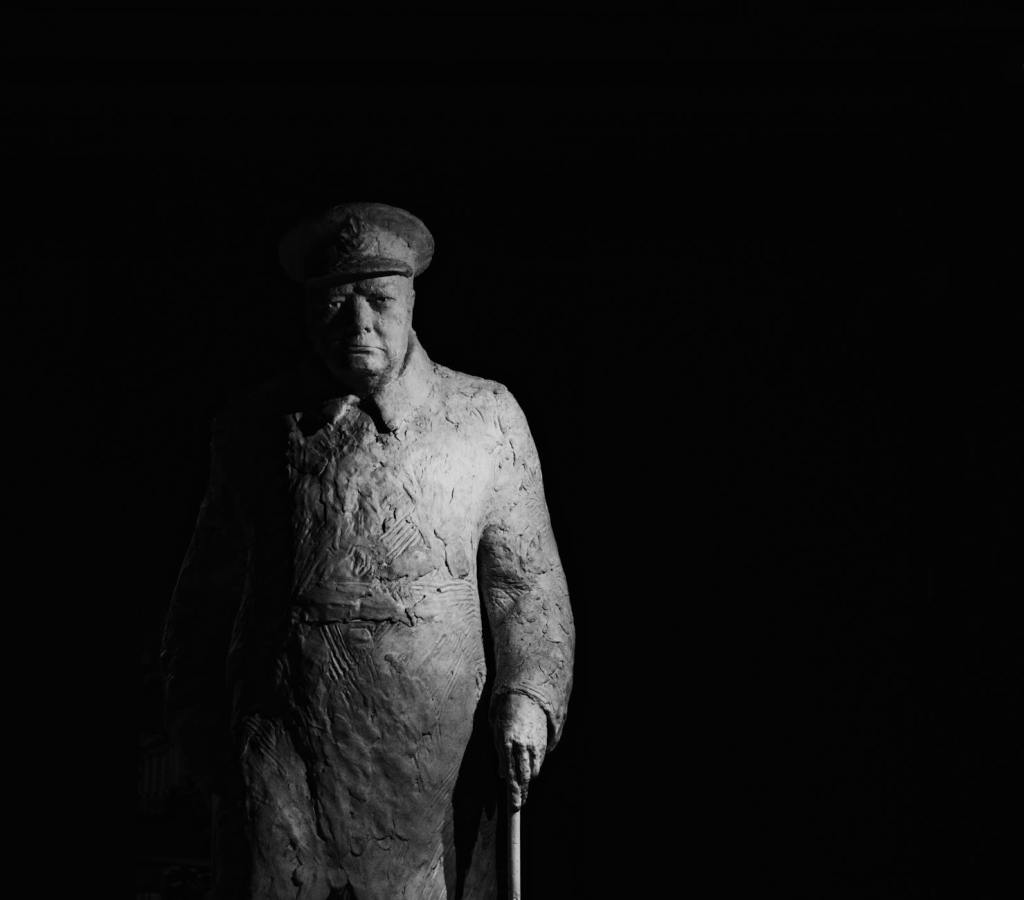
This realization warrants an aggressive application of Churchill’s wisdom.
Responsible entities–private, national, and international–should immediately implement these measures:
Authorize and fund the safe and thorough, yet expedited, archaeological excavation of the Mt. Ebal altar site including within both of its encompassing footprint structures;
Employ a policing force to guard the site 24/7 during the entirety of the above operation; and
Authorize and fund safe and thorough additional scientific and epigraphical analysis of the Curse Tablet to fully determine the nature of the inscriptions it harbors.
Why? For mankind clarifying evidence potentially lies on Mt. Ebal.
Losing it would constitute a disaster of incomprehensible proportions.
Imagine the gut punch of bulldozers scrapping away there incalculably precious historical evidence!
Consider, that:
In all the years since Zertal’s death the small round altar most likely associated with Joshua has yet to be fully excavated; and
Other Curse Tablet offerings may yet be found there.
Justifications for vigilance and action abound.
What might Churchill implore?
Surely it would be, “Do something now! Do not let this opportunity to glimpse the remote past become scattered dust. How then could it inform the future?”
For this reason I have written the letters found afterwards in supplemental materials. These I addressed to my congressional delegation. They argue for the protected, safe, expedited, scholarly exploration–archaeologically and scientifically–of Joshua’s Altar and Mt. Ebal artifacts.
Of how these things might ultimately be accomplished I do not have full insight.
As I observed previously, these involve a diplomatic component the constituent parts of which extend beyond my and most others’ expertise.
A possible framework, however, may include some or all of the following:
Our State Department might convince Israel to give the Palestinian Authority some concessions.
In return, the PA would grant it a three to five year authorization for Joshua’s Altar excavations.
The PA would likely have to expropriate the property as a cultural heritage site. For this appropriate due process compensation should be afforded.
The agreement would include 24 hour Israeli Army or U. N. protection of the site during the excavation.
It would also include an agreement that artifacts discovered will belong to the Nation of Israel.
With these efforts educational institutes and corporations may assist.
Again, the above implies sophisticated nuance beyond my and most others’ expertise.
Yet, not knowing the exact levers that must be pulled does not mean that we cannot act. For example, we can let those who have access to those levers know that they need to pull them. Letters similar to mine I thus encourage others to send.
Why? The tablet presents actionable evidence. Its assault on scholarly history is real. Yet, delay imperils evidence that may further validate that assault.
Final Thoughts
We thus arrive at the end of our Mount Ebal adventure.
Share with others what you have learned. Tell of the forceful narrative of which the Curse Tablet speaks.
Also encourage those at the reins of authority to ensure the prompt excavation of Joshua’s Altar.
Then hopefully at another time, maybe at a near date, we can revel in new secrets discovered on Mt. Ebal, ones that transport the Curse Tablet from convincing testimony to inescapable reality.
What truths past and future might this reality focus more clearly?
Philip found Nathanael and told him “We have found the One Moses wrote about in the Law, the One the prophets foretold–Jesus of Nazareth, the son of Joseph.”