
History VIII
[Ebal, fourteen of thirty]
Why the intense scorn about Stripling’s early pronouncement about the Mount Ebal Curse Tablet?
Accepted archaeological procedure discouraged reporting a find until after it has completed peer review by the appropriate scholarly community. This protocol Stripling admittedly violated.
This post is part of my memorandum opposing many scholar’s position on the Mount Ebal Curse Tablet, that is, that it presents nothing worthy of note. Instead, I maintain that the tablet presents sufficient evidence to warrant posthaste excavation of the proposed Joshua’s Altar of northern Judea / Samaria.
This is my memorandum’s fourteenth post.
If you would like to read the entire effort from beginning to conclusion, click here.
Otherwise, proceed below.
Regarding this infraction Stripling explained that he had feared losing his intellectual stake in his find. He thus felt compelled, despite protocol, to release publicly what he perceived about his artifact’s nature.
Unfortunately, this happened in the wake of another biblical archaeology embarrassment, one that heightened sensitivity about scholarly procedures.1
Israel Antiquities Authority had prematurely publicized their analysis of a Tel Lachish pottery sherd. Their news release heralded the pottery bit as the first found in Israel referencing King Darius the Great of Persia 2500 years ago.2
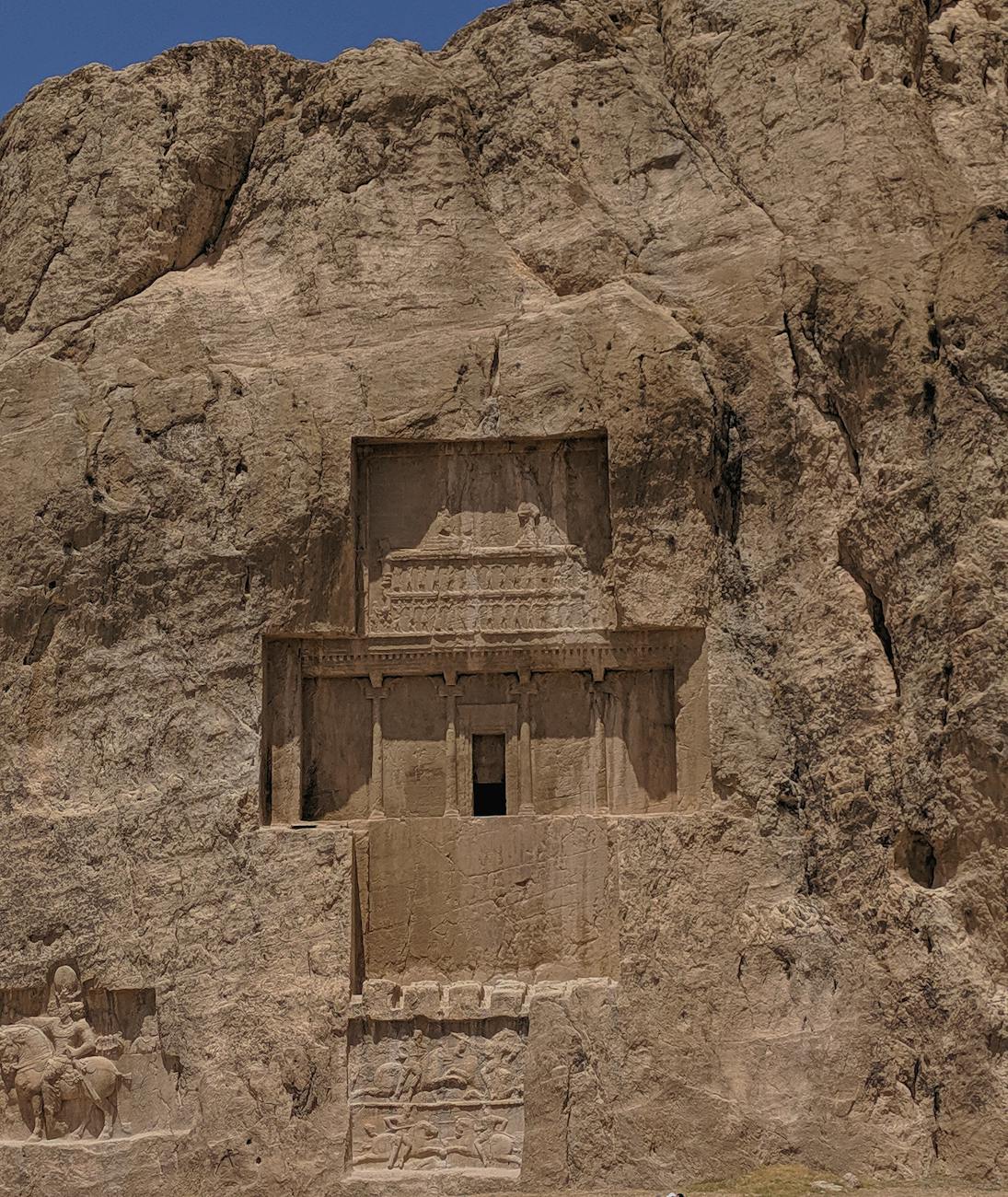
The tomb of Darius the Great (550 B.C. to 486 B.C.) at Naqsh-e-Rustam
The site lies northwest of ancient Persepolis, 30 miles (50 km) northeast of modern Shiraz, Iran.
Photo by Nursel Kaya on Pexels.com

Ruins of Persepolis, a city founded by Darius the Great
Photo by Masih Shahbazi on Pexels.com
Shortly afterwards, however, a researcher specializing in ancient Aramaic confessed that she had written the inscription.
While visiting the site with her students, she had demonstrated the ancient script on a pottery sherd lying about. Once finishing her lesson, she had tossed it aside, not intending any malice.3
What she had demonstrated turned out to be quite accurate–accurate enough to fool many renowned scholars.
Mortification ensued across prestigious academic communities.
Contemporaneously into that setting, Stripling’s dilemma unhappily landed.4
At him many scholars were outraged. He had prematurely declared a history challenging find underpinned by photos. Not only had he not navigated peer review. He had not released his photos for academic scrutiny. Without them scholars were handcuffed in vetting the allied fantastic claims.
A firestorm had been lit!
Time now for some questions: Do you think the protocol of not releasing information about an archaeological find until after peer review is good public policy? Why or why not?
Let me know below in “comments”.
Thank you for engaging this topic with me thus far!
The next post, the ninth of our review of the Curse Tablet’s history, I entitle “Peer Review”.
I look forward to continuing with you there.
If you appreciate this type of analysis, please “subscribe”, “like”, and “share”.
If you wish to support this work, you can do so in the donation section below. Such really encourages!
Next post: “Peer Review“
- Melainie Kidman, Academic article on controversial 3,200-year old ‘curse tablet’ fails to sway experts, The Times of Israel, 14 May 2023, paragraph 32, 33, and 34, https://www.timesofisrael.com/academic-article-on-controversial-3200-year-old-curse-tablet-fails-to-sway-experts/, (7 October 2024). ↩︎
- Breaking News, “Mt. Ebal Curse Tablet Peer Review Complete”, Appian Media, In Roads, youtube.com/watch?v=_15tYO4hqJS, (33:35), May 12, 2023. ↩︎
- Melainie Kidman, Academic article on controversial 3,200-year old ‘curse tablet’ fails to sway experts, The Times of Israel, 14 May 2023, paragraph 32, 33, and 34, https://www.timesofisrael.com/academic-article-on-controversial-3200-year-old-curse-tablet-fails-to-sway-experts/, (7 October 2024). ↩︎
- Id. ↩︎
Make a one-time donation
Make a monthly donation
Make a yearly donation
Choose an amount
Or enter a custom amount
Your contribution is appreciated.
Your contribution is appreciated.
Your contribution is appreciated.
DonateDonate monthlyDonate yearly
 captivatingtwists.com
Leave a comment